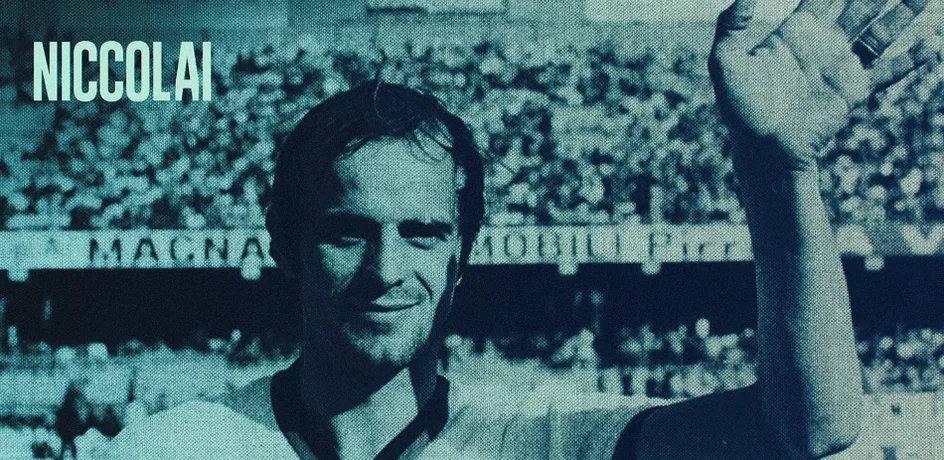
Comunardo Niccolai’s place in Italy’s starting side for the 1970 World Cup opener remains one of the most unlikely scenes in the country’s football memory. Only weeks after helping Cagliari to their historic Scudetto, the uncompromising stopper walked out in Toluca against Sweden, entrusted by Ferruccio Valcareggi with a task few supporters had expected: containing Ove Kindvall on the game’s largest stage.
A champion’s defender under unusual scrutiny
Niccolai was an essential figure in the Cagliari side that had just conquered Serie A, and Valcareggi’s selection reflected the coach’s faith in the Sardinian champions. Four Cagliari players were named in the opening XI, a core the national coach considered reliable as Italy began a tournament played in difficult conditions.
- Italy faced Sweden in Toluca, more than 2,600 metres above sea level.
- Valcareggi announced his team well in advance, seeking calm within the squad and clarity before the opening match.
- The midfield debate around Sandro Mazzola and Gianni Rivera had dominated the build-up, while tensions involving Rivera and delegation chief Mandelli had been eased by federation president Artemio Franchi.
- Italy began with Albertosi; Burgnich, Facchetti; Bertini, Niccolai, Cera; Domenghini, Mazzola, Boninsegna, De Sisti and Riva.
For Niccolai, the selection was remarkable not because his defensive gifts were in doubt. He was strong in aerial duels, forceful against centre-forwards and prepared to make hard interventions when the match demanded it. Yet he had never carried the reputation of the elegant, internationally seasoned Roberto Rosato, the Milan defender whom Valcareggi left among the substitutes.
The choice also brought an old anxiety back to Italian supporters. Niccolai was remembered for spectacular own goals, most notably in Cagliari’s March 1970 title-defining meeting with Juventus. His headed intervention, intended to deal with the danger, beat goalkeeper Enrico Albertosi and threatened to damage Cagliari’s championship bid. Gigi Riva’s two goals repaired the afternoon and preserved Cagliari’s position at the top, but the episode followed Niccolai into the World Cup summer.
Valcareggi’s assignment against Kindvall
The Sweden match gave Niccolai a specific opponent: Kindvall, the Feyenoord forward who had established himself in the Dutch game as a quick, clinical presence in the penalty area. Valcareggi’s instruction was to deny him the ball early. Allowing Kindvall to receive and turn in a one-against-one situation, Italy believed, would create a far more serious problem.
Niccolai accepted the responsibility in his own direct fashion. There was little ornament to his defending, but there was determination. He understood that a World Cup start might not come twice, particularly given the public unease attached to his name, and he concentrated on the striker in front of him.
A short World Cup appearance and a lasting image
The opportunity lasted 37 minutes. Niccolai attacked a contested ball with his usual intensity, won it from his opponent, and was injured in the action. The pain made clear that he could not continue. Valcareggi sent on Rosato, and Niccolai’s World Cup experience as a starter ended there.
He spent the remainder of the tournament supporting his teammates while recovering. Rosato took over at stopper as Italy progressed through the competition, defeating West Germany in the celebrated Azteca semi-final before losing the final to Pelé’s Brazil.
- Niccolai’s selection had surprised many because Rosato was widely regarded as the more polished and experienced option.
- His tournament was interrupted before half-time against Sweden by an injury suffered while challenging for possession.
- Italy went on to reach the final, with Rosato established in the defensive role.
There are differing recollections of Manlio Scopigno’s reaction when he saw his Cagliari defender chosen for Italy. One version has the coach expressing disbelief at seeing Niccolai on worldwide television; another, recalled by journalist Giampaolo Murgia, says Scopigno merely asked, “Can that really happen?” The detail has become part of the folklore, but the central fact stands without embellishment: a defender burdened by a reputation for misfortune had earned a place in the national team at the World Cup.
His afternoon in June 1970 was brief, but it belonged to a larger Cagliari chapter in Italian football. The Scudetto winners had already shifted the balance of Serie A; Niccolai’s inclusion showed how far that squad’s influence had reached. Injury denied him a second chance in the tournament, yet the image of him standing with Italy before the opening match remains one of those unusual moments when a club season’s achievement carried a player into football’s most unexpected spotlight.