Inter and Parma meet again at San Siro with a memory from 27 October 1996 hanging over the fixture: a young Hernan Crespo announced himself in Italian football, even in defeat, on the same stage where his two Italian lives would eventually meet.
That was the seventh round of the Serie A season. Roy Hodgson’s Inter had Giuseppe Bergomi directing the defence in front of Gianluca Pagliuca, with a young Javier Zanetti, Paul Ince, Ciriaco Sforza and Youri Djorkaeff among their established names. Marco Branca and Ivan Zamorano formed the forward line. Parma, under Carlo Ancelotti in his first Serie A coaching job after promotion with Reggiana, travelled with Enrico Chiesa and Crespo in attack.
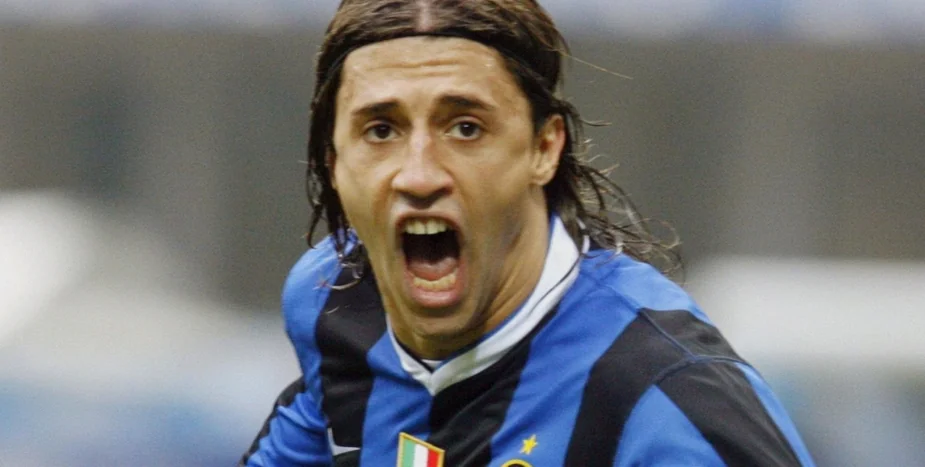
For Crespo, now coaching Atlas in Mexico, Inter-Parma remains a particularly personal appointment. Parma brought him to Italy from River Plate in the summer of 1996 and made him a recognised figure in European football. Inter, where he played in the early 2000s, gave him another important chapter and an environment in which he says he felt very much at home.
Yet when asked where his allegiance lies, Crespo does not attempt to balance the answer. His support is with Parma. After Buenos Aires, he considers the city the place closest to him: it was where he matured, where his daughters were born, where he established his home, played, coached and, for a brief spell, served as vice-president. For Inter supporters, he says, it is simply a matter of affection rather than a rejection of his years in Milan.
A first goal, and Ancelotti’s patience
Crespo was 21 when Parma went to San Siro in 1996. He had only recently arrived, was still adapting to the country and the league, and had already faced criticism. Ancelotti’s response was constant reassurance. The coach told him to ignore the noise and promised that the starting place would remain his; the more the striker was whistled, the more he would be selected.
The confidence paid off immediately in Milan. After only one minute, Zé Maria broke down the right and delivered into the area. Crespo met it with an acrobatic half-volley, scoring his first goal in Italy. It remains one of the defining recollections of his early Parma career, although Inter recovered to win 3-1 through two Zamorano goals and one from Zanetti.
The defeat increased the pressure around Ancelotti, whose position was questioned during a difficult spell. Parma eventually found their direction in the second half of the campaign, producing a strong recovery and finishing second, only two points behind Marcello Lippi’s Juventus. Crespo looks back warmly on that season, while acknowledging that life on the bench has brought a different kind of strain: coaching, he says, is much more stressful than playing.
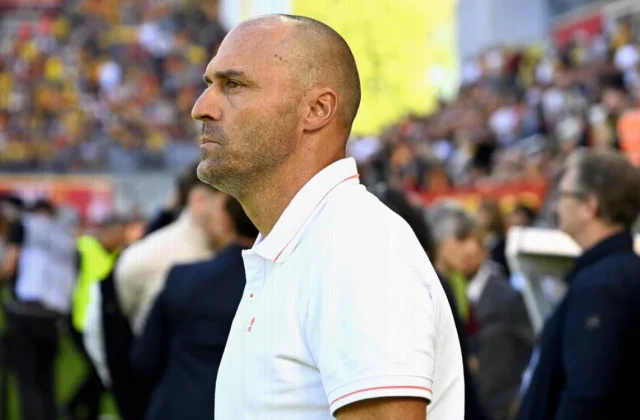
The present meeting arrives with another former centre-forward taking responsibility at Parma. Alberto Gilardino is beginning his work on the bench, and Crespo intends to follow it closely despite his commitments with Atlas. He believes Gilardino’s own experience as an elite striker is a valuable foundation, joking that any coach would be well served by having a player of Gilardino’s quality available to him.
Crespo also sees reasons for Parma to approach the season with confidence. In his view, the club possess the technical and financial means to secure survival, while also developing younger players who may later become important assets for the club.
Facing Inter, however, is a severe opening test. Crespo regards the Nerazzurri as Italy’s strongest side, citing the depth of their squad, match-winning individuals, sound organisation and the work of Cristian Chivu. He believes they have the ingredients to retain the Scudetto and to progress further in the Champions League.
That does not mean he sees the result as already written. Football has room for turns that logic cannot always anticipate, and Crespo is especially interested in watching Romero, Parma’s new centre-forward, after receiving encouraging reports from friends. Nearly three decades after his own first Italian goal at San Siro, he can imagine another Parma striker trying to give Inter an unexpected problem.