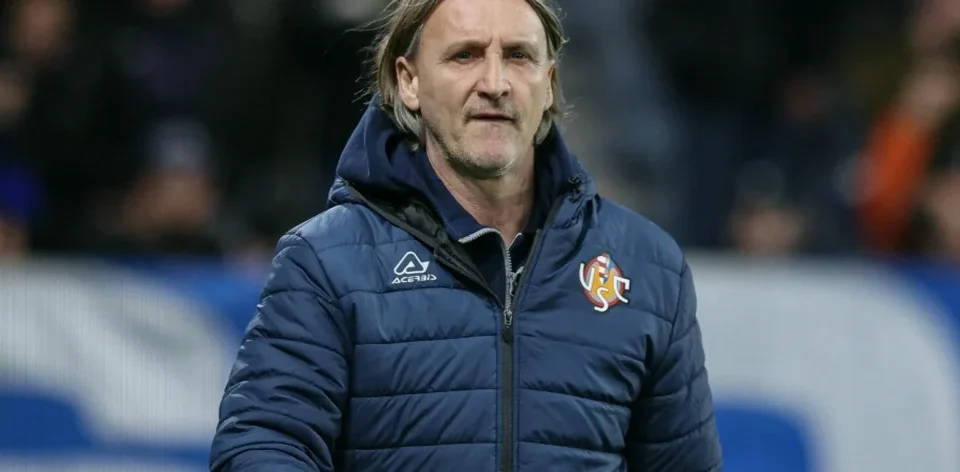
Davide Nicola has been asked to take on another rescue job, this time at Venezia, who are bottom of Serie A after six matches without a point. It is a familiar moment in the modern championship: a club calls when the season has already begun to tilt, and a coach arrives not to build a long-term project from scratch but to find enough results to keep the team in the division.
Nicola returns to his specialist role
Nicola’s record gives Venezia reason to believe that a recovery is possible. He has secured survival five times after taking charge during a season, more than any other coach in this particular line of work.
- Crotone stayed up in 2017.
- Genoa escaped in 2020.
- Torino avoided relegation in 2021.
- Salernitana survived in 2022.
- Empoli remained in Serie A in 2024.
Each case required a coach to work with an anxious dressing room and a damaged league position. Venezia are now asking Nicola to add another escape to that sequence, with the margin for error already narrow after their scoreless opening six rounds.
There is a broader tradition behind such appointments. Paolo Vanoli provided a recent example last season, taking over a Fiorentina side in severe difficulty and gradually restoring it. The club later decided it could move forward without him, only to bring him back during the current campaign.
The coaches who learned to arrive late
Davide Ballardini spent many years as one of Serie A’s most recognisable emergency appointments. His interventions produced safety with Cagliari in 2008, Palermo in 2009 and Genoa in both 2011 and 2013. His one major failure in that role came at Bologna in 2014, where the breakdown around both the squad and club proved too deep for a change on the bench to repair.
Gigi De Canio also made a career out of finding a route through troubled seasons.
- At Reggina in 2003, he arrived three months into the campaign and guided the club into a relegation play-off against Verona, which Reggina won. Before the decisive match, he told his players: “We have come this far; we cannot throw it away now.”
- He took over Siena in January 2005, replacing Simoni, and kept the club up through a final-day escape after only 20 matches in charge.
- Genoa turned to him in 2012 following a chaotic sequence under president Enrico Preziosi, who had dismissed Malesani, reinstated him and removed him again, with Marino also passing through the role. De Canio delivered survival on the final day.
Giuseppe Papadopulo’s Bologna spell in 2009 was even shorter. He replaced Sinisa Mihajlovic, who had himself succeeded Arrigoni, with seven games left between April and June. Papadopulo introduced himself by saying, “I am the Pope; we will perform a miracle.” Bologna won three matches and drew two, enough to remain in Serie A. His approach included pushing full-backs Zenoni and Lanna further forward as the side searched for points.
When experience and timing changed a season
Claudio Ranieri’s work at Parma in 2006-07 belongs in the same category, despite the larger achievements that would follow elsewhere in his career. He was appointed in the 23rd round after Stefano Pioli’s dismissal, returning to Serie A coaching after a decade away from the division. There were doubts about whether Parma had sufficient quality to escape danger.
The January transfer window helped, notably through the arrival of Giuseppe Rossi. The forward scored nine crucial goals, while Ranieri’s team moved clear of the relegation places before the final weeks. Mathematical safety came on the last day, but Parma ultimately finished a far more comfortable and unexpected 12th. Ranieri was celebrated by the supporters after the turnaround.
Other survival specialists did not always need dramatic winning runs. Edi Reja collected eight draws in 13 games after taking charge of Atalanta in 2015; it was not spectacular, but it was enough to finish above the relegated sides.
Ilario Castagner was appointed by Ascoli after 10 matches of the 1986-87 season, replacing Sensibile. President Costantino Rozzi told him: “You take care of it; I will not interfere.” That promise was not followed perfectly, but Castagner preserved Ascoli’s top-flight status and also won the Mitropa Cup.
Bologna’s 1979 escape remains part of the tradition
One of the older and more unusual examples came in spring 1979, when Serie A had 16 clubs. Verona were already down, but six teams entered the last round at risk of filling the remaining two relegation places.
Bologna had spent most of the season among the bottom three. President Luciano Conti had already replaced Bruno Pesaola and Marino Perani, and lacked the resources for another appointment. When asked who would take over, he replied in Bolognese dialect that he had no money left. The job therefore went to youth-team coach Cesarino Cervellati.
Cervellati, a religious man, was candid with the fans: “Only God can save us.” On the final day Bologna trailed Perugia 2-0, with both goals scored by Salvatore Bagni. Mastalli reduced the deficit before half-time, and then Castagner, Perugia’s coach, left Bagni in the dressing room for the second half in a decision that prompted debate.
Bologna completed the comeback. Antonio Bordon converted a penalty for 2-2, a point that kept the club in Serie A on goal difference. Conti celebrated in the stands and offered his own conclusion: “You see? Cervellati kept us up. Money is not everything in life.”