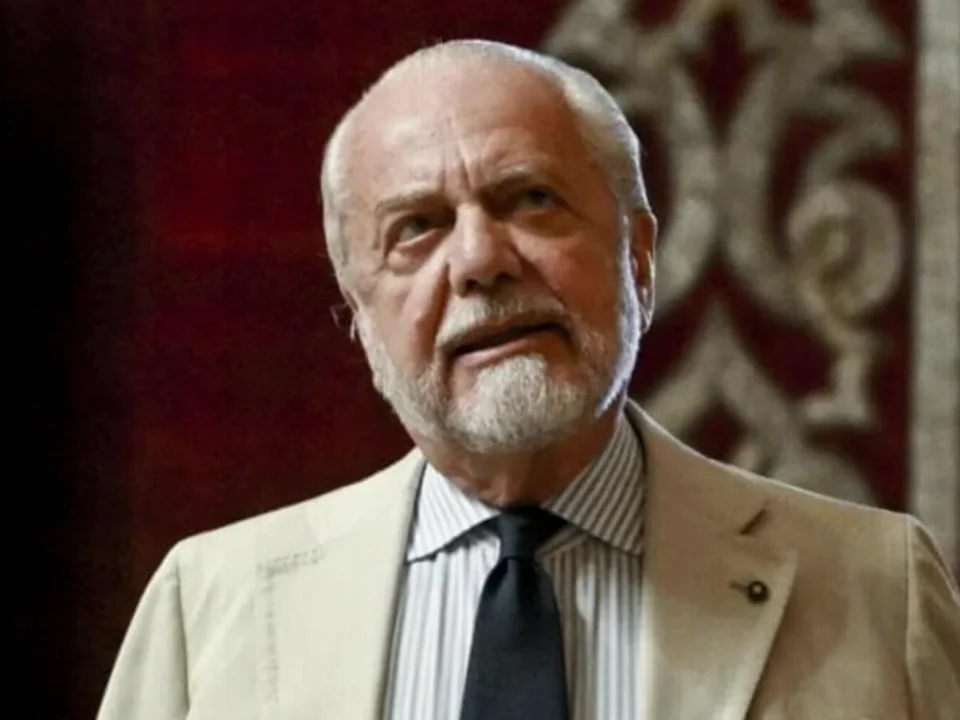
Aurelio De Laurentiis used a career achievement award ceremony at Palazzo Grazioli to set out an expansive vision for Napoli’s future, from a new training complex at Qualiano to a privately financed 70,000-seat stadium in Naples East. The Napoli president also revisited his arguments over football governance, international breaks, summer preparation and the role of coaches, placing the club’s long-term infrastructure at the centre of his message.
Napoli’s plans for Qualiano and Naples East
-
De Laurentiis said Napoli’s original search for land for a new sporting centre had proved difficult. A site had been identified, but subsequent checks uncovered complications which he described as both absurd and frustrating.
-
The club has now found 17.5 hectares in Qualiano. Napoli intend to build 10 football pitches there, alongside 7,500 square metres of offices and changing-room facilities for the senior side and the entire youth system.
-
On the stadium question, De Laurentiis said he signed a letter of intent with Q8 a month ago. The company has identified a 38-hectare area in Naples East for the proposed development.
-
His plan is for a 70,000-capacity ground with 120 sky boxes, restaurants and associated services. It would not include an athletics track.
-
The project would also include an interactive museum, developed with his Los Angeles-based agent. Visitors would be able to take part virtually in matches alongside Napoli figures including Diego Maradona, Edinson Cavani and Gonzalo Higuain.
-
De Laurentiis acknowledged that the project would require substantial time and investment in dollars, but said construction of the stadium itself could be completed in 24 months and would be funded entirely by him.
The president pointed to Real Madrid’s redevelopment as an example of the flexibility he wants from a modern stadium, particularly the ability to stage concerts without damaging the playing surface. He complained that summer events at the Stadio Diego Armando Maradona have repeatedly left Napoli needing to relay the pitch, adding that the irrigation pipes were nearly damaged this year.
His position on the Maradona
De Laurentiis was dismissive of the proposed public spending on Napoli’s current home. The Campania Region is expected to put forward €150 million and the municipality another €50 million, but he argued that €200 million would make only a marginal difference to the Maradona.
After 22 years of using the stadium, he reiterated his long-standing dissatisfaction with the facility. Napoli will continue to play there until the new ground is ready, he said, but he expects the present stadium to be demolished once the replacement has been built.
A broader view of ownership and management
De Laurentiis also spoke about Gerry Cardinale, recalling a dinner held three years ago. He said Cardinale advanced ideas with which he strongly disagreed, though he chose not to challenge him at the time.
In De Laurentiis’ view, Cardinale represented an owner operating with the priorities of a financier rather than those of an entrepreneur. He questioned the logic of investment funds entering football principally to generate returns for investors, arguing that such ownership offers little if a profit does not materialise.
He contrasted that outlook with his own record at Napoli. De Laurentiis said his experience in the difficult Italian film industry gave him confidence to enter football, and cited two Scudetti, five cups and 22 years at the club. He also referred to Napoli’s long sequence of European participation, the enthusiasm rebuilt around the team and his belief that his successes came without wrongdoing, including through the Calciopoli era.
Spalletti and the limits of a coach’s role
Asked about Luciano Spalletti, De Laurentiis initially declined to discuss the former Napoli coach directly. He referred instead to a television dramatisation involving Francesco Totti and Spalletti, featuring Sergio Castellitto’s son, and used the subject to state his wider view of management.
For De Laurentiis, coaches are collaborators brought in to conduct the group of players. They remain employees of the club, he said, and can sometimes lose sight of that relationship.
Summer preparation over exhibition money
Napoli were offered $6 million to play one match in Australia and another in Singapore during the summer, De Laurentiis said, but he rejected the proposal. He did not believe a journey of around 30 hours was compatible with properly preparing for a demanding season.
Instead, Napoli arranged summer fixtures in Trentino and Abruzzo, inviting and paying other teams to take part. De Laurentiis said the sporting value of preparation mattered more than the money on offer.
Malagò, politics and the international calendar
De Laurentiis defended Giovanni Malagò, describing him as the figure best placed to restore Italian football to a healthier path. He argued that attempts were being made to remove Malagò because others wanted his position.
He criticised political involvement in sport, saying that if politics wishes to influence football it should also provide financial support. He accused Economy Minister Giancarlo Giorgetti and the Sports Minister of creating difficulties for Italian football and tennis, while arguing that politicians often appear only when they want access to major sporting occasions.
The Napoli president ended by returning to a familiar concern: the strain placed on players by the modern calendar. He said UEFA and FIFA regulations need significant revision because domestic leagues, which he sees as the foundation of supporters’ attachment, are being weakened to sustain international bodies.
While recognising the pride attached to national-team success, De Laurentiis warned that players can now approach 80 matches in a season. He questioned whether they can consistently bear the physical, muscular and psychological demands involved.
He also challenged the age-based structure of international football. In his view, there is no need for a 37-year-old to occupy a place in the senior national side when players aged 18, 20 or 22 could be involved. The division of national teams by age, he said, is a major mistake.