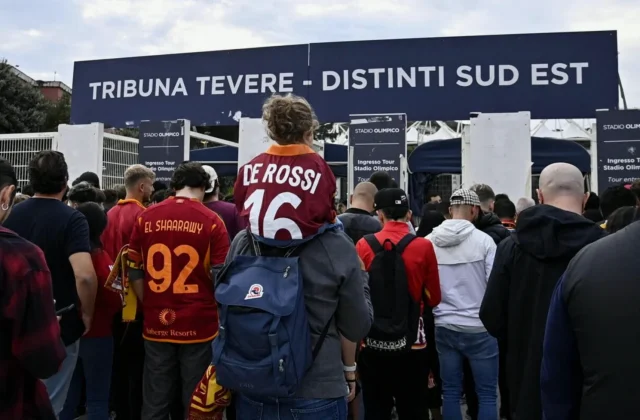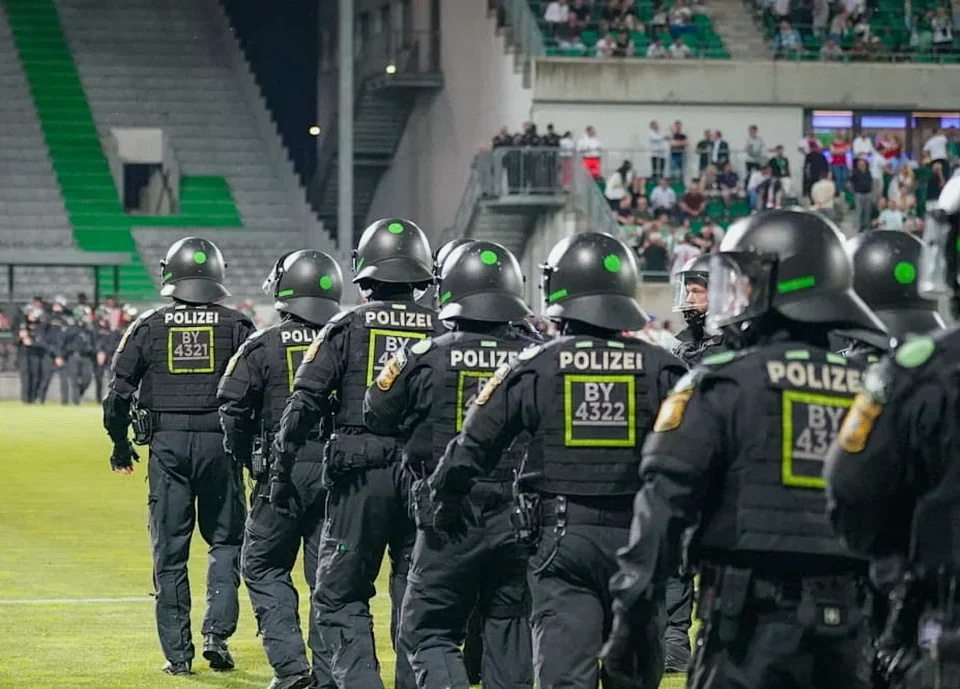
The German Football Association will pass on at least part of any police-cost charges for high-risk matches to the home club. The decision matters first for the DFB-Pokal, the 3. Liga and lower divisions, not yet for the Bundesliga and 2. Bundesliga.
DFB to pass high-risk policing charges to home clubs
SEO Title: DFB to Pass High-Risk Match Police Costs to Home Clubs
SEO Description: The DFB will transfer at least part of police-cost charges for high-risk fixtures to home clubs, with lower-league sides facing the greatest exposure.
What changed
- The DFB executive committee adopted a general policy on Friday for fees charged to the association over policing at high-risk games.
- Those charges will now be transferred, at least in part, to the relevant home club.
- The association said it has a duty to protect its assets and is therefore generally obliged to recover the money.
- The move follows plans by Saarland’s state government to introduce a system similar to Bremen’s.
The decision marks a shift from the DFB’s previous line. In May, the association warned that such invoices could threaten the existence of clubs in the 3. Liga and Regionalliga, while also distorting sporting competition.
Background: Bremen set the precedent
- Bremen became the first German state to charge for additional policing at a high-risk football match in April 2015.
- Werder Bremen’s Nordderby against Hamburger SV produced a bill of more than €400,000.
- In January 2025, Germany’s Federal Constitutional Court rejected the Bundesliga’s complaint against Bremen’s fee system.
- First Senate president Stephan Harbarth said the Bremen rules complied with the Basic Law. Organisers of high-risk fixtures, the court held, go beyond the state’s limited baseline duty to prevent danger.
The DFL, then operating under the Bundesliga name in the legal case, had argued that the state should bear security costs for citizens in public spaces.
No national agreement
Most federal states have preferred the prospect of a uniform national arrangement and have not taken a firm position on billing clubs. Rhineland-Palatinate interior minister Achim Schwickert has rejected charging clubs, including after disorder at the DFB-Pokal derby between Waldhof Mannheim and 1. FC Kaiserslautern.
North Rhine-Westphalia and Hesse have also largely opposed the measure. But NRW interior minister Herbert Reul said in March 2026 that he remained against passing on police costs, while finding that position increasingly difficult to defend.
Saxony interior minister Armin Schuster called the approach wrong for several reasons. He added that pressure was growing because of the conduct of certain supporters and football’s failure to intervene.
Bernd Neuendorf, the DFB president, still considers charging clubs for police operations the wrong approach.
Pressure on smaller clubs
The financial effect will vary sharply. RB Leipzig and TSG Hoffenheim are likely to be less exposed because of their financial strength and relatively smaller active supporter scenes.
Traditional clubs in the third and fourth tiers could face greater risk: smaller budgets, but larger and more active fan bases. Concern was particularly strong in the Regionalliga Nordost in early 2025.
The DFB’s new policy covers competitions it runs: the DFB-Pokal, the 3. Liga and the levels below. The DFL has not adopted an equivalent general rule for Bundesliga football.
A nationwide police-cost fund has been suggested repeatedly by Bremen interior senator Ulrich Mäurer. The problem is the uneven number of “red” or high-risk matches between locations. A flat levy on every club would not reflect that difference.
Reaction
Helge Limburg, the Greens’ Bundestag spokesman on legal policy and fan rights, called the outcome costly and damaging for clubs and football. He said the focus on policing overlooked the role of supporters, fan projects and stadium alliances in improving safety.
Limburg argued that the target should be fewer officers at grounds and lower costs, rather than shifting part of public-security spending onto clubs.
1. FC Köln vice-president Jörg Alvermann also rejected blanket recharging of police costs. He said clubs, political leaders and security authorities should instead reduce deployment levels around matchdays. Stadium-alliance measures were, in his view, an initial step, while moving bills to clubs did not address the central issue.
The German Police Union took a different view. Federal chairman Heiko Teggatz said fee notices were not intended as punishment, but as an incentive for stronger prevention of violence and security work.
Teggatz described the DFB ruling as an important step and urged other states to follow Bremen by issuing legally permitted charges for high-risk fixtures. Clubs, he said, must recognise that careless handling of match security can become expensive, particularly in a professional game that generates billions.