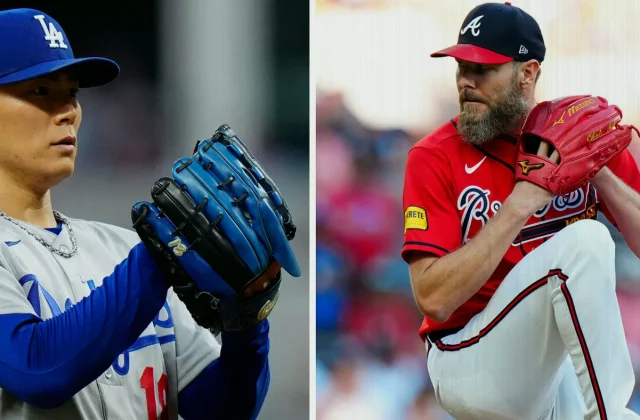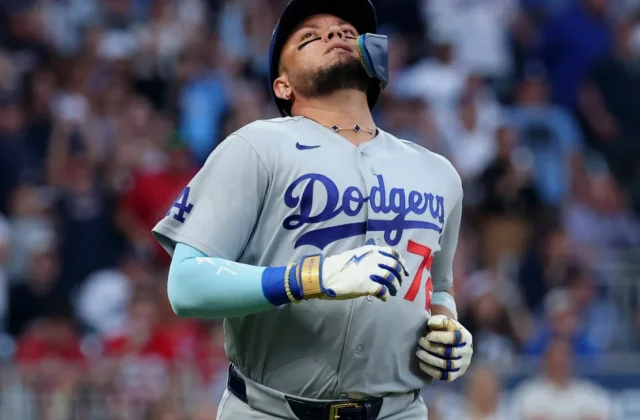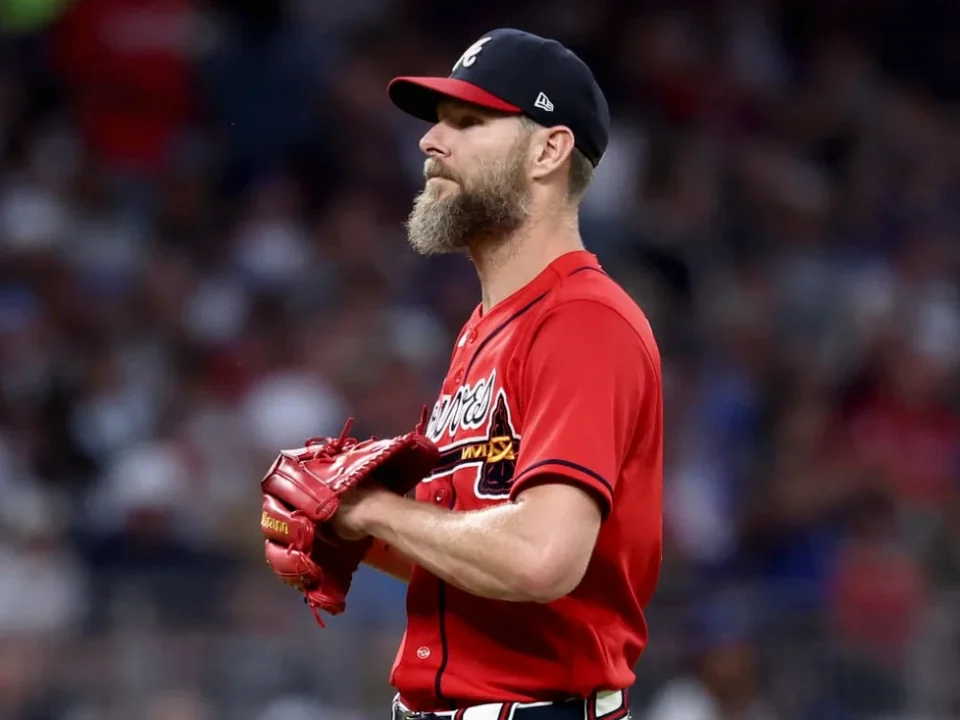
Chris Sale gave Atlanta the kind of opening it needed Tuesday night, then the Braves’ offense left him with too little room to maneuver. The result was a 3-1 loss to the Dodgers in Game 3 of the National League Division Series at Truist Park, putting Atlanta behind 2-1 in the best-of-five matchup and sending Tyler Mahle to the mound Wednesday with the season at stake.
There will be another day to revisit the decision to use Sale out of the bullpen against Philadelphia in the Wild Card Series. For now, the larger frustration is familiar: even when the left-hander gives the Braves a chance, this lineup has not consistently cashed it in.
Sale was electric at the outset. The 37-year-old piled up six strikeouts over the first two innings, matching Mike Hampton, who did it in Game 2 of the 2003 NLDS, as the only Atlanta pitchers to reach that total so early in a postseason game. He produced eight swinging strikes in those opening frames and worked out of a bases-loaded jam in the third.
But the sharpness faded in the fourth. Andy Pages opened the inning with a single, Enrique Hernández followed with a two-run homer to left, and Freddie Freeman added a solo shot two hitters later. Hernández’s drive was the 17th postseason home run of his career. Freeman’s was No. 18, with nine of those having come during his years in Atlanta.
Sale finished five innings and allowed three runs. After the second inning, he managed only one more strikeout and did not generate another swing-and-miss. It was a notable shift from the pitcher who had overwhelmed Los Angeles early, and it naturally revived questions about last Thursday’s relief assignment.
Atlanta could not answer Yamamoto
Yoshinobu Yamamoto kept the Braves from building anything substantial on the other side. The Dodgers starter surrendered four hits across seven innings, with Atlanta’s only run coming in the fifth on Drake Baldwin’s RBI groundout.
Baldwin came up with the bases loaded and one out, a moment that could have changed the feel of the game. His softly hit ball to first brought home a run, but Ronald Acuña Jr. then grounded out to end the inning. Baldwin is 3-for-23 this postseason, while Acuña is 3-for-21 through Atlanta’s first six playoff games.
The Braves had appeared to steady themselves by winning a bullpen game at Dodger Stadium on Sunday. Instead, they now face an elimination game at home. A Mahle win Wednesday would send the series back to Los Angeles for a Friday Game 5. A loss would close a season in which Sale repeatedly carried a rotation thinned by injuries.
That workload included the unusual call in the Wild Card round. Two days after throwing 95 pitches in a Game 1 win over the Phillies, Sale was asked to get the last four outs of Game 3. He entered with two outs in the eighth, nobody aboard and Atlanta holding a four-run lead, facing Bryce Harper. Sale threw 21 pitches in the appearance. Brent Suter, Victor Mederos and Raisel Iglesias were the remaining bullpen choices, though Iglesias had worked on each of the previous two days.
At the time, Sale’s appearance felt like an aggressive, emotional move from a club leaning on its ace. Atlanta later declined his preference to start Sunday’s Game 2, a decision that looked sensible given the way he tired Tuesday. Still, the possibility remains that the relief work from last week followed him into this start.
The historical hill is steep now. Teams that take Game 3 after a best-of-five series has been split through two games have won 48 of 67 series, a 72% rate. Under the current 2-2-1 Division Series format, clubs carrying a 2-1 lead into Game 4 on the road have advanced 26 times in 37 tries. Twenty of those teams ended the series in Game 4.
Those numbers do not decide Wednesday night, but they frame the task plainly. The Braves need Mahle to give them innings, and they need the hitters to provide the support Sale did not receive. For all the second-guessing around an ace’s extra bullpen outing, Atlanta’s clearest problem remains the one that has followed it through October: too many chances, too few runs.