Three of the NBA’s six coaching changes this season put first-time head coaches in the chair, and Dusty May in Dallas, Micah Nori in Portland and Sean Sweeney in Orlando arrive with sharply different paths to the same job. Their opening camp priorities are already clear: May is sizing up a young Mavericks core around Cooper Flagg, Nori wants Portland to turn its guard talent into pace and pressure, and Sweeney is looking to push Orlando’s playoff regulars through the postseason ceiling.
Key takeaways
- May enters Dallas directly from college basketball after winning the 2026 NCAA title at Michigan.
- Nori takes over Portland after 17 NBA seasons as an assistant, including five on Minnesota’s staff.
- Sweeney lands in Orlando after serving as San Antonio’s associate head coach last season.
- May sees triple-double potential in 19-year-old Cooper Flagg and plans to lean on Kyrie Irving’s basketball intelligence.
- Nori wants the Trail Blazers to defend aggressively, run the floor and make room for Damian Lillard, Ja Morant and Deni Avdija.
- Sweeney views Paolo Banchero and Franz Wagner as versatile offensive pieces who can create paint pressure from several spots.
Dallas starts with a college champion and a young roster
May is the outlier among the new hires. He did not arrive from another NBA bench, having never held either an NBA head-coaching or assistant role before Dallas hired him in June. His resume was built in the college game, beginning with Florida Atlantic’s 2023 Final Four trip and continuing with Michigan’s 2026 championship run after another Final Four appearance.
The move has been a long time coming in a quieter way. May said that as a coach in his early 20s, he made a yearly habit of visiting NBA training camps to watch the league’s best teachers work. He recalled spending time around Hubie Brown in Memphis and Scott Skiles in Chicago, while also considering early opportunities to work in NBA video rooms. His college trajectory kept him on that track, though NBA conversations picked up after Florida Atlantic’s Final Four run.
“I thought I would probably have to be an assistant before I ever became an NBA head coach,” May said. “Then it just happened.” He called an NBA head job a dream that stayed in the back of his mind, fueled by what he described as an obsessive appetite for watching the league.
Now his first roster includes Flagg, the 19-year-old wing May believes is only beginning to show his range. May pointed to Flagg’s unselfish habits, passing, rebounding and ability to affect a game in multiple ways, saying the young forward has plenty of triple-doubles ahead of him.
Dallas also expects a healthy Irving to carry a major part of the load for a developing group. May praised Irving not only for his work with the ball and his off-ball feel, but also for his strength, finishing and decision-making. In May’s view, Irving has an answer for nearly every situation on the floor, and the Mavericks will need that problem-solving from a veteran guard.
May also has firsthand knowledge of rookie big man Morez Johnson Jr., whom he coached at Michigan. He described Johnson as a player who cannot be forced off the court by matchup hunting, citing his ability to cover different situations rather than becoming a liability against perimeter-oriented lineups. May expects Johnson’s nonstop motor, physicality and toughness to fill needed minutes for Dallas.
Portland and Orlando build around pressure, versatility and playoff lessons
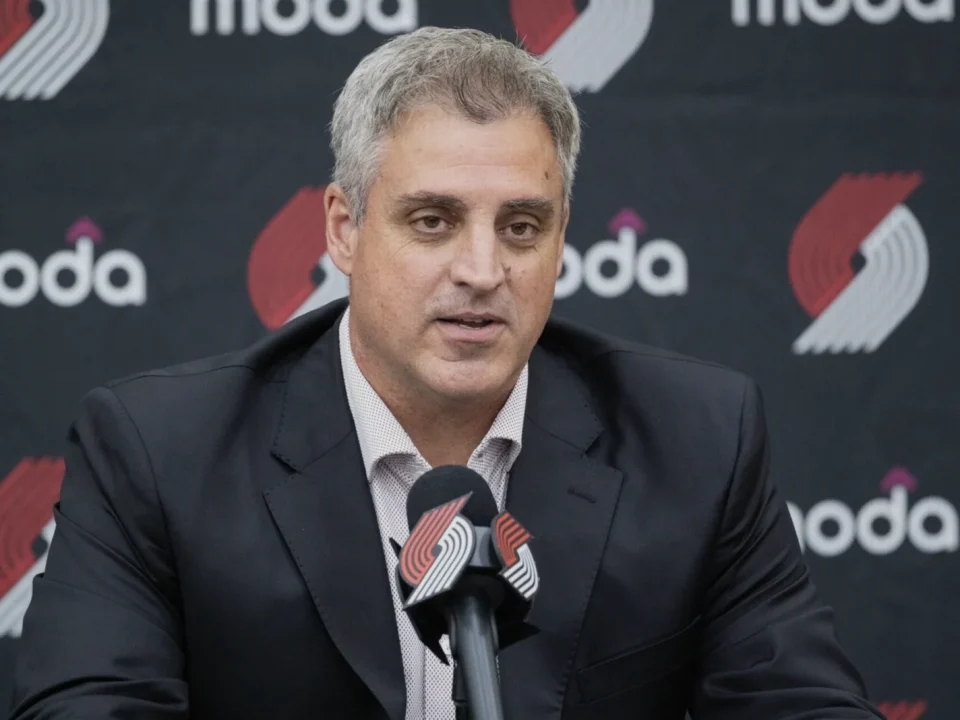
Nori’s climb to Portland includes stops with Toronto, Sacramento, Denver, Detroit and Minnesota. Across 27 years in the league, he has worked under 13 head coaches and alongside four NBA Coach of the Year winners: Sam Mitchell, Dwane Casey, Lenny Wilkens and George Karl.
He specifically credited Butch Carter, who gave him his first opportunity in Toronto, along with Kevin O’Neill, Mitchell, Wilkens, Karl, Michael Malone and Chris Finch. Nori said he has taken something from every coach he encountered, from defensive concepts to player communication and overall program management.
The Trail Blazers are coming off a playoff appearance and have added major backcourt firepower with Lillard’s return and Morant joining the roster. Nori’s plan is to make that talent play fast without losing its edge at the other end.
His preferred identity begins with effort and energy. He wants Portland to attack defensively instead of merely waiting for misses, finish possessions by keeping opponents to one shot, then get out in transition. With a smaller guard-heavy group, Nori wants proper spacing, quick pace and a shared-ball approach built around willing passers.
That formula should create more driving room for Avdija, the returning All-Star. Nori noted Avdija’s ability to get downhill, draw fouls and find teammates, and said added shooting and playmaking around him should stretch the defense further. He also expects healthier seasons from Lillard and Morant, calling both capable of returning to their best level.
Scoot Henderson is another player Nori expects to take a significant step forward. Nori invoked a Dwane Casey saying that it is easier to rein in a player than to ask one to play harder, a description that fits Henderson’s full-speed offensive approach. The new coach has also seen defensive progress from Henderson, particularly in getting into the ball, fighting through screens and making an impact at the point of attack.
Portland’s defensive personnel reminds Nori of his recent Minnesota experience. He sees Donovan Clingan as a rim protector in the mold of a back-line anchor, Toumani Camara as a high-level wing stopper, and Jrue Holiday as another accomplished two-way defender. He placed Camara alongside Jaden McDaniels in terms of having an elite defensive wing presence, while noting Holiday’s two-way value in a comparison to Anthony Edwards.
In Orlando, Sweeney inherits a more established playoff group. The Magic have averaged 44 wins and reached the postseason in each of the last three years, but have not yet translated that consistency into a deeper run. Sweeney comes from staffs that reached the NBA Finals with Dallas in 2024 and San Antonio in 2026, after a two-decade climb through video work, assistant positions and his associate head coach role with the Spurs.
His Finals experience reinforced how little separates teams at the highest level. Sweeney said those games come down to elite players, late-game execution and competing through possessions that remain tight until the finish. He said he was grateful for his time in San Antonio and for the opportunity it created.
Sweeney credited Jason Kidd for teaching him how to coach both players and staff, Avery Johnson for helping him get into the NBA, and Casey for years of guidance in Detroit. His deepest influence, he said, has been Tim Grgurich, with whom he worked for more than 12 years. Sweeney said Grgurich shaped how he views teaching, the game itself and the daily work required to compete.
The offensive outline in Orlando starts with Wagner and Banchero being movable pieces rather than fixed-position scorers. Sweeney likes Wagner’s ballhandling, decisions and competitive edge on both ends. With Banchero, he sees the familiar scoring package of size and power, plus an underlined passing element. The goal is to place both stars in different areas of the floor, attack the paint and make the next decision off the defense’s response.
He also brings a personal history with Jalen Suggs, whom he knew as a child through an AAU program Sweeney coached near Suggs’ hometown. On the floor, Sweeney wants to maximize Suggs’ screen navigation, instincts and point-of-attack defense.
Anthony Black, meanwhile, gives Orlando another versatile option. Sweeney highlighted Black’s transition attack, year-to-year statistical improvement and ability to defend on and off the ball. He also sees Black as a player who can help the Magic on the glass at both ends, another useful piece for a team trying to turn its regular-season base into something sturdier in May and June.