Paulo Dybala’s decision to join Roma rather than Inter has become one of those transfer crossroads that continues to frame the Italian championship. Inter had come close to adding the Argentine to an already formidable side, but Dybala chose the capital, where his bond with the club has endured and his current partnership with Donyell Malen has given Roma fresh encouragement.
Key takeaways
- Inter had broadly agreed terms with Dybala’s representatives after his Juventus contract expired.
- The proposed deal was for three years, with an option for a fourth, at about €6 million net per season.
- Dybala instead signed for José Mourinho’s Roma and was presented before more than 10,000 supporters at the Palazzo della Civiltà Italiana.
- Roma’s recent attacking understanding between Dybala and Malen has reinforced the value of the Argentine’s choice.
- At Inter, Dybala could have joined Lautaro Martínez and a returning Romelu Lukaku in a very different forward department.
The move that never reached Milan
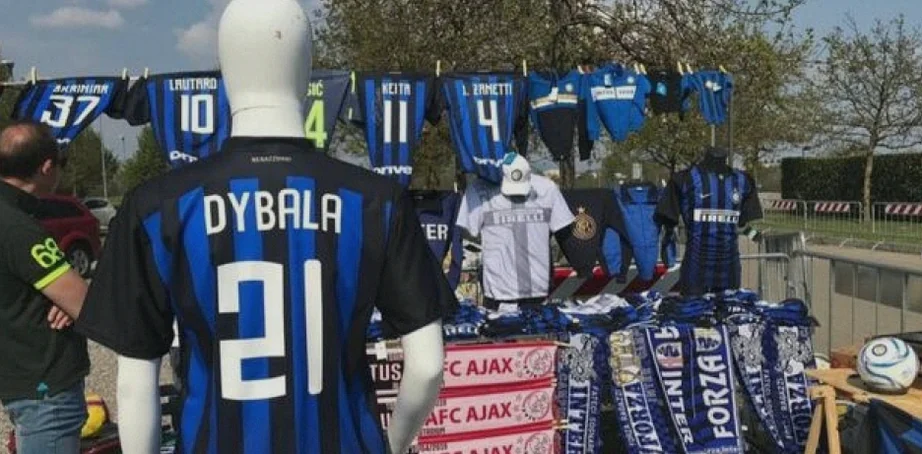
There was a point when Dybala in an Inter shirt appeared close enough for unofficial number 21 shirts to be sold outside Appiano Gentile. The Nerazzurri saw an opportunity to sign one of Serie A’s leading attacking players without a transfer fee, shortly after his departure from Juventus.
The agreement being discussed would have given Dybala a three-year contract, with the possibility of a further season, worth roughly €6 million net annually. For Inter’s board, it offered the prospect of a high-level free signing from a domestic rival, a familiar kind of operation in the club’s modern recruitment.
Simone Inzaghi would have inherited a particularly rich collection of options. Marcus Thuram had not yet arrived in Milan, while Inter were working on Romelu Lukaku’s return from Chelsea. Dybala could have operated behind Lautaro Martínez and Lukaku, with Edin Džeko also available as an experienced alternative.
The wider picture was also different. André Onana was still at the club, Milan Škriniar had not yet left at the end of his contract, Stefan de Vrij remained a dependable presence and Alessandro Bastoni was already central to the defensive unit. Federico Dimarco or Robin Gosens could have played on the left, Denzel Dumfries on the right, while Nicolò Barella and Hakan Çalhanoğlu were joined by Marcelo Brozović among the midfield choices.
Roma’s answer to the alternative history
Dybala ultimately began again with Roma under Mourinho, arriving to a remarkable public welcome. More than 10,000 Giallorossi supporters gathered at the Palazzo della Civiltà Italiana for his unveiling, reflecting both the scale of the signing and the optimism around a team coming from its Conference League triumph.
That optimism was later carried into the Europa League, where Roma reached the final against Sevilla. Their hopes of lifting a second European trophy under Mourinho ended in a match marked by dissatisfaction with Anthony Taylor’s refereeing.
Years on, the imagined Inter version of Dybala remains an intriguing Serie A question: a free-agent addition to a side that already had the structure to challenge at the highest level. Yet Roma’s present mood offers its own conclusion. Dybala’s connection with Malen has become a key source of belief around the club, and the Argentine’s choice of Rome cannot now be judged as a mistake.