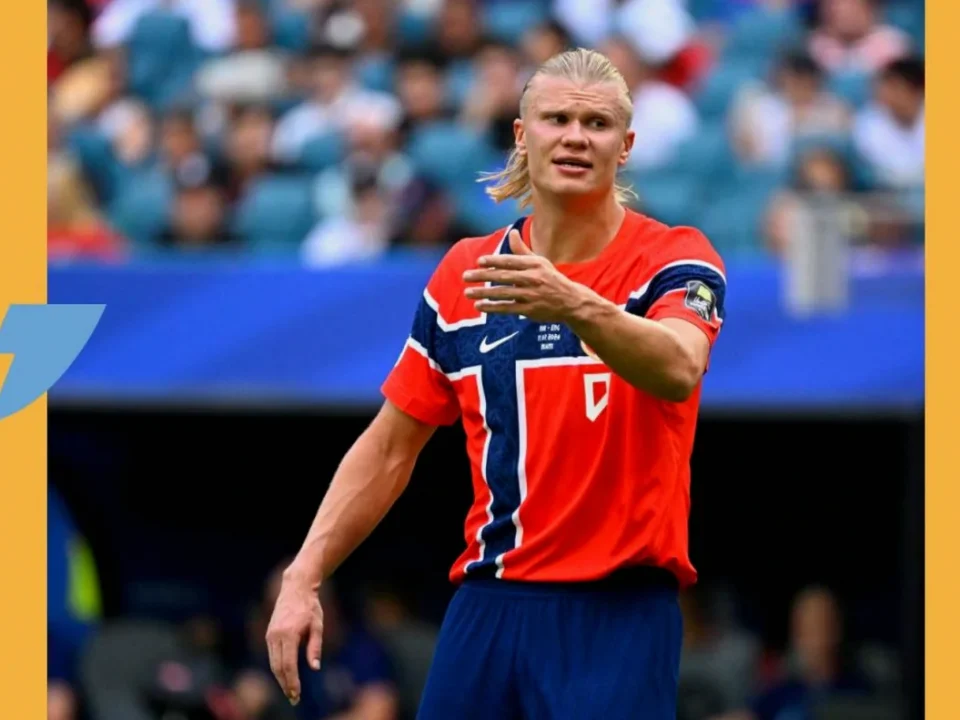
Norway’s World Cup run ended in extra time against England, but Erling Haaland’s influence has travelled well beyond the pitch. In the weeks after the tournament, the Manchester City striker’s preference for carrots and locally grown produce has been linked to a sharp rise in demand for Norwegian vegetables.
Erling Haaland’s carrot habit sparks sales rise in Norway
SEO Title: Erling Haaland carrot craze boosts Norwegian vegetable sales after World Cup
SEO Description: Erling Haaland’s World Cup campaign and healthy eating habits have helped drive demand for Norwegian carrots, fruit and locally produced vegetables.
Haaland led Norway to the World Cup quarter-finals, where they lost 2-1 after extra time to England. Yet his tournament impact also emerged in supermarket demand, particularly for carrots, which have become closely associated with the forward’s carefully managed diet.
The striker has shown parts of his daily routine on Instagram, combining meditation, tightly planned sleep and substantial meals based on protein, vegetables and locally sourced ingredients. Fruit and vegetables hold a central place in that routine, while refined sugar is avoided.
Carrots are his preferred snack. Rather than eating them only grated or prepared as part of a meal, Haaland regularly eats them whole, including as a dessert alternative or afternoon snack. He has even been seen holding one while signing autographs.
“I grew up surrounded by fields and farms,” Haaland said. “You can see how vegetables are produced and the work done by farmers. It made me more aware of the quality of what I eat.”
He chooses organic carrots and has repeatedly encouraged Norwegians to support domestic agriculture. “For flavour, nothing matches Norwegian vegetables,” he said. “I do not know whether it is the climate, the water or the soil, but the difference is obvious.”
Young supporters follow their captain’s example
Norway’s Agriculture Ministry noted in an early-August weekly report that the summer had been particularly strong for Norwegian carrot sales. Producers identified a “Haaland effect”, with the World Cup enthusiasm helping lift demand.
The momentum has extended beyond carrots. The ministry said last week that Norwegian fruit was also enjoying strong demand, while bunches of carrots had recorded especially significant growth compared with previous years.
Haaland featured prominently in a television campaign for Bama, a vegetable wholesaler, driving a truck before eating carrots on screen. The commercial, combined with his social-media presence and World Cup performances, has made vegetables a more attractive proposition for children.
One six-year-old supporter, Alf, has begun asking for “Haaland sweets” — his name for carrots. His mother said that throughout the World Cup, the boy had been inspired by the striker and now asks what he must do to become like Haaland.
National team nutrition went local
Norway’s commitment to home-grown food was also visible during the World Cup. The federation brought in 300kg of fish, 116kg of cheese and 6,000 oranges in an effort to keep the squad in the best possible condition.
The wider public-health significance is clear. Research indicates that food preferences are formed early in life, with the period before the age of 12 considered decisive in establishing eating habits that can continue into adulthood.
Those years are regarded as crucial for building future dietary routines. Poor nutrition is associated with increased cardiovascular risk and high blood pressure, and has also been linked to 25% of cancers. For Norway’s farmers, Haaland’s unlikely carrot campaign has therefore become more than a passing football fad.