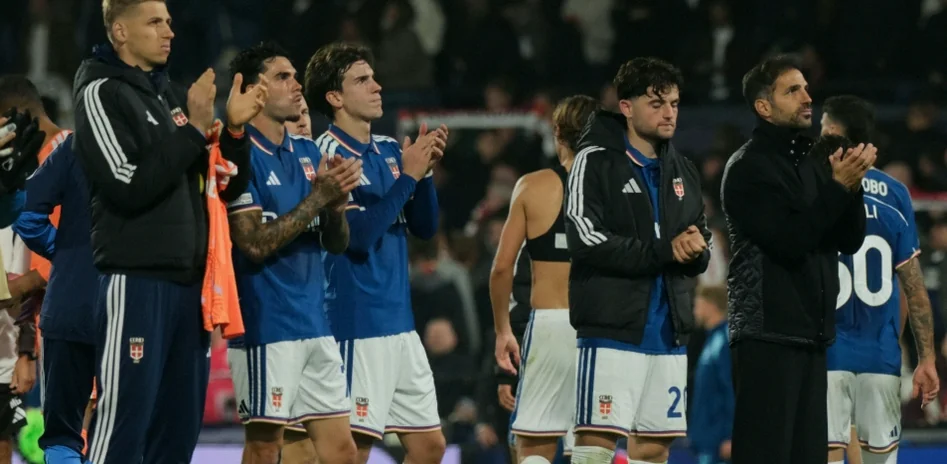
Como’s European night at De Kuip became a lesson in the weight of experience. Feyenoord’s home crowd, the occasion and the pressure of a major continental stadium exposed a young side still learning what such matches demand, leaving Cesc Fabregas to reflect on the value of lived experience after the defeat.
The coach and the club
Fabregas knows the feeling from the other side of a European night. He said that across 18 years as a player he featured in more than 110 Champions League matches and suffered many defeats of this kind. “The energy of a European stadium gives you something extra,” he said.
His message after the game returned repeatedly to one word: experience. Como’s players were confronted by an environment that cannot be recreated on the training ground, even by a coach with Fabregas’s own continental background. The defeat was not simply about youth or inexperience within the team; it was also shaped by the setting in Rotterdam.
Feyenoord’s support, known collectively as Het Legioen, has long been central to the identity of the club. The fans are symbolically represented by the retired number 12 shirt, a tribute to their role as the side’s extra presence on matchdays. Around the city’s canals, the build-up to the fixture carried the atmosphere of a full-day celebration before the noise became a decisive part of the evening inside De Kuip.
That support has not always been without controversy, including the serious vandalism in Rome several years ago involving the Barcaccia fountain. Yet during the 90 minutes against Como, the force of the home crowd was unmistakable.
A first European away day
For Como supporters, the trip had a very different character. It was the club’s first away journey of this kind, and many travelling fans embraced the occasion in Rotterdam’s canal-side restaurants and cafés. Their presence still represented commitment: following a team abroad is an expression of attachment, whatever the stage of its European development.
But De Kuip is an exceptionally difficult ground in which visiting support can make itself heard, and Como did not receive the same lift from the stands that Feyenoord found from theirs. That is not a criticism of the travelling contingent; few away ends can compete with the volume and history of Het Legioen in its own stadium.
The broader point for Como is that the club’s growth must extend beyond the pitch. Fabregas’s players, including Paz and the rest of the squad, need an atmosphere at the Stadio Sinigaglia capable of helping them through difficult passages of the season.
They return from Rotterdam after a month without a victory, at a moment when the relationship between team and public matters more than ever. Whether Sinigaglia can become a genuine factor in the club’s next step will be answered over time — and in the challenge posed by Manchester United.