Roma’s season now has an animated side story, told in Japanese dialogue and Roman dialect subtitles. Behind Spqrenders is Federico Cecchini, a 34-year-old Roma supporter whose cartoon shorts have turned the club’s weekly drama into a social-media serial.
Cecchini trained as an architect but says he has continued to see himself as an artist. His work combines writing, storyboards, illustrated panels and computer graphics, drawing on the anime that shaped a generation of Italian viewers.
Quick facts
- Spqrenders retells Roma stories through anime-style short videos.
- Federico Cecchini, 34, creates the ideas, scripts, storyboards and images.
- The characters speak Japanese, with subtitles written in Roman dialect.
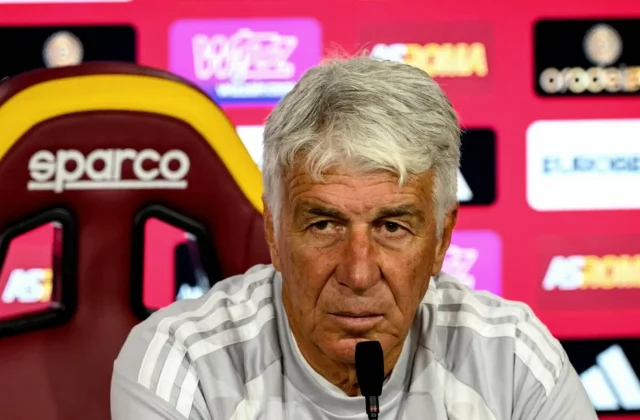
- Gian Piero Gasperini is portrayed as an uncompromising commander.
- Roma director D’Amico has become a central supporting figure in the series.
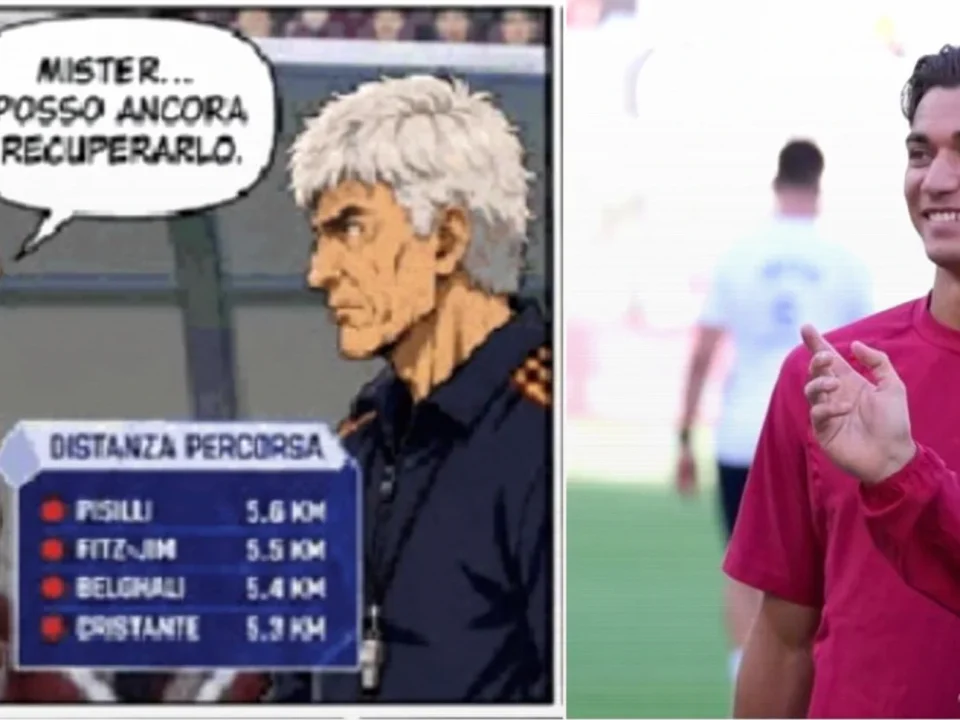
The references range from Captain Tsubasa, known in Italy as Holly e Benji, to Mila and Shiro, as well as the more combative imagery of Fist of the North Star. Cecchini sees a resemblance between Gasperini and Mr Mitamura, the stern volleyball coach from the latter series.
Artificial intelligence and digital tools are part of the production, though Cecchini insists they do not replace the author’s hand. He compares the process to pastry-making: technology can assist, but the creator must know precisely how to combine the ingredients and proportions.
In his version of Trigoria, Gasperini is a leader who expects to win and offers no concessions. That is why the coach has become the natural main character of the cartoons, a demanding figure carrying Roma’s ambitions from one episode to the next.
D’Amico is the other key presence. Cecchini calls him the series’ pillar: a discreet official who supports Gasperini and helps hold the club together, yet is also depicted as a shrewd operator capable of getting his way.
The contrast is deliberate. Cecchini points to Walter Sabatini’s highly theatrical press conferences as the opposite kind of sporting director, while D’Amico’s quieter public image has given the animator room to create a more understated comic character.
One Roma-Inter episode captures the tone. When D’Amico asks the coach how the team should manage the match, the animated Gasperini dismisses the idea: management, he replies, is for apartment blocks; Roma are there to attack.
The recurring plots have followed the small obsessions that grow around a club across a season. Bryan Cristante’s supposedly endless running has supplied one thread, while Dan Friedkin’s calmness and the debate over an inverted left-sided player have provided others. In Cecchini’s telling, that last issue has driven Gasperini close to madness.
Further episodes are already being prepared. Cecchini plans one involving Florenzi, affectionately labelled “grandma’s handsome boy”, and another centred on Malen’s absence from the national team, including an imagined Gasperini line to Xavi: “Did you think you could take my favourite?”
For now, the project remains a social-media production, although Cecchini would like to take it to television. He has been encouraged by the reactions of singer Carl Brave and Lulli, who has told him that the shorts are entertaining.
The attachment behind the work is older than the page itself. Cecchini says his father passed on an overwhelming love for Roma: a man who once wanted to be a footballer before working in banking, and who took his son to Roma dinners with Antonello Venditti and to the stadium with a drum.