Spain secured their second World Cup title in New Jersey, defeating Argentina 1-0 after extra time as Ferran Torres struck in the 106th minute to settle a tense final at MetLife Stadium.
Key takeaways
- Ferran Torres scored the decisive goal after a Pedro Porro cross and Nico Williams lay-off.
- Spain finished the tournament having conceded only once, with Charles De Ketelaere the sole opposing scorer in the quarter-finals.
- Argentina failed to register a shot on target, while Emiliano Martínez kept the score level until extra time.
- Enzo Fernández was sent off two minutes before the end of normal time for a challenge on Pau Cubarsí.
- Argentina lost Cristian Romero and Lisandro Martínez to injury and had used all their substitutions by the 70th minute.
Spain’s control brings a second star
The final followed a familiar Spanish pattern: possession, patient passing and a high defensive line that kept Argentina away from Unai Simón’s penalty area. Argentina tried to disrupt the rhythm through physical contact, stoppages and late challenges, but Luis de la Fuente’s side did not abandon their approach.
Simón’s only significant intervention came with his feet when Lionel Messi was sent through on goal. Argentina created two chances in extra time, but otherwise Spain restricted the Albiceleste severely. Their resistance was built around Aymeric Laporte, whose positioning, anticipation and distribution repeatedly gave Spain a composed route out from the back.
Spain had 12 attempts without scoring before the breakthrough. Martínez, Argentina’s goalkeeper, produced a succession of saves—some unconventional, but effective—to keep his team alive deep into the contest.
Then, 106 minutes into the final, Porro delivered from the right, Nico Williams helped the ball on and Ferran arrived to drive a left-footed finish into the net. The Valencia-born forward, who had searched for a goal throughout the competition, celebrated by damaging the corner flag. His extra-time winner came ten minutes earlier than Andrés Iniesta’s historic 116th-minute goal against the Netherlands in the 2010 final.
Spain had already thought they had taken the lead in the first period of extra time when Nico Williams scored, only for Slovenian referee Slavko Vinčić to disallow the goal. The decision was based on an apparent infringement involving Mikel Merino, although Merino was judged by Spain not to have made contact with either Nicolás Otamendi or Martínez.
The victory extended Spain’s record of major-tournament success built on control rather than direct play, adding this World Cup to the European Championship wins of 2008, 2012 and 2024, as well as the 2010 world title. Rodri, Fabián Ruiz, Laporte, Cubarsí, Lamine Yamal and Nico Williams were central to a side that maintained its technical identity under the greatest pressure.
A difficult final environment and Argentina’s late collapse
The MetLife crowd was heavily tilted towards Argentina, with an estimated nine supporters in their colours for every Spain fan. Yet Spain’s dominance after half-time and during extra time quietened the stadium as Argentina struggled to escape their own half.
The pitch was another major factor. Its slow, uneven surface had already drawn complaints from Brazil and France, and Spain repeatedly requested that it be watered. The condition of the grass made fast circulation harder and appeared to favour a more disruptive Argentine approach.
Argentina’s situation worsened through injury. Romero, their leading central defender, and Lisandro Martínez both had to leave the match, while the earlier loss of substitutes meant they had no changes remaining after the 70th minute. Spain’s relentless intensity had also taken a toll on previous opponents during the tournament: Manuel Ugarte of Uruguay, Nuno Mendes of Portugal, Thibaut Courtois of Belgium and William Saliba of France were among those forced off against them.
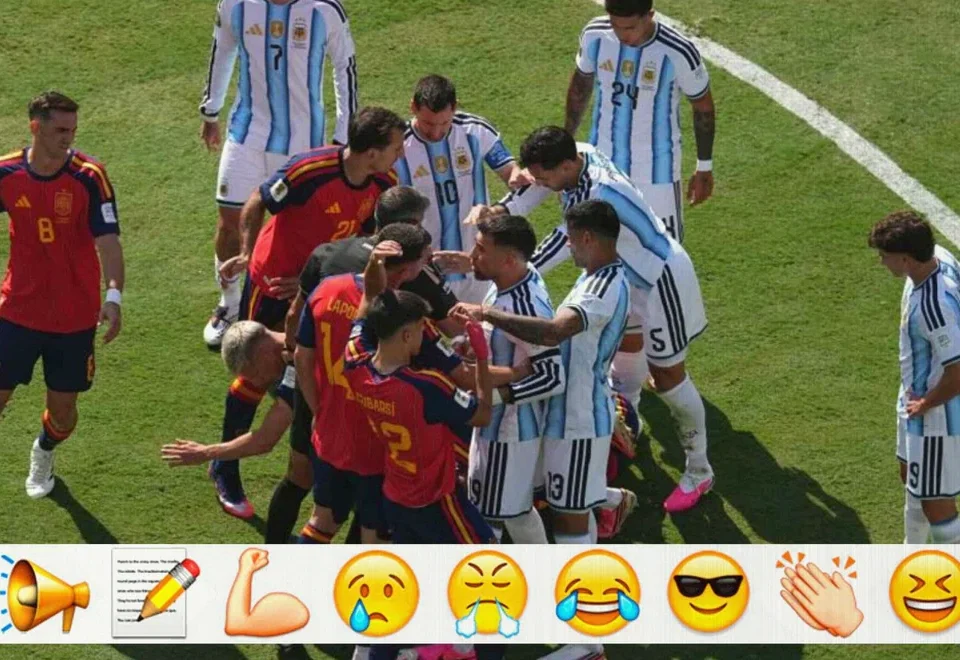
With two minutes left in normal time, Enzo Fernández collected a second yellow card after a high challenge on Cubarsí in a contested-ball situation. Argentina therefore played extra time with 10 men, echoing the 2010 final in South Africa, when the Netherlands lost John Heitinga to a red card before Iniesta’s winner.
The occasion was also marked by an unusually long interval. Although FIFA said the half-time entertainment would last 17 minutes, the break eventually ran to 27 minutes. The extended show added another interruption to a match already repeatedly halted by fouls and treatment.
Spain nevertheless kept the ball, held their shape and found the goal that turned Ferran Torres into the final’s defining figure. Their second star arrived through the same principles that carried them through the competition: calm possession, defensive authority and trust in the ball when the match threatened to become something else.
SEO title: Spain beat Argentina as Ferran Torres wins World Cup final in extra time
SEO description: Spain claimed a second World Cup title with a 1-0 extra-time victory over Argentina at MetLife Stadium, where Ferran Torres scored the decisive goal.