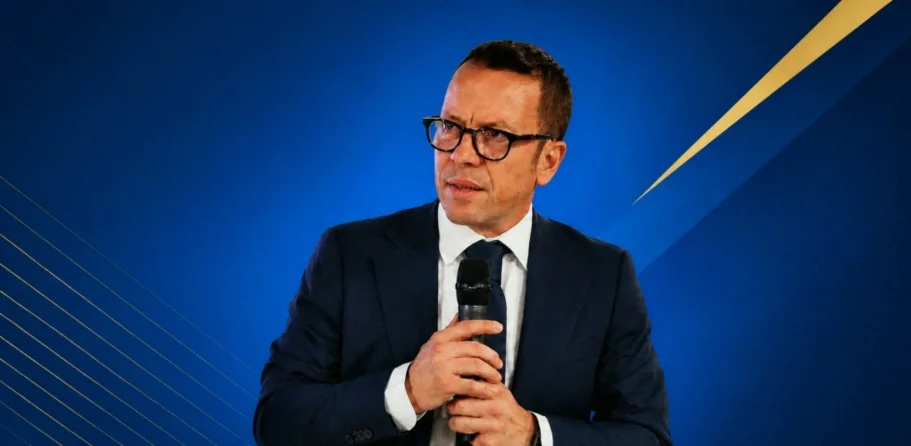
Francesco Massini has been elected president of the Italian Referees’ Association, taking permanent charge of an organisation he had already been leading on an interim basis since Antonio Zappi lost the office in May.
A vote after the interim period
- Zappi’s presidency ended after the CONI Board of Guarantee upheld his 13-month suspension, leaving Massini to guide the AIA as acting president.
- In the first ballot, held with 926 voters taking part, Massini received 323 votes, only two more than Carlo Pacifici’s 321. Narciso Pisacreta collected 278 votes, while four ballots were left blank.
- The contest moved to a runoff between Massini and Pacifici. Of the 912 members who cast a preference, Massini won 50.55%, against Pacifici’s 48.36%, with 10 blank ballots.
- After his election, Massini named Michele Affinito as vice-president.
A referee’s route to the AIA presidency
Born in Rome on 27 January 1969, Massini came through the game as an international futsal referee before building a long career in football. His Serie A debut came on 20 November 1999, when he officiated Milan’s 4-4 draw with Verona.
He went on to take charge of 201 Serie A matches and 110 international fixtures. In 2016 he joined the CAN 5, the national futsal refereeing body, before moving into a leading administrative role in Lazio.
As president of the Lazio regional referees’ committee, Massini was appointed Zappi’s senior deputy in 2024. That position placed him at the centre of the association’s response when the presidency became vacant, and now carries him into the role in his own right.
The programme ahead
Massini’s platform places financial independence for the AIA among its central objectives, alongside greater professional development for elite referees and changes to the association’s regulations.
He has also stressed the importance of the local Sections within the organisation and set out an ambition for a modern, transparent and participatory system of governance, closer to the association’s members. For Italian football, the election brings formal clarity after months of regency, while the new president begins with a mandate shaped by a close ballot and a promise of institutional reform.