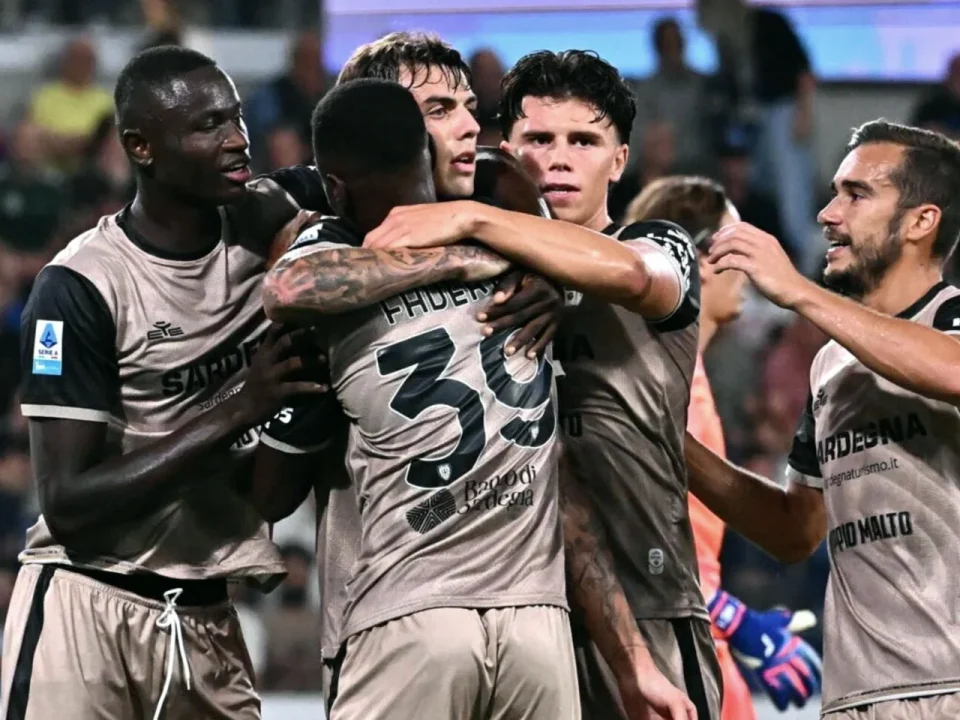
Cagliari’s bright opening to the season has brought an old Rossoblù voice back into the conversation. Franco Selvaggi, the forward remembered on the island as “Spadino”, sees a team playing with confidence but insists that the early table should not alter its habits. Four victories from the first five matches, fourth place and only two goals conceded – the best defensive record in Europe at this stage – have created understandable excitement, yet the 1982 World Cup winner believes the real test will be the response when the difficult afternoons arrive.
“I did not expect this, although I am very happy about it,” Selvaggi said of Fabio Pisacane’s side. “Cagliari are doing excellent things.” He recalled his own first season at the club, when the team climbed as high as second behind Inter before eventually finishing ninth. His message to the present squad is one of restraint: the club and coach are serious enough to manage the enthusiasm, but concentration must remain intact from one fixture to the next.
Selvaggi knows what it means to make an immediate impression in Sardinia. Signed at the urging of Gigi Riva, then a club official, he scored 12 league goals in his first Cagliari campaign and finished fourth in the scoring standings behind Roberto Bettega, Alessandro Altobelli and Paolo Rossi. Across three seasons, from 1979 to 1982, he struck 30 times and supplied plenty for others. In all, he recorded 183 Serie A appearances and 49 goals during an era he remembers as unforgiving: a 16-team division packed with leading players, where defenders marked tightly and did not always rely on fair methods.
His nickname came from a perceived resemblance to Raymond “Spike” Fonzarelli, Fonzie’s cousin in Happy Days. It suited a forward who combined pace, agility and technique, but also a player prepared to serve the collective. Even Pietro Vierchowod, among the most formidable Italian markers of his generation, admitted that Selvaggi could leave him dizzy and was extremely hard to contain.
That willingness to work without demanding the spotlight helped take him to Spain in 1982. Enzo Bearzot selected Selvaggi ahead of the more prolific Roberto Pruzzo, placing faith in Paolo Rossi after his suspension and preferring a forward unlikely to disturb the balance around his first choice. Selvaggi did not play a minute as Italy lifted the World Cup, yet he accepted his role even while Rossi struggled in the opening group phase. He remains rightly proud of a medal earned within a group he describes as technically strong, mentally resilient and strengthened rather than broken by criticism. The squad’s return to Rome with the trophy and President Sandro Pertini remains an unforgettable memory.
The former striker was also the first player from Basilicata to represent Italy, before Simone Zaza followed in 2014. He jokes that he made another contribution to the victorious camp by being the only player able to share a room with Marco Tardelli, who suffered from insomnia.
For the present Cagliari, Selvaggi identifies a coherent club environment as the foundation of the start. He sees a well-prepared side full of young footballers determined to establish themselves, supported by a united dressing-room atmosphere and competent leadership. The narrow win at Udinese may not have been fluent, he conceded, but it still showed the value of spirit, sacrifice and a crowd capable of driving the team forward.
Paul Mendy has particularly caught his attention. Selvaggi considers the striker quick, capable in front of goal and able to provide a focal point in attack, with a significant future ahead of him. He also defended Alessandro Romano after criticism followed Italy’s 2-0 Nations League defeat to Belgium. Romano was making his Azzurri debut against a strong opponent, Selvaggi noted, while the entire Italy side had performed poorly, especially before the interval. Judging the youngster too harshly would be excessive, he argued, because Romano has clear qualities and should recover quickly.
Captain Alessandro Deiola is another player Selvaggi rates highly. He believes the midfielder has shown that he can also operate effectively at centre-back and has the versatility to handle several tasks, while benefiting from a side functioning well as a whole. That collective order is why Selvaggi will not be drawn into European predictions. Satisfaction, he warns, can be dangerous, and Cagliari must approach each game with the urgency of the opening weekend rather than dwell on what has already been achieved.
In that respect, he hears an understandable echo of Pisacane’s own thinking. Cagliari president Tommaso Giulini took a calculated risk in appointing the coach, Selvaggi said, but Pisacane had already demonstrated his worth by securing survival comfortably last season. Now he is confirming those credentials, becoming a reference point at the club and showing the courage to trust younger players. Having been a player himself, Pisacane understands the hardship and traps that Serie A can bring.
Selvaggi’s affection for Cagliari has never faded. He recalls settling quickly into a place he found beautiful, although his stay ended with a move to Torino for 1.5 billion lire after president Alvaro Amarugi bluntly told him the club needed money and that he had to perform well in order to be sold. It was a substantial fee then, Selvaggi said, even if modern football finances have since moved beyond recognition. For now, the former forward’s advice to the current Rossoblù is simpler: enjoy the momentum, but keep their feet firmly on the ground.