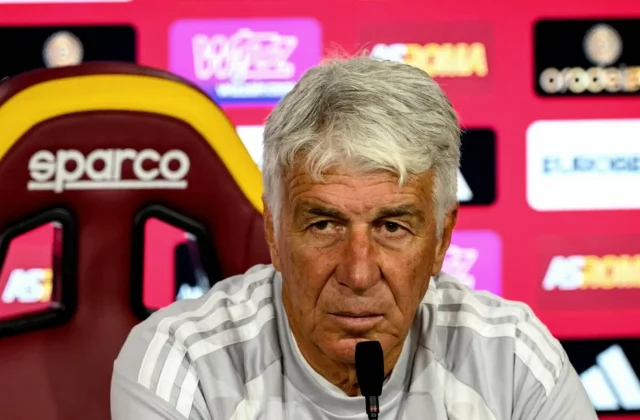
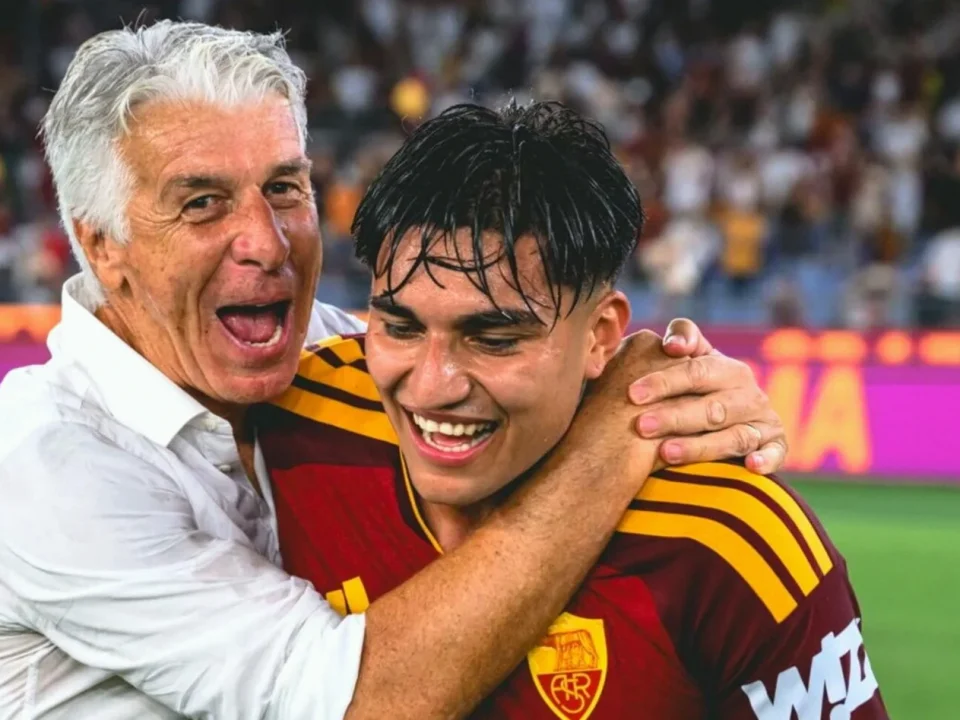
Roma’s early-season picture is being shaped as much by the players who wait as by those who start. Gian Piero Gasperini has built a group around the idea that he possesses 20 possible starters, and the mood at Trigoria reflects that message: selection is not treated as a fixed hierarchy, while those left out one week are generally handed an opening soon afterwards.
Key takeaways
- Gasperini is regularly using around 16 players per match, with rotation central to his management of the squad.
- Koulierakis, Rodrigo Mora and Santiago Castro represent a combined commitment of €102.5 million.
- The three recent arrivals have accumulated only 323 minutes across Roma’s first six matches.
- Mora has started against Fiorentina and Atalanta, while Castro has made encouraging substitute appearances in several games.
- Koulierakis has been restricted to 31 minutes so far, despite impressing during pre-season.
A costly queue behind Roma’s established names
There is little room for sentiment in Gasperini’s selection process, but there are obvious obstacles for those trying to force their way in. Mile Svilar, Gianluca Mancini, Mario Hermoso, Manu Koné, Bryan Cristante, Paulo Dybala and Donyell Malen are among the senior figures difficult to dislodge when fully fit.
That has left three expensive additions waiting for a more prominent role. Koulierakis cost €16.5 million, while Castro arrived for €36 million plus add-ons. Mora’s eventual cost is set at around €50 million: €25 million was paid immediately, with a further €25 million due either when he is sold or through instalments designed to reduce Porto’s resale percentage.
Together, that makes a €102.5 million investment currently spending much of its time among the substitutes. Mora has played 187 minutes, Castro 105 and Koulierakis 31, for a total of 323 minutes in the opening six fixtures.
Roma’s increased depth compared with last season rests largely on these recruitment choices, even if the overall squad is not especially large. Koulierakis, Mora and Castro have effectively taken the places of Ziolkowski, Venturino and Ferguson. The club did not bring in the wide player it had sought, but added Balerdi in defence, exchanged Molina for Celik, and replaced the trusted De Roon with El Aynaoui, who had been unsettled.
Different options for a long campaign
For Gasperini, the value of the new faces lies not simply in cover but in the possibility of changing the character of his side without weakening it. Mora can operate in a role comparable to Dybala’s, although Dybala’s current importance makes a direct replacement unlikely. Instead, the Portuguese player can alternate with Matías Soulé, offering a more technical, creative interpretation of the position, while the Argentine brings sharper bursts and greater acceleration.
Castro is not merely Malen’s deputy. Roma may eventually use both forwards together, with one fewer attacking midfielder, whether from the start or during a match. The coach is still weighing whether that adjustment can preserve the balance he wants from the team.
The former Bologna forward has made a positive impact against Fiorentina, Lecce and Atalanta, although his display against Torino was less convincing. He did not feature in the matches against Fenerbahçe or Inter.
Koulierakis has had the least visible introduction. He was one of the brighter performers in the summer preparations, but Hermoso’s strong form and Balerdi’s emergence have pushed him down the defensive order. Supporters have seen him only briefly against Fiorentina and Inter, yet those working with him daily believe he has the toughness and temperament required of a determined marker. Roma’s season will eventually ask for those qualities too.