Gianni Rivera’s memories of Sandro Mazzola return to a Milan in which the derby divided the city but never broke a friendship. With Mazzola gone, Rivera has looked back on a shared career that ran from their first meetings as teenagers to Italy’s complicated World Cup campaign in 1970, and to the work they did together for footballers away from the pitch.
Key takeaways
- Rivera remembered Mazzola as both an outstanding player and a close friend, separated only by their loyalty to Milan and Inter.
- Mazzola scored within the opening minute of his first derby in 1963, before Dino Sani earned Milan a 1-1 draw.
- Their much-discussed rivalry was, in Rivera’s view, amplified beyond its true scale.
- Rivera said he and Mazzola never understood why Italy alternated them during parts of the 1970 World Cup.
- The pair also helped establish the Italian Footballers’ Association in 1968, alongside Sergio Campana and other leading players.
A friendship shaped by Milan
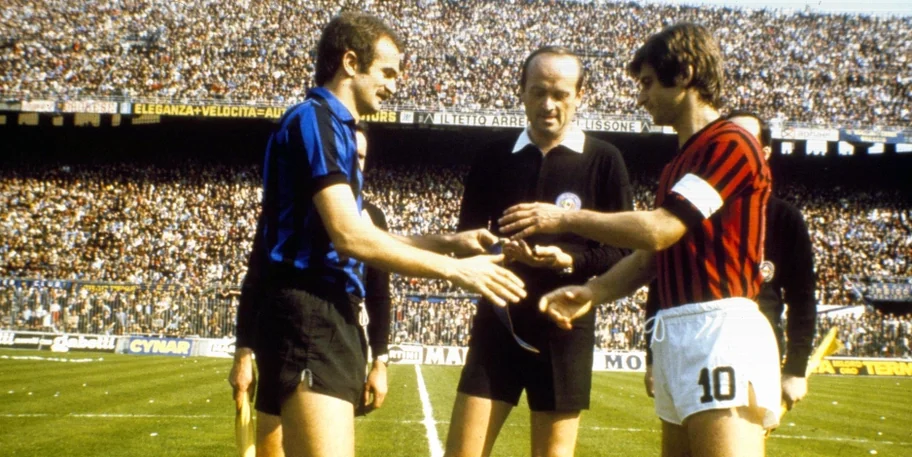
For Rivera, Mazzola belonged to a footballing city of European cups, league titles and packed derby afternoons. One wore Milan colours, the other represented Inter, but Rivera said the division was confined to the match itself. Both won major honours, competed for scoring records and became central figures in Milan’s great era of the 1960s.
The first derby has remained especially vivid for Rivera. Mazzola, making his debut in Milan-Inter, found the net after only seconds — later recorded as the 13th second — following a rapid combination with Mario Corso. Dino Sani then replied for Milan to make it 1-1.
That 1963 season carried significance for both men. Rivera won the European Cup with Milan, while Mazzola celebrated the Scudetto with Inter. They also made their first Italy appearance together at San Siro, against Brazil.
Rivera recalled that match with Gilmar in goal for the visitors and Giovanni Trapattoni marking Pelé. Although Rivera was Italy’s designated penalty taker, he handed the ball to Mazzola and invited him to take it. Mazzola scored.
Rivera was 19 and Mazzola a year older. In his recollection, it was a time when the game felt joyful and Milanese clubs were reaching the summit of Europe: Milan won their first European Cup, then Inter claimed their second the following year.
On the benches stood Nereo Rocco and Helenio Herrera, two figures who gave the rivalry another layer. Rivera described their exchanges as part of the spectacle, while stressing that the competition between the clubs was essentially respectful even when derbies became hard-fought. There were occasional punches, he said, but nothing that defined the relationship between the sides.
The supposed Rivera-Mazzola duel, meanwhile, was not as absolute as later retellings suggested. Rivera felt that it added spice to the football conversation and suited everyone involved, including the players, but did not reflect the regard the two had for each other.
The unresolved Mexico 1970 question
The most enduring image of their Italy careers remains the “staffetta”, the arrangement used by coach Ferruccio Valcareggi at the 1970 World Cup in Mexico. Mazzola would play one phase of a match, Rivera another. Rivera’s view has not changed: they could have played together.
Before Mexico, and again afterwards, the two were regularly selected in the same Italy side. Their contrasting qualities, Rivera argued, made coexistence entirely possible. Pelé shared that assessment, once expressing surprise that Italy possessed both players but did not field them together.
Rivera said neither he nor Mazzola ever received an explanation that made sense. Altitude was among the theories, with Italy playing at around 2,000 metres, but the arrangement was limited. Against Israel, Rivera alternated with Angelo Domenghini while Mazzola played.
In the 4-1 win over Mexico, Rivera replaced Mazzola and scored, but he believed Mazzola had played well enough to remain on the field. The same concern applied to the famous 4-3 extra-time victory over West Germany, when Rivera again came on after Mazzola had left. Rivera’s decisive contribution did not alter his belief that both could have remained involved.
The final against Brazil brought the most painful version of the episode. Italy lost 4-1, and Rivera came on for Roberto Boninsegna only late in the match, with Brazil already 3-1 ahead before adding a fourth soon afterwards. He spent six minutes on the pitch. Rivera suggested Valcareggi may have believed that six minutes would be enough for him to turn the final.
There was confusion even on the touchline. Rivera recalled Mazzola taking off his boots during the first half, only for Valcareggi to rebuke him and insist that the coach would decide who was substituted. Mazzola put them back on, while neither player was clear about whether the change would happen. In later years, they returned to playing together for Italy.
Mazzola would later joke that six minutes were sufficient for Rivera — just not against Inter. Rivera took that as a sign of mutual esteem. They remained in contact until recent times, exchanging telephone messages and speaking about far more than old matches.
That wider bond included their role in the creation of the Italian Footballers’ Association in 1968. Led by Sergio Campana, the group also included Giacomo Bulgarelli, Francesco Castano, Giancarlo De Sisti and Giacomo Losi. Rivera said the leading players were already protected by good contracts; the aim was to represent younger and less secure footballers and to improve conditions across the profession.
For Rivera, that work was part of what made the Mazzola years larger than a derby rivalry. In a period of cultural, economic and social change in Italy, they helped shift Italian football beyond the game itself. His hope is that San Siro will remember their derbies with the same affection that endured between two opponents who became lifelong friends.