Greece step into a new tier on Thursday night, carrying a front line shaped by academy pitches rather than old memories of 2004. Their first match in Nations League A, against Serbia at 20:45, arrives with a generation of attackers beginning to give the national side a different horizon.
The move
Twenty-two years after Greece stunned Europe by winning Euro 2004, the country will make its debut in the top Nations League division. The squad has not appeared at a European Championship since 2012 or a World Cup since 2014, but its promotion comes as a group of young forwards establish themselves at major clubs.
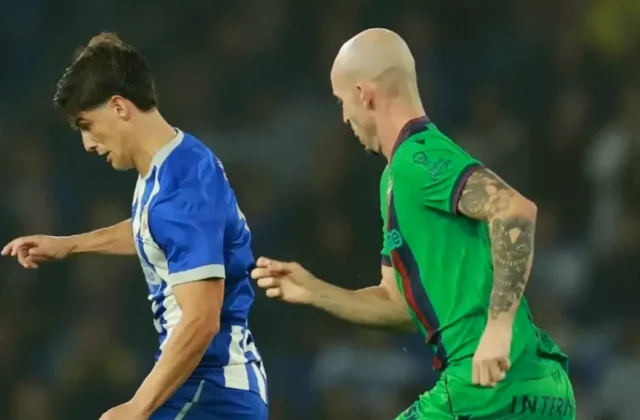
Arsenal’s 24-year-old Christos Tzolis, Borussia Dortmund’s 18-year-old Konstantinos Karetsas and Brighton’s 19-year-old Charalampos Kostoulas are expected to be central figures against Serbia. None was old enough to properly experience Greece’s European triumph in Portugal.
The attacking pool also includes Dortmund midfielder Giannis Konstantelias, 23, and Brighton striker Stefanos Tzimas, 20, although both are unavailable through injury.
Karetsas developed in Belgium, while the other players came through Greek football. Their emergence reflects a stronger youth focus among the country’s leading clubs and a broader attempt to bring order to player development.
Academies producing a new Greece
Olympiacos have increased their investment in youth development under owner Evangelos Marinakis. The club won the UEFA Youth League in 2024, becoming the first Greek side to lift the competition, and Kostoulas was among the products of that team.
He quickly moved into Olympiacos’ senior ranks before joining Brighton in the summer of 2025 in a deal worth about €35 million.
PAOK also gave Tzolis his pathway into senior football. His route was less direct, but he finished last season as Europe’s leading assist provider with Club Brugge before completing an approximately €40 million move to Arsenal this summer.
A national development plan
The Hellenic Football Federation presented the main points of its Anagennissi programme, meaning “Renaissance”, in January 2026. The plan is designed to improve the way young players are trained and introduced to professional football.
Konstantinos Vrakas, who leads the project, has described the target profile as an “intelligent warrior player”: one capable of exploiting space and being ruthless in duels.
The programme changes match formats through the age groups. Full 11-a-side football begins only at under-14 level, with fewer players used in younger categories before the numbers increase gradually.
It also seeks to create clearer senior opportunities. Greek Cup teams must keep at least one home-grown under-21 player on the pitch at all times, while every third-tier side must start a minimum of two under-18 players.
Vrakas believes sustained commitment could change Greece’s standing. “If we remain loyal to the plan and persevere, we can be among Europe’s leading teams in ten years,” he said.
The French season around it
There is no Ligue 1 connection in this Greek squad’s immediate story, but its importance is familiar across the French game: clubs and national teams are increasingly judged by whether academy investment becomes first-team minutes, transfers and international depth.
For Greece, Thursday’s meeting with Serbia is the first visible test of that longer project. Tzolis, Karetsas and Kostoulas are not yet the finished answer, but Nations League A offers them a stage Greece have waited years to reach.