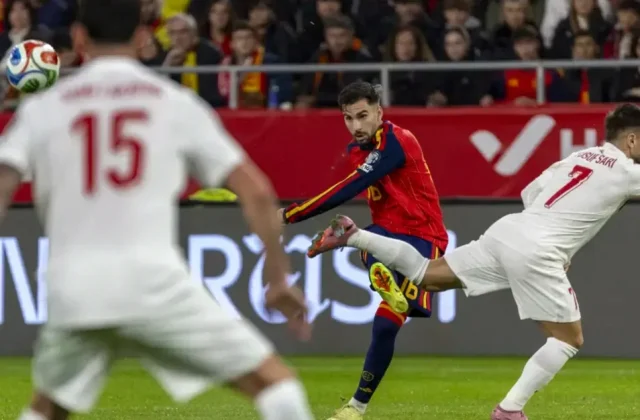
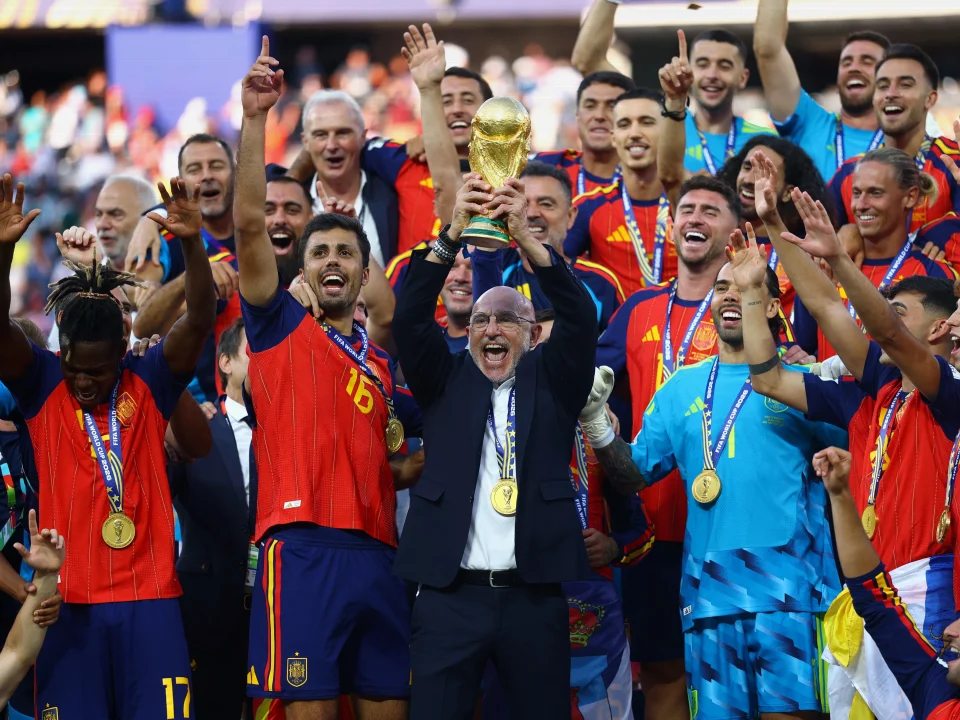
Madrid is celebrating a national side that has moved from continental champion to world champion, while the Spanish game’s wider development network is receiving fresh attention. Spain, winners of Euro 2024 and the 2026 World Cup, return during this international window as FIFA’s top-ranked team, supported by a player-production system linking LaLiga clubs and the Spanish Football Federation.
The news from the club system
Spain’s current strength is visible beyond the silverware. Six Spaniards feature among the 30 nominees for the 2026 Ballon d’Or, the largest representation of any country and one fifth of the shortlist. Spanish football also supplies four of the five candidates for the men’s coaching award.
The senior team had already won the 2022/23 Nations League, having finished runners-up in both 2020/21 and 2024/25. After their European Championship triumph in 2024, Spain’s Olympic generation added gold in Paris the following month.
Across senior and youth men’s national teams, Spain have collected 24 European or world titles since 2000. That record rests on a broad pathway rather than only the resources of the country’s biggest institutions: professional and smaller clubs, local academies, regional competitions, schools, coaches and families all form part of the same talent network.
Abel Merino Orozco, an education professor at the University of Burgos, described Spain’s model as a territorial system in which training, scouting and guidance are closely connected. He argued that its durability comes from the relationship between all those parts, not solely from elite clubs.
Coaching education and shared reference frameworks have been a priority in Spain since at least 1990. That common grounding allows coaches to work from related principles while helping young players develop. A year-round competition calendar, designed for each age group from academy football through to the professional game, is another key part of the structure.
There was, however, no collective youth-development strategy in place until the middle of the 2010s, despite the senior side’s earlier European and World Cup successes. Work on a common approach began in 2015, and after consultation with clubs in the first and second divisions, LaLiga launched its National Plan for the Optimisation and Improvement of Youth Categories in 2022.
Juan Florit, LaLiga’s head of football projects, said the league recognised that past success could not guarantee competitiveness for another decade. The plan established shared coordination, assessment and exchange of knowledge, while setting targets for improved professional structures, coach education and the broader care of young athletes.
Its second phase began in January and is initially scheduled to run until 2032. Clubs are measured against common standards, but each is also given a tailored strategy. There is no compulsory national curriculum, with teams retaining their own methods.
Florit said academy directors overwhelmingly value producing first-team footballers above winning youth championships. “The player is the project,” he said, stressing that league tables and youth results should not become the central purpose.
- From under-8 to under-12 level, development centres on technical coordination, comfort in possession and a basic understanding of the game.
- Between under-13 and under-16, tactical and cognitive work becomes more significant, alongside increasingly individual programmes.
- From under-17 through to senior football, physical and psychological preparation takes a larger role as players approach first-team transition.
LaLiga clubs have expanded youth facilities and staffing with support from the competition. No overall figure was provided for the investment in academy football.
The connection with the federation is particularly clear in the new world champions. Of the 26 players in Spain’s 2026 World Cup squad, 25 came through LaLiga academies across 11 different clubs. Goalkeeper David Raya was the sole exception: he started at UE Cornellà in Spain before moving to Blackburn Rovers.
Florit said national teams benefit not merely when clubs train young players, but when they offer them meaningful top-level minutes. In the 2025/26 season, academy-developed players accounted for an average 20.1% of all minutes in LaLiga, the highest share across Europe’s five major leagues.
De la Fuente’s route to 2032
Spain have tied the senior side’s future to Luis de la Fuente, extending his contract until 2032 after a previous renewal had run through 2028. The coach has worked inside the federation since taking charge of the under-19s in 2013.
His youth-team record includes the 2015 European Under-19 Championship and the 2018 Mediterranean Games with the under-18 side. He subsequently coached Spain’s under-21 and Olympic teams before being appointed senior manager in December 2022.
Spain now hold the longest unbeaten sequence in the history of international football, having gone 38 matches without defeat. Under De la Fuente, the side’s overall return is 38 wins, 10 draws and two losses, with a Nations League, a European Championship and the latest World Cup secured during his tenure.
Unai Simón, Rodri and Mikel Merino attended the ceremony for De la Fuente’s new deal. All three had previously played under him in Spain’s age-group teams, as had eight other members of the latest senior squad.
Before the World Cup final, De la Fuente told his players that Spain had become Europe’s benchmark and must now aim to set the standard globally. After the victory, he insisted the team would not settle for its present achievements.
“We must keep improving and keep competing to win,” De la Fuente said. “Success means being ready to compete for victory. We are not satisfied with what we have achieved; the best is still ahead.”