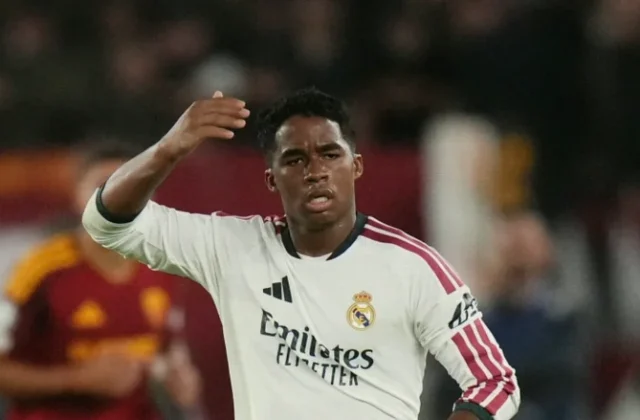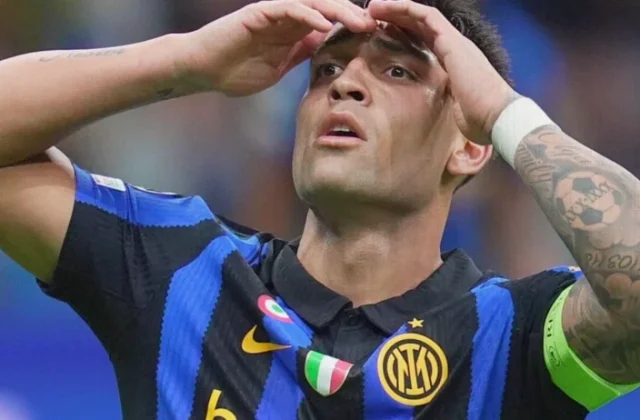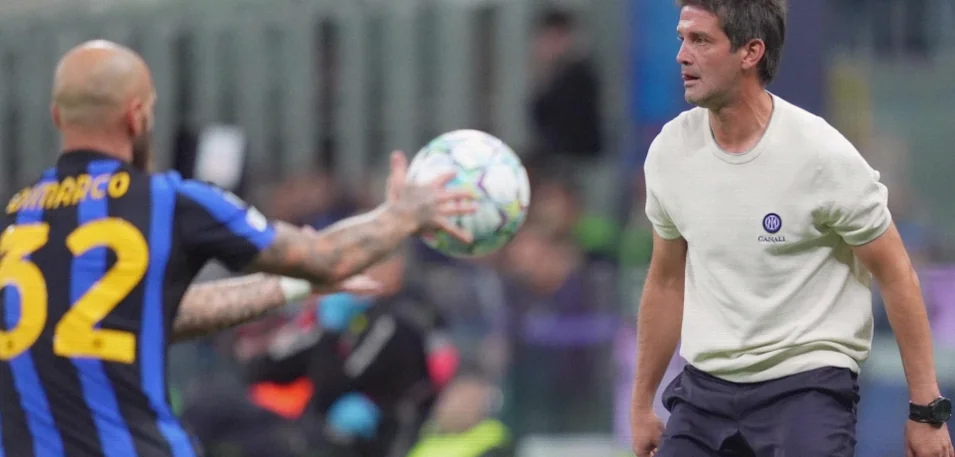
Inter’s domestic authority under Cristian Chivu has not travelled into Europe with the same certainty. The latest 4-0 defeat to Club Brugge has sharpened a problem that now stretches across two Champions League campaigns: a side capable of imposing itself in Serie A is conceding too much, too often, when the continental standard rises.
Key takeaways
- Club Brugge’s four goals made it four successive Champions League defeats for Inter, a club record.
- Inter have also lost four European home matches in a row and seven of their past eight games in the competition.
- Chivu’s first four Champions League matches as Inter coach brought four wins, 12 points and an 11-1 aggregate score.
- Defensive figures from the defeats to Real Madrid and Brugge are alarming: 34 shots faced, six goals conceded and 0.21 expected goals allowed per shot.
- Opponents have recorded 83 touches inside Inter’s penalty area in those two matches, with only Lille posting a worse total.
From a strong opening to a European slide
There was a time, not long ago, when Chivu’s European start appeared to match Inter’s wider status in Italy. His return to the Champions League as a coach began with a 2-0 win away at Ajax, decided by a Marcus Thuram double. Successes then followed against Slavia Prague, Union Saint-Gilloise and Kairat Almaty.
Those opening fixtures produced a perfect return: four victories from four, 11 goals scored and only one conceded. The schedule was favourable, with Inter facing opponents below them in technical quality, and there was always an understanding that the direct route into the round of 16 needed to be secured in that period. Still, the team had done more than merely avoid trouble.
The decline began after the Kairat match. Inter lost late at Atletico Madrid’s Metropolitano, then suffered a home defeat to Liverpool after an 88th-minute penalty that was widely viewed as controversial. Arsenal then won 3-1 at San Siro, before Inter produced a response in Dortmund that was not enough to prevent a play-off place.
The brighter results of Chivu’s European spell were therefore concentrated between last September and the first half of November. The subsequent play-off tie against Bodo/Glimt brought defeats in Norway and in Milan, ending Inter’s campaign before the last 16.
The new edition has begun on the same difficult course. Defeats against Real Madrid and Brugge mean Inter have opened with two losses, something that previously occurred only in 2006-07 under Roberto Mancini, although that team ultimately reached the round of 16.
A defence under pressure
The concern is not limited to results. Across the matches with Real Madrid and Brugge, Inter have permitted 0.21 expected goals for each opposition shot, the highest figure among the leading European clubs over the period measured. The numbers point to the quality of chances allowed rather than simply an unfortunate run of finishing.
Inter’s penalty area has also become too accessible. Rivals have touched the ball 83 times within the final 16 metres of the pitch, a total surpassed only by Lille, who have faced Arsenal and Real Betis. Lille’s opposition may have been stronger overall, but Inter’s own figures remain hard to dismiss.
Against Madrid and Brugge, the Nerazzurri conceded 34 attempts and six goals. Four of those arrived at home against Brugge. Only two previous Inter matches have seen the net hit more frequently: against Arsenal in 2003 and Schalke in 2011.
Goalkeeper Pepo Martinez has borne a significant share of responsibility, but the issue extends beyond one player. Inter’s defensive unit no longer offers the same assurance as last season. In Serie A, Chivu’s side have repeatedly found ways to recover from setbacks; in the Champions League, mistakes are less easily repaired.
There is an unwanted numerical echo around this run. Chivu wore No. 4 during his first Italian season as a player before changing to No. 13 at Roma and later No. 26 at Inter. Now the number has returned in less welcome form: four goals conceded to Brugge, four straight Champions League defeats and four consecutive home losses in Europe. Chivu’s task is to turn that pattern around before Inter’s continental season slips further away from their domestic ambitions.