Inter’s season has already produced the kind of numbers that make a title challenge feel less settled than it should. Cristian Chivu’s side have scored freely, reaching 22 goals across eight matches, but the other side of the balance sheet is becoming impossible to ignore: 14 conceded in the same period.
A sharp change from last season
- Inter opened their Serie A campaign by allowing eight goals in six league fixtures.
- In the Champions League, they then conceded six times across two matches, leaving them without a point in the competition.
- The 4-0 defeat to Club Brugge at San Siro on 13 October pushed the total to 14 goals allowed in eight games.
- For comparison, Inter did not reach 14 league goals conceded last season until 4 January 2026, after the turn of the year.
The contrast is stark. A side with ambitions of competing on every front is currently conceding at close to two goals per match. Recovering such ground in Serie A remains possible over a long calendar, but the Champions League offers far less room for correction after two defeats.
There has not been an obvious structural revolution to explain the decline. Chivu has broadly retained the same system, while the defensive personnel have also remained familiar. Francesco Acerbi and Stefan de Vrij have departed, although neither had been an undisputed starter, while John Stones and Benjamin Pavard have been added to the options. The most commonly used back three of Yann Bisseck, Manuel Akanji and Alessandro Bastoni has remained in place.
The cost of Inter’s attacking ambition
Chivu’s football belongs to the modern European tendency towards attack: a team seeks to score more rather than merely restrict the opponent. Inter’s 22 goals show that the approach has brought attacking returns, but it has also increased the demands on the players asked to cover the defensive transitions.
Central defenders are often required to step into the opposition half and support attacking moves. That can leave less protection when possession is lost, and the problems have not been confined to the collective shape.
- Bisseck has started the campaign well individually, but has looked vulnerable on recovery runs after joining attacks.
- Bastoni has repeatedly found himself under pressure.
- Akanji has not appeared close to his previous level, with his condition after the World Cup still a concern in mid-October.
- Stones’ adaptation has been delayed by fitness issues, while Djed Spence has also had physical problems.
- Pavard is viewed principally as a rotation option.
- Carlos Augusto has offered the clearest reliability, regardless of the role he has been given.
Problems at both ends of the defensive unit
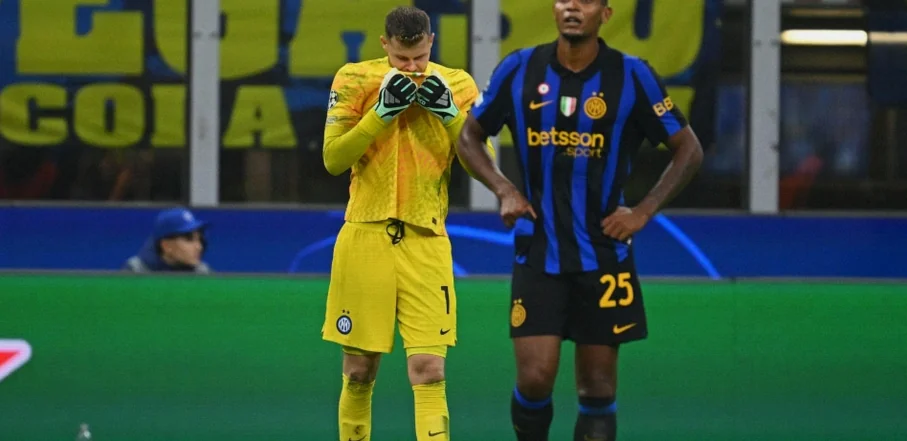
The goalkeeper has also played a part. Pepo Martinez has made a series of costly mistakes, leaving Inter without the margin for error expected from a team looking to improve on last season’s domestic double.
That is the central tension of Chivu’s early campaign. Inter remain capable of overwhelming opponents in attack, but the security which underpinned last year’s successes has gone missing. The formation has not fundamentally changed and much of the personnel is recognisable, yet the goals against have arrived months earlier than they did a year ago.
Winning two trophies again would still represent a strong season. To do so, however, Inter need their defensive record to stop resembling an exception and start looking like the foundation of a team built to last through spring.