Inter’s season is being written in two different registers. In Serie A, the Nerazzurri remain the deepest and strongest side in the field, with the possibility of another title becoming clearer if Roma’s challenge fades more quickly than Lazio’s. In Europe, however, the picture has been far less convincing: two Champions League matches have brought two defeats, within a sequence of seven losses in the last eight games in the competition.
The coach and the club
The contrast does not necessarily amount to a contradiction. Italian football and the Champions League demand different levels of authority, and Inter’s domestic superiority has not been matched by a squad capable of imposing itself among Europe’s leading clubs. The club had spoken confidently about competing for the European Cup, but its route now appears likely to run through the play-offs unless there is an unlikely turnaround.
Inter’s weaknesses have been most visible at the back. The goalkeeping situation is a concern, while the defensive unit has looked less reliable than the midfield and attacking departments. Those imbalances were already apparent during the summer planning, when the gap between the defence and the rest of the team could be identified.
Josep Martinez has not provided an adequate alternative to Yann Sommer, particularly when measured against the goalkeeper he replaced. The group of English players brought in during the summer has also made little impact so far. More broadly, Inter’s current level does not appear sufficient for the very highest European stage.
That brings the discussion back to the club’s structure following Piero Ausilio’s departure. His absence removes a senior sporting figure who could absorb criticism for decisions made away from matchday: recruitment, squad construction and the longer-term direction of the team. With Ausilio no longer there, responsibility for the planning is harder to separate from the leadership above him.
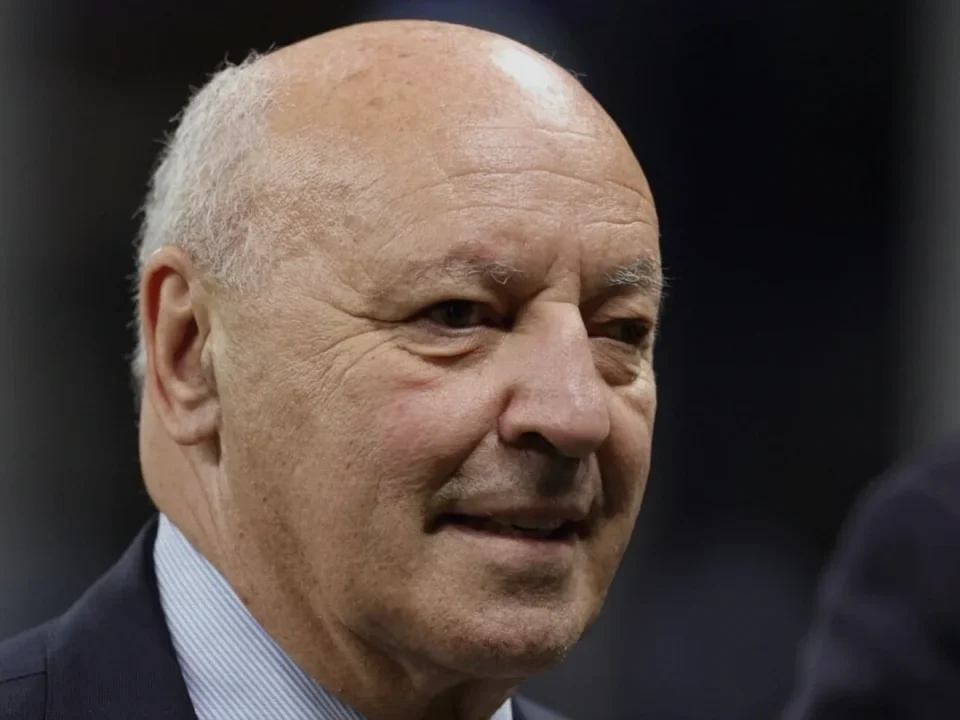
Beppe Marotta remains one of Italian football’s most experienced and capable executives, but Inter has increasingly been shaped around his authority as president and principal decision-maker. His influence extends beyond the club, through his involvement in the wider political life of the game, from FIGC matters to discussions around the national-team coach and the federation’s new general secretary.
The question is whether that wider role has taken him too far from the daily reality of his own squad. Inter may need not another high-profile signing, but a more constant sporting presence behind the scenes: a leader close enough to the players, the dressing room and the football department to recognise problems before they become results.
Marotta has seen how quickly authority can be reshaped at Juventus. Andrea Agnelli’s decision to move away from the experience represented by Marotta was intended to create a younger executive culture, but that chapter ended badly for the Turin club. At Inter, the lesson may be different: even a central figure must sometimes step back from being indispensable and restore balance around him.
For now, the league remains Inter’s more forgiving arena. Their squad still gives them a clear advantage over most domestic rivals, and the title race may increasingly depend on whether Roma and Lazio can sustain their pursuit. Europe, though, has exposed a club that must address its defensive shortcomings and rediscover a more complete connection between the boardroom and the pitch.