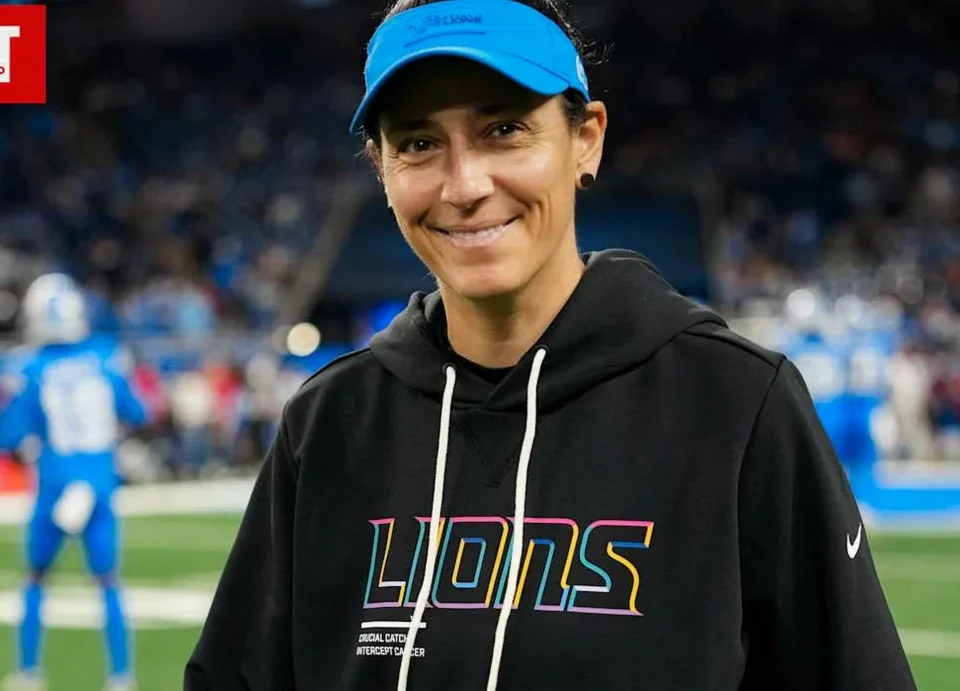
Detroit Lions assistant strength and conditioning coach and director of sports science Jill Costanza built her NFL career through a path that moved from basketball and college performance training to military human-performance programs and, ultimately, Dan Campbell’s staff in Detroit.
From basketball to the Lions
- Costanza initially pursued a future in sports marketing, despite her father encouraging her to consider coaching basketball, the sport she played.
- Her direction changed after repeated ACL injuries among players on a girls’ team led her to study performance training. A presentation by Todd Wright, then the University of Texas head strength coach, showed her a nontraditional approach to athlete development.
- She earned a master’s degree in strength and conditioning from the University of Miami, choosing its sport-performance focus over a broader exercise physiology route.
- Costanza later returned to Texas for an internship before entering the military’s expanding human-performance field.
- She spent three years working with Army special forces and two more with Air Force special forces, gaining particular experience in sports science.
- During that period, she worked with Mike Clark, who had served as Campbell’s strength coach at Texas A&M while the current Lions head coach was a player there.
- When Campbell became Detroit’s head coach, Clark was hired as the Lions’ human performance director and asked Costanza to join the staff.
A dual role in Detroit
Costanza’s job combines direct work in the weight room and on the practice field with the data-driven side of player performance. While she said sports science has become a valuable part of her background, much of her day remains centered on coaching players through warmups, lifting sessions, practice preparation and recovery work.
Her sports-science responsibilities include interpreting data from technology systems, understanding why the club tracks particular measures and translating those findings into usable information for coaches. The information can help evaluate training plans, identify needed adjustments and assist return-to-play decisions for injured players.
Monday begins with an examination of game data and GPS readings, with the staff identifying players who carried especially demanding workloads. Players also complete recovery lifts that day.
Tuesday is the players’ scheduled off day, giving Costanza time to meet with head strength and conditioning coach Josh Schuler, review injuries and begin mapping out plans for players working their way back.
Wednesday and Thursday are the heaviest practice days. Players lift before practice, and those who did not train that morning can complete a session afterward. Costanza then reviews practice information and prepares updates for Campbell on individual workload levels.
Individual plans and daily demands
Costanza said the most difficult part of the job is tailoring work for every player. Injury histories can leave certain athletes vulnerable to new issues, requiring the staff to identify physical weak points and find solutions that fit each player rather than relying on a single program for everyone.
She also pointed to the sustained mental demand of an NFL season, saying the staff must consistently make sure players receive the preparation, recovery and support they need.
Costanza credits authenticity and a focus on personal development for her progress. She said she has not chased jobs, instead concentrating on her own growth and trusting that suitable opportunities would emerge.
NFC Championship trip stands out
One of Costanza’s defining Lions memories came during Detroit’s trip to San Francisco for the NFC Championship Game. Although the result was disappointing for the Lions, she called reaching that stage a major career moment given the franchise’s history and the significance of the postseason run.
Looking ahead, Costanza sees herself moving into a leadership position, ideally a director-level role. She said women should not merely be present to satisfy a requirement, emphasizing that women already are making meaningful contributions across professional football.
Mentors shaped her approach
Costanza identified Sandy Abney and former Texas strength and conditioning coach Shaun McPherson as key mentors, along with Clark and Schuler.
McPherson, she said, pushed her into responsibility early by placing her in charge of team warmups and workouts. Those assignments taught her how to coach, build trust with athletes and be ready when a larger opportunity arrived.
Costanza also credited Schuler for providing support within the Lions’ performance department and Clark for bringing her to Detroit.
Advice for women entering football
Costanza said careers in football rarely follow a straight line and urged women not to view a delayed opportunity as a failure. Experience outside the sport, she said, can strengthen communication skills, empathy, cultural awareness and emotional intelligence.
Her own NFL opportunity did not arrive until she was 41, and she hopes that serves as encouragement for women at any stage of their careers. Her message was simple: remain connected to your goals, value every stop along the way and understand that it is not too late to pursue a new path.
The most rewarding part of her work, Costanza said, is hearing from athletes who feel better or believe they are performing at their best. She acknowledged that some of her methods differ from conventional strength-and-conditioning practice, but player feedback has reinforced her belief that the approach is helping them not only play better, but also regain confidence and hope.