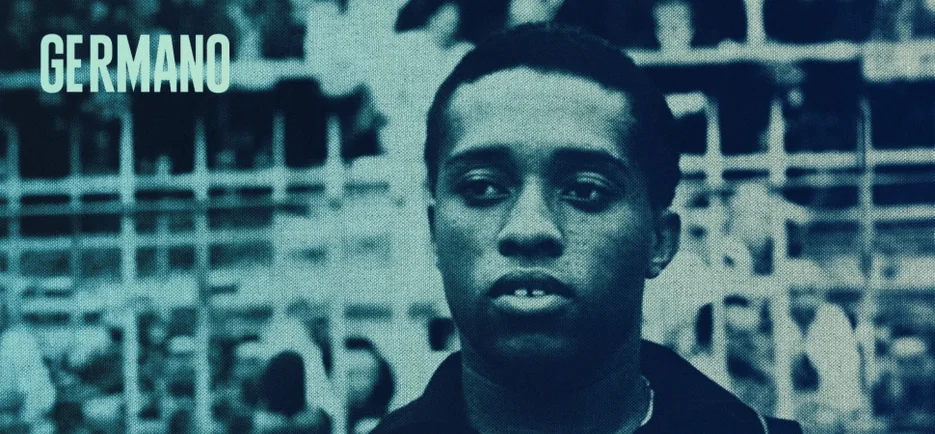
José Germano de Sales arrived at Milan in the summer of 1962 as a 20-year-old Brazilian forward with promise, a $150,000 fee behind him and the backing of Nereo Rocco, Dino Sani and José Altafini. His Italian chapter, however, became about far more than the football he was meant to play: isolation at Milanello, racism from within the game and a relationship that challenged one of the country’s most powerful industrial families.
Germano had emerged at Flamengo, where his pace, dribbling and technical ability had marked him as a player of considerable potential. Milan, then champions of Italy, expected a useful attacking addition. Rocco, serving as Gipo Viani’s assistant, was convinced by his talent. Yet the young forward found little of the support required by a player arriving alone from Brazil.
A difficult beginning at the champions
Rather than being given a home in Milan, Germano was housed at the Milanello training complex. The arrangement left him spending virtually all day at the club’s base, separated from city life and from the familiarity of home. A footballer known in Rio de Janeiro found himself increasingly alone in a new country.
The dressing-room environment did not ease that transition. While Rocco continued to value the Brazilian’s qualities, Viani publicly mocked him with racist names, including “Bongo Bongo” and “Banana”. The insults drew laughter from others around the squad, adding to the isolation of a player who was barely out of his teens.
His league debut should have offered a more hopeful turning point. Germano started in the number 11 shirt against Venezia at San Siro and scored twice in a 3-3 draw. Milan’s goalkeeper Ghezzi made three errors in a disappointing afternoon for the holders, but Germano’s goals prevented defeat. Even so, he was abused by sections of the crowd throughout the match, while newspaper coverage focused on his mistakes rather than the contribution of his two goals. One report used a racist description of the forward.
For Germano, the promise of a major Italian move was being swallowed by an atmosphere in which integration had become increasingly difficult.
The meeting beyond Milanello
One afternoon, Germano climbed over the Milanello fence and walked through the surrounding fields. There he came across Giovanna Agusta, a young rider known as the Contessina. She was the daughter of Domenico Agusta, the formidable industrialist whose family controlled businesses in motorcycles and helicopters.
Their first conversations were conducted through a mixture of Italian and Brazilian Portuguese. They continued to meet, then fell in love. Giovanna, still underage, announced their engagement, bringing immediate opposition from her father.
Domenico Agusta ruled his family empire with authority and did not accept the prospect of his daughter marrying a Black Brazilian footballer. At the time, it was said that his influence had played a part in Germano leaving Milan for Genoa in November 1962. Whatever the precise role behind the transfer, the relationship survived the end of Germano’s stay with the Rossoneri.
Germano later returned to Brazil to continue his career, while Giovanna promised that she would wait for him and marry him.
A wedding fought in court
In 1966, Germano returned to Europe after signing for Standard Liège. Giovanna moved to Belgium to join him, and the pair lived modestly in a small central Liège boarding house while planning their future together.
They set 11 March 1967 as their wedding date. On the eve of the ceremony, Germano received a formal legal objection delivered by a Belgian bailiff on behalf of Domenico Agusta. Rather than accept the marriage, Agusta’s lawyers took the matter to court against his daughter’s wishes.
The hearing brought a decisive development. Giovanna told the court in Liège that she was pregnant and produced a medical certificate. The opposition could not prevent the marriage. Germano and Giovanna married on 17 June 1967, and she told the crowd outside the church: “We are the happiest couple in the world.”
The newlyweds travelled to Brazil for an extended honeymoon. Their daughter, Lulù, was born in 1968. Germano subsequently retired from football, turning his attention to family life.
Football promise and a family rupture
Their happiness lasted for around two years before the pressure from Giovanna’s family returned. Domenico Agusta, who had kept his daughter at a distance, offered to bring her back into the family and grant her part of the inheritance if she separated from Germano.
Giovanna accepted. Germano was then paid a substantial sum, with which he bought a fazenda in Brazil and began another life away from football.
His time in Italy had never allowed his ability to develop into the career many had expected. Germano arrived at Milan as a gifted young forward, but encountered a club and a wider society unwilling to offer him dignity or belonging. The relationship that followed briefly defied those boundaries, only to be broken by the same divisions of power, wealth and class that had surrounded it from the beginning.