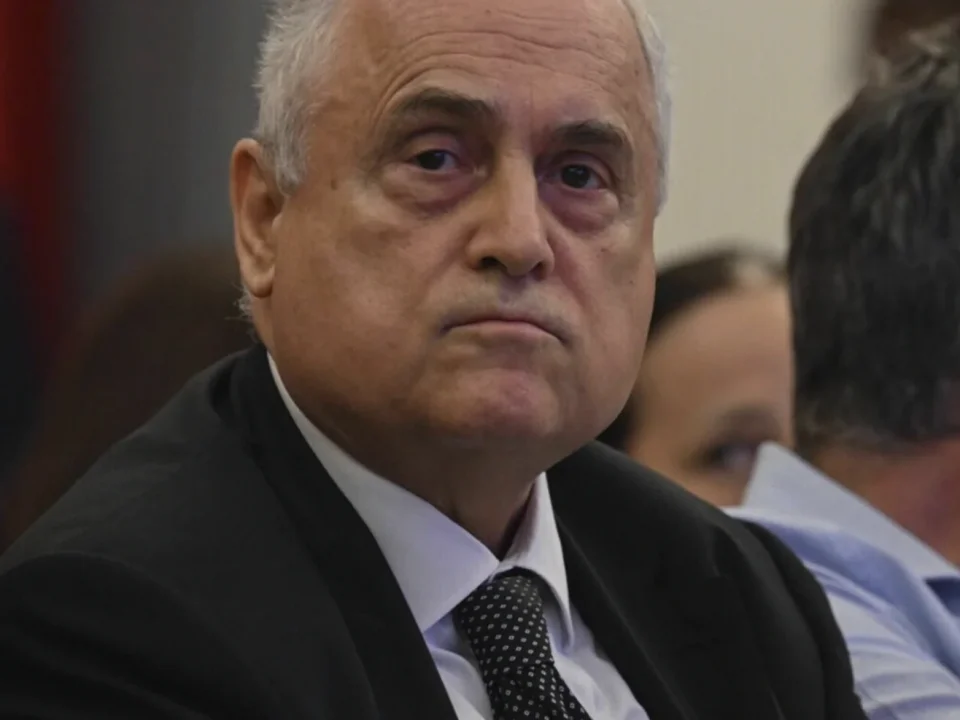
Lazio’s season has acquired an off-pitch chapter in which the Curva Nord is asking where legitimate protest ends and alleged wrongdoing begins. Organised supporters have responded to the latest claims surrounding a supposed anti-Claudio Lotito plan and the possible circulation of information intended to influence the club’s share price.
Quick facts
- The Curva Nord rejects claims that its anti-Lotito campaign received outside financial backing.
- Supporters say no member of the group owns SS Lazio shares or acted as a market speculator.
- They cite a May appeal ruling that cleared the Irriducibili of extortion against Lotito after a case lasting 20 years.
- The group says its demonstrations were permitted, peaceful and funded through its own activities and voluntary contributions.
- The protest, the Curva insists, concerns respect for Lazio’s history, traditions and deceased figures rather than match results.
The supporters’ groups referred to the appeal decision in May, when the Irriducibili were acquitted of allegations that they had extorted Lotito. Their position is that the long-running dispute represented a lawful supporters’ campaign against the club leadership, rather than an act of extortion.
That ruling has become central to the Curva’s response to the current controversy. Lotito’s complaints have brought renewed scrutiny of alleged funding behind demonstrations against him, alongside claims of a separate initiative connected to possible manipulation of Lazio’s stock-market value.
The Curva Nord denied receiving money from any financial group, bank or other outside backer. It said protest costs had been covered by beer and shirt sales, as well as a bank account through which individuals could contribute freely and transparently.
The supporters also rejected any suggestion that they had operated with an interest in Lazio’s listed shares. They said the group was not made up of market operators and that none of its members held shares in the club.
Its statement placed particular emphasis on the conduct of the protest. The Curva said every public event had been held with authorisation from the relevant authorities, and that the demonstrations remained calm despite predictions of disorder.
Inside the Stadio Olimpico, it said, the campaign had been expressed through approved banners and without abusive language. The group described its approach as one built on irony and poetry, while maintaining that those who disagreed retained full freedom to attend matches.
Many supporters chose to give up seats they had occupied since the Lenzini era, describing that absence as a painful gesture of attachment to the club. Yet the Curva said it had not turned its back on the team or coach, continuing to travel and fill away sections without incident.
For the supporters, this is not a dispute shaped by Lazio’s sporting results. Their stated grievance concerns what they see as insufficient respect for the club’s past, its customs and the memory of those associated with its history.
The final question from the Curva Nord was directed at Italy’s institutions: what offence, if any, is being committed by supporters who express dissent in this way? In a season where the relationship between Lotito and sections of the fanbase remains strained, that question now sits alongside the wider allegations still surrounding the club.