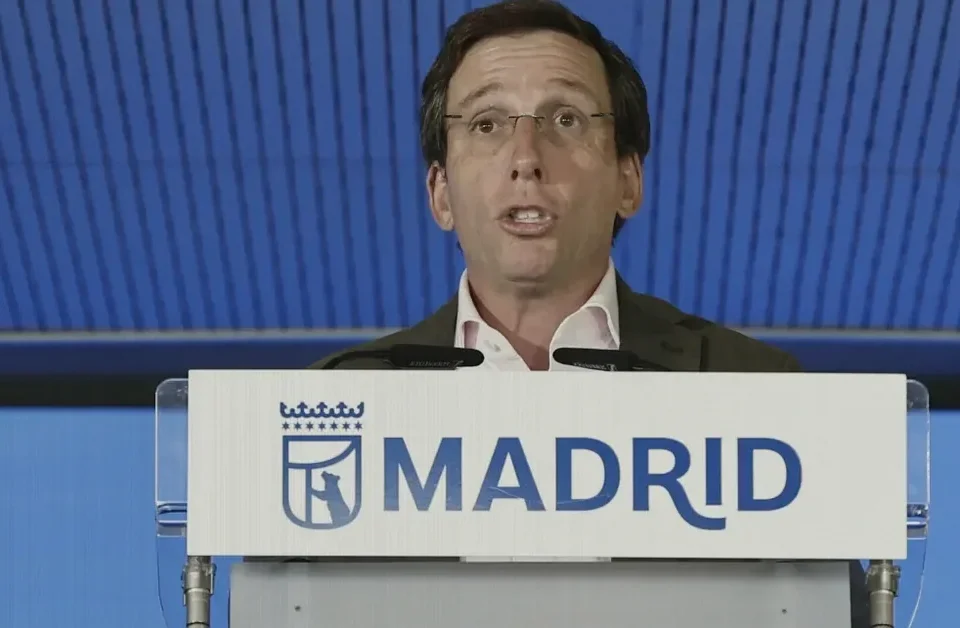
Madrid’s place in the race to host the 2030 World Cup final has been questioned by Mayor José Luis Martínez-Almeida, who said he is not optimistic that Spain’s capital will stage the tournament’s decisive match and argued that there should be consequences if it does not.
Key takeaways
- Martínez-Almeida said Morocco is pursuing the final through political and institutional channels.
- He said he has seen no equivalent effort from Spain’s national government to secure the final for Madrid.
- The mayor stated that there has been no contact with the Spanish government on the issue.
- Spain and Portugal launched the 2030 hosting project before Morocco joined the bid.
- Argentina, Paraguay and Uruguay are set to host three centenary matches as part of the tournament plan.
Madrid’s concern over the final
Speaking in Zaragoza, Martínez-Almeida said he had no reason to believe Spain’s government would fight for Madrid to become the final venue. “I am not optimistic,” he said, while stressing that Morocco is entitled to campaign for the match.
His concern is that Morocco appears to be acting with political and institutional support, while he has no evidence that Spain is making a comparable push. He said the lack of communication with the national government has reinforced his doubts over Madrid’s prospects.
The mayor maintained that Madrid would be the natural setting for the final. In his view, the tournament originated with the joint Spain-Portugal proposal, with Morocco joining later, while the South American element will include three matches in Argentina, Paraguay and Uruguay.
A warning for the 2030 hosting plan
If the final is awarded elsewhere, Martínez-Almeida believes Spain’s role in the World Cup arrangement should prompt a response. He did not say that Spain should necessarily reconsider its participation, noting that such a decision would not be his to make, but said there “should undoubtedly be consequences”.
The venue decision remains a major unresolved point in the long road to the 2030 finals. For Madrid, the issue is now not only the possibility of hosting matches during the tournament, but whether the Spanish capital can secure the fixture that closes the World Cup cycle.