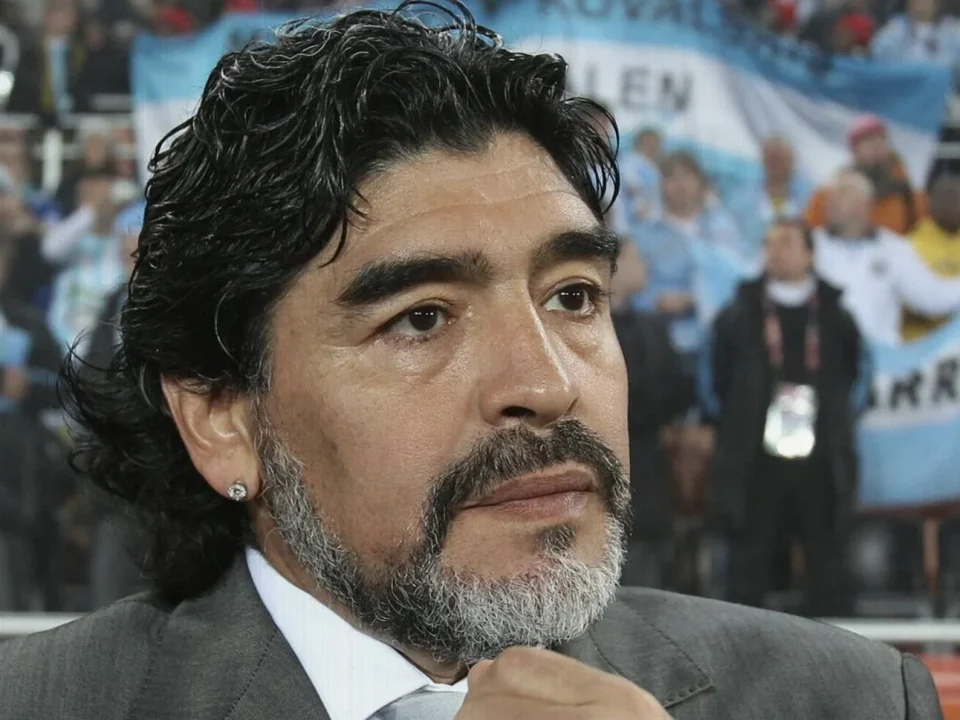
Diego Maradona’s death has returned to the centre of a courtroom in Argentina, where prosecutors have argued that the final weeks of the Napoli icon’s life were marked by an inadequate and poorly organised programme of home care. The case concerns the period after his surgery for a head haematoma and his death on 25 November 2020, a date that remains one of the most painful in the modern history of Argentine and Italian football.
The prosecution’s final argument
In closing submissions, prosecutor Patricio Ferrari told the court that the house in San Andreas, Tigre, where Maradona was taken after his operation, was not equipped to receive a patient with such complex medical needs.
- On 11 November 2020, Maradona left hospital care and was moved to the property in Tigre.
- Ferrari said the medical staff knew the seriousness of Maradona’s condition at that point, describing him as “a ticking time bomb”.
- The prosecutor alleged that, between 11 and 20 November, those responsible failed to meet the obligations they had undertaken in relation to his treatment.
- Maradona died 14 days after arriving at the house, on 25 November 2020.
Ferrari maintained that the prosecution had established, beyond reasonable doubt, what he called an anarchic structure defined by complete disorganisation. In his argument, the group responsible for Maradona’s care was led by neurosurgeon Leopoldo Luque.
The prosecutor said the residence lacked even basic medical provisions. He listed the absence of gloves, gauze, an intravenous drip, a first-aid kit, a defibrillator and an ambulance, arguing that the promised support simply was not present.
Seven defendants face homicide charge
The trial has included more than 40 hearings and 103 witness statements. Seven members of the medical team involved in Maradona’s post-operative care are on trial.
- Neurosurgeon Leopoldo Luque
- Psychiatrist Agustina Cosachov
- Psychologist Carlos Díaz
- Nurse Ricardo Almirón
- Nursing supervisor Mariano Perroni
- Swiss Medical coordinator Nancy Forlini
- Clinical doctor Pedro Di Spagna
They are charged with simple homicide with possible intent, an offence carrying a potential prison term of between eight and 25 years. The accusation rests on the contention that the defendants were aware of the risks to Maradona’s health but nevertheless accepted a home-care arrangement that did not have the necessary conditions.
A case that reaches beyond football
For Napoli, Maradona remains inseparable from the club’s greatest era and from the identity of a city that adopted him as one of its own. But the proceedings in Argentina concern the vulnerable final stage of his life rather than the player who transformed Sundays in Serie A.
Ferrari’s central allegation was that Maradona was abandoned by a group he characterised as unprepared professionals who repeatedly failed to recognise that they were treating a highly vulnerable and medically complicated patient. The court must now decide whether that alleged neglect amounted to criminal responsibility for the death of one of football’s most enduring figures.