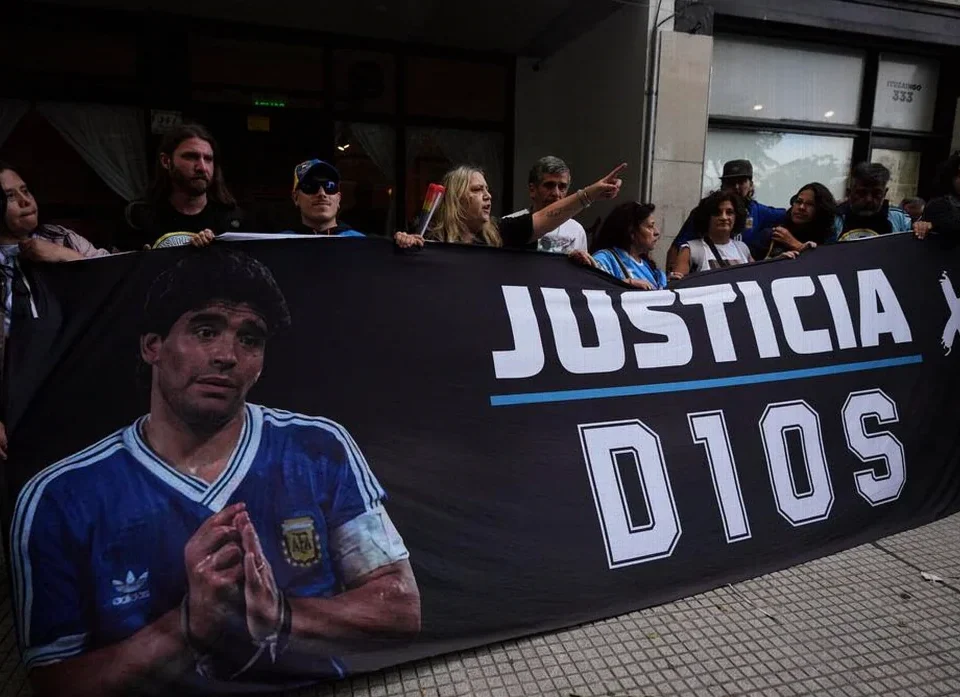
In the continuing trial over Diego Armando Maradona’s death, a medical expert retained by Leopoldo Luque has argued that the Argentina icon’s own refusal to be examined limited the care doctors could provide in his final days. José Antonio Maya told the court that warning signs could only have been properly assessed if Maradona had allowed clinicians to see him.
Autonomy at the centre of Maya’s evidence
Maya, a clinical physician who has appeared for Luque, based much of his testimony on the medical principle of patient autonomy: the right of a person to make free, informed and voluntary decisions about their body and treatment.
- He said Maradona died suddenly and that potential warning signs required, at the very least, a direct medical examination.
- Maya maintained that this was not a question of blaming Maradona, but of recognising his responsibility for declining attention.
- He added that Maradona would permit doctors to intervene when he felt ill, but appeared well enough on this occasion to refuse them that opportunity.
The court has heard that, on 18 November 2020, one week before his death, Maradona dismissed Luque, Swiss Medical’s clinical doctor Pedro Di Spagna and nutritionist Luciano Spena.
Witnesses in the case have repeatedly characterised the former World Cup winner as a difficult patient. Di Spagna, who is also accused in the proceedings, went to Maradona’s home after a nurse reported swelling in one of his legs. Maradona did not agree to receive him.
Dispute over heart risk and swelling
Maya also rejected the description of Maradona as a cardiac-risk patient or as someone suffering from heart disease. He referred to a diagnosis made in 2000 which linked cocaine use to an irreversible cardiomyopathy, but said later examinations in 2007 found Maradona’s heart to be healthy.
Addressing the medical findings in more detail, Maya said dilated cardiomyopathy causes the heart walls to become thinner. Scientific police conclusions, he noted, found Maradona’s cardiac walls were thickened rather than thinned.
The expert was a member of the interdisciplinary medical board assembled in 2021 to examine the circumstances surrounding Maradona’s death. That board concluded that the conduct of the professionals involved had been inadequate, deficient and reckless, and that warning signs had been overlooked.
Maya did not endorse that conclusion. He signed the report in dissent and submitted his own assessment.
A dissenting view from the 2021 medical board
Prosecutor Patricio Ferrari cited Maya’s separate document during questioning. In it, Maya described swelling in Maradona’s torso as the only sign that should have prompted doctors to consider action or readmission to hospital, provided they had been able to examine him.
- Maya said oedema does not automatically amount to an emergency warning sign.
- He accepted that it can indicate a condition requiring further assessment.
- Asked whether it was sound medical practice to leave such a warning unaddressed for several days, he replied that it was not.
- However, he returned to his central point: Maradona first needed to allow doctors to examine him.
The testimony places the question of access to the patient alongside the wider scrutiny of medical decisions made around one of football’s most enduring figures, whose death in November 2020 continues to command attention far beyond Argentina.