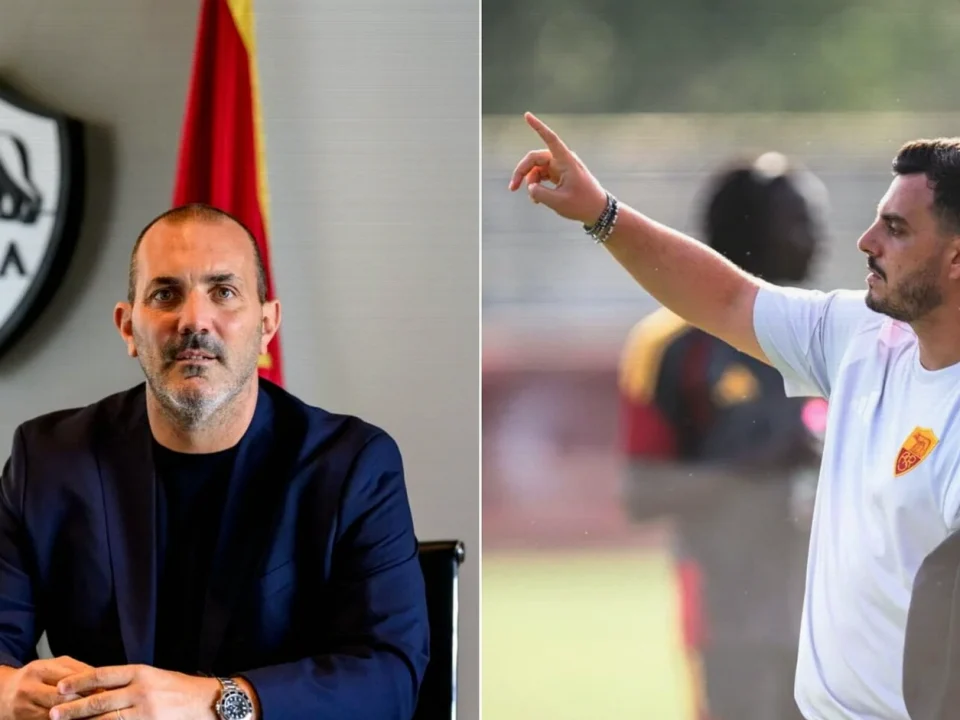
Three months into his role as Roma’s head of youth development, Massimo Margiotta is working under the weight of a distinguished recent past while setting out a pathway for the club’s next generation. The former Venezuela forward has inherited a department shaped by Bruno Conti and Alberto De Rossi, two figures whose influence remains central to Roma’s identity.
A demanding inheritance at Trigoria
Margiotta acknowledged that succeeding Conti and De Rossi brings considerable responsibility, but said their legacy is also an incentive to build constructively rather than a burden to avoid.
He described Conti as one of the defining personalities in Roma’s academy history, crediting him with work that was both distinctive and transformative. Margiotta added that their relationship has developed over the past 16 years. He also spoke warmly of Alberto De Rossi, whom he has come to know over time, calling him a man of great value.
Replacing two such important figures, Margiotta said, is a major task. His intention is to produce work worthy of what had been built before him.
Links with the first-team structure
- Margiotta arrives with an established working relationship with Roma executive D’Amico, forged during their time together at Verona.
- He said D’Amico pays close attention to youth development, delegates responsibility and trusts the staff around him, conditions Margiotta believes are important for the academy’s progress.
- The new youth chief also sees daily contact with Gian Piero Gasperini as a valuable opportunity to learn.
- Margiotta noted that Gasperini’s own formation included significant experience in youth football, making his approach particularly relevant for those working with emerging players.
- Watching the coach train, assess players, demand standards and guide talent towards senior football will, Margiotta said, provide a continuing lesson.
For Margiotta, Gasperini’s career illustrates how expertise developed in academy football can become a defining strength at senior level. That connection matters at a club where the Primavera is expected to be more than a separate team: it is a bridge towards the demands of the first-team environment.
Scala chosen for the Primavera
One of Margiotta’s most significant decisions in his opening months was the appointment of Mattia Scala as Primavera coach. Scala has spent 13 seasons in Roma’s youth system, a background which Margiotta believes demonstrates his ability, knowledge and capacity to develop.
The choice also reflects a broader principle for the department. Roma want their academy to identify and advance talent beyond the playing squad, with coaches and other professionals given the chance to progress through a merit-based structure founded on quality, commitment, expertise and a sense of belonging.
In that vision, the Primavera side stands as the highest stage of the youth sector and should naturally reflect the work carried out throughout the pathway below it. Margiotta’s first quarter in the job has therefore been less about making a break with Roma’s past than about ensuring that its established academy culture continues to produce people ready for the next level.