From London, Michele Kang sees women’s football not as a side project to the men’s game but as a continental industry still being built in real time. The American businesswoman, whose portfolio spans Washington Spirit in the United States, OL Lyonnes in France and London City Lionesses in England, believes the sport already has the players and public interest required for rapid growth. What it lacks, she argues, is a professional framework capable of matching that momentum.
Kang’s commitment began after the 2019 World Cup, when she started watching the women’s game closely and identified a sporting product whose potential had been left largely untapped. Her first experience at Washington Spirit convinced her that the obstacles were wider than one club: gifted players existed, but investment, facilities and the professional structures surrounding them had not developed at the same speed.
That conclusion broadened her ambition. The task, in her view, is not merely to create successful individual teams, but to show what can happen when women’s football is backed seriously over a sustained period. Her three clubs operate in distinct markets and carry different identities, yet they form part of the same attempt to establish a durable model for the game.
A business with its own identity
Kang rejects the idea that women’s football should be treated as a charitable exercise. She considers it a worldwide commercial opportunity, with growing audiences now requiring investment to keep pace. Yet she does not believe success should mean reproducing the men’s game exactly, whether in revenue, reach or its wider cultural footprint.
Instead, she argues that women’s football can be designed around its athletes, its own supporters and a distinct commercial proposition. The men’s game offers lessons, but she sees no reason for the women’s sport to wait another three or four decades to construct the ecosystem it needs. The aim is to become one of sport and entertainment’s most compelling offerings, measured by whether supporters choose to spend their time and money on it.
Capital alone will not achieve that, Kang says. Clubs need capable organisations, the right people and the discipline to invest in the foundations of a sustainable operation. Better football, stronger development environments and the ability to attract the players who make audiences want to follow the sport are all part of the same equation.
For Kang, the route to larger broadcast figures begins in the stands. Full stadiums create visible demand; television audiences then rise, followed by greater interest from broadcasters and commercial partners. Sponsors and media companies, she notes, follow the public.
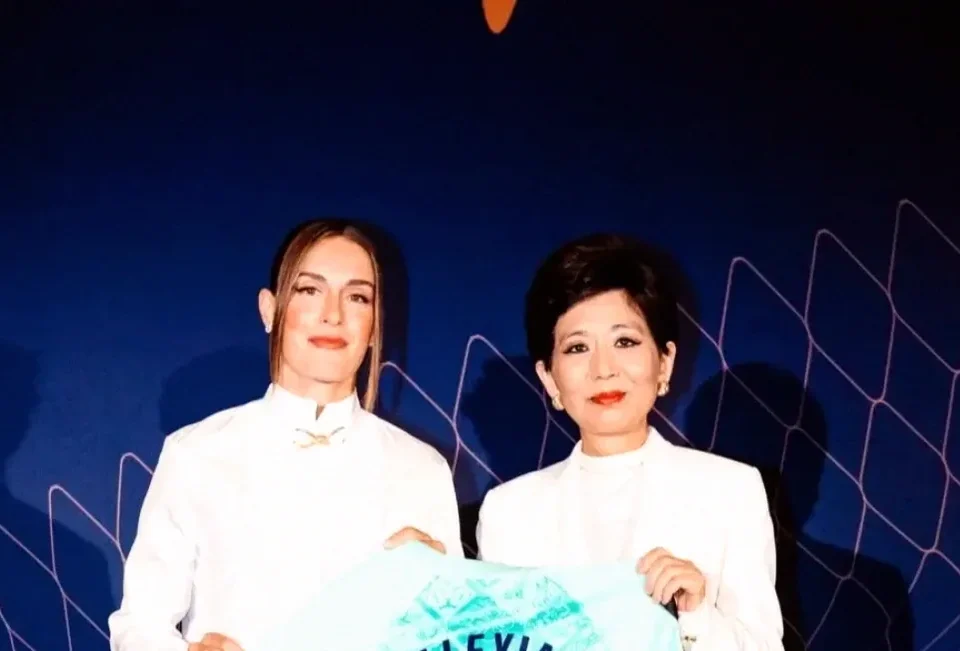
The arrival of Alexia Putellas at London City Lionesses is central to that vision. Kang regards the two-time Ballon d’Or winner as more than an elite signing for a club with major aspirations. Their work together is intended to underline that women’s football can be credible, financially sustainable and attractive as a business.
Putellas may be one of the game’s defining figures, Kang says, but recruitment is only one part of building a lasting club. The harder work is creating an environment in which leading players want to remain: a high-performance base, expert coaching staff, demanding working standards and thorough preparation. Putellas also carries significance beyond the pitch, as an inspiration to millions of women and girls and as someone helping shape the future Kang wants the sport to have.
Building beyond one season
Kang wants a game that can generate enough income to pay players their genuine value and offer girls in every country a clear route towards their ambitions. She noted that Putellas grew up at a time when the necessary investment was not available and had to fight for conditions that should have been ordinary. The purpose of the new model, Kang says, is to ensure the next generation does not face the same struggle.
That also means changing the message received by young players. A girl who repeatedly encounters inferior facilities, training and opportunity will learn that she is considered secondary, Kang argues. From the outset, she believes girls should see the same standards, commitment and investment as boys.
Women in senior sporting roles can help open doors and demonstrate what is possible, she says, but the responsibility cannot sit only with them. Owners, executives, investors, brands, media companies and the wider industry must recognise the opportunity and commit meaningful resources. The sport’s progress cannot depend on Kang, or on any single individual.
Through Kynisca, Kang’s wider platform, the intended measure of success is to prove repeatedly that this approach can work across clubs and countries, creating something robust enough to raise the level of women’s football more broadly. The immediate challenge is ensuring that resources grow alongside the game itself. Talent and fans are already present, but improved facilities, performance settings, player pathways, research and professional systems remain necessary.
The first stage was a willingness to invest early and lay foundations. The more difficult next phase is delivering that work consistently across different teams and markets. Kang’s horizon is deliberately longer than a single campaign or a prominent transfer: she is seeking a system able to outlast the moment that created it.