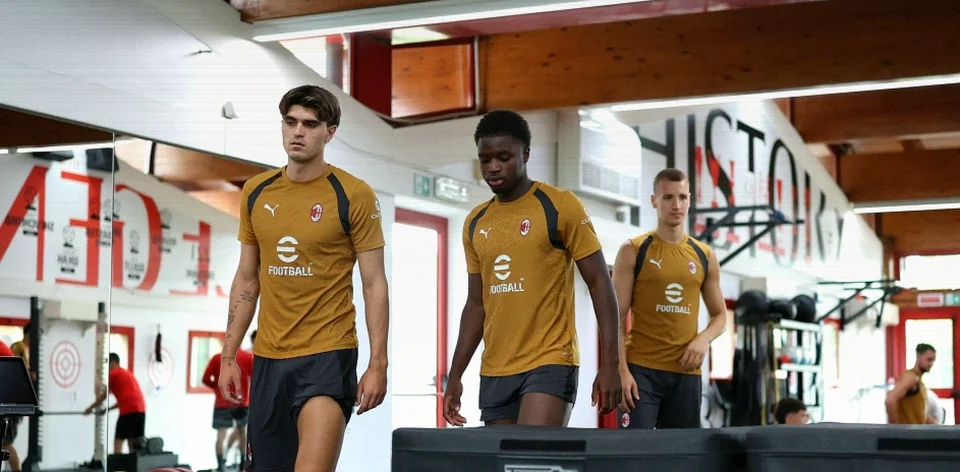
Milan’s season is beginning to show how differently two young forwards can travel through the same club. Alpha Cisse has quickly become part of Ruben Amorim’s attacking options, while Francesco Camarda is still waiting for a meaningful opening despite being retained as Gonçalo Ramos’s deputy.
Amorim has insisted that his work is intended to create opportunities across the squad, naming Pulisic, Camarda and Cisse among the players he wants to involve. In a team required to chase results every weekend, however, the balance between development and immediate returns is rarely straightforward.
Two contrasting starts
- Cisse announced himself early in the Serie A campaign, scoring twice in his first four league appearances. One of those goals came against Juventus, and his impact convinced Amorim to continue using him.
- The young attacker has accumulated 288 minutes for Milan, with the coach speaking warmly about his contribution and potential.
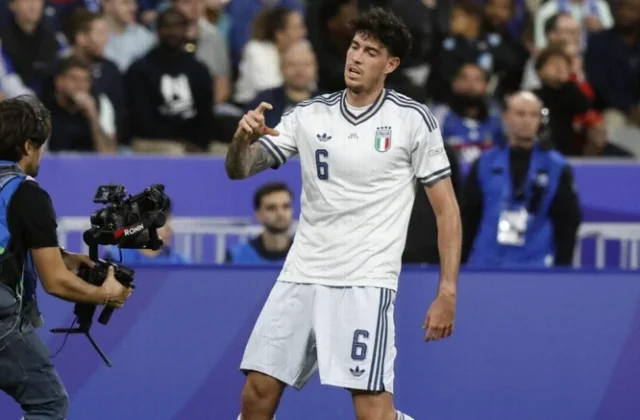
- His confidence was reinforced during international duty, when he struck a powerful 95th-minute winner for Italy Under-21s away to Armenia.
- Camarda’s recent image was very different: he missed the ball from close range in a chance that underlined a difficult moment rather than any judgement on his talent.
- The striker has played only eight minutes across two Serie A matches, from 540 minutes available to Milan so far.
Those snapshots do not settle the question of which player has the greater future. They do, though, reflect the importance of rhythm and confidence for young attackers. Goals and assists shape more than statistics for forwards; they can influence every part of a player’s performance and decision-making.
The problem of the central striker role
Cisse has benefited from a more flexible contest for places behind the front line. Amorim has rotated his attacking midfield pair, making it difficult to predict who will start from one match to the next. Cisse’s early performances gave the coach a reason to persist with him.
Camarda faces a more direct obstacle. Milan have largely placed their centre-forward role in the hands of Ramos, the most expensive signing in the club’s history. Ramos has scored once in 535 minutes, but Amorim values his all-round work enough that his place has remained strong.
That does not mean Ramos will play every match. Yet the structure of Milan’s attacking system makes the choice particularly consequential. Whether Amorim sets his side up in a 3-4-2-1 or a 4-2-3-1, there is one recognised striker. There is greater room for experimentation in the supporting attacking positions than at centre-forward.
The issue also reaches back to summer planning. Milan decided Camarda was ready to serve as a credible alternative to Ramos and did not bring in another specialist centre-forward. Amorim had also argued against an oversized squad, believing a smaller group would leave proper space for younger players. Camarda’s limited involvement nevertheless raises questions over whether that plan has yet delivered the opportunity envisaged for him.
Different routes before Milan
Their previous development may also help explain the difference in readiness. Camarda’s time at Lecce has prompted debate over whether a season with a strong Serie B club might have served him better than football with a Serie A side whose principal aim was survival, and whose attacking opportunities were naturally limited.
Cisse, meanwhile, developed at Catanzaro, where he made enough of an impression for Milan to move late and prevent PSV from completing a deal for him.
Neither pathway offers a definitive answer, and young players do not develop in identical conditions. For now, though, Cisse is riding the momentum of a fast start while Camarda remains on the margins. Milan’s challenge is to ensure that both can eventually become protagonists in the same season-long story.