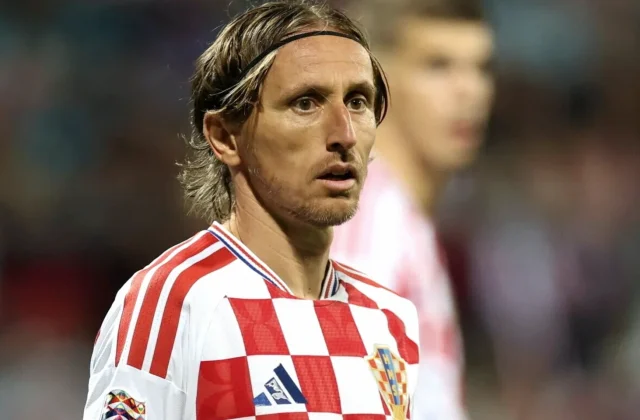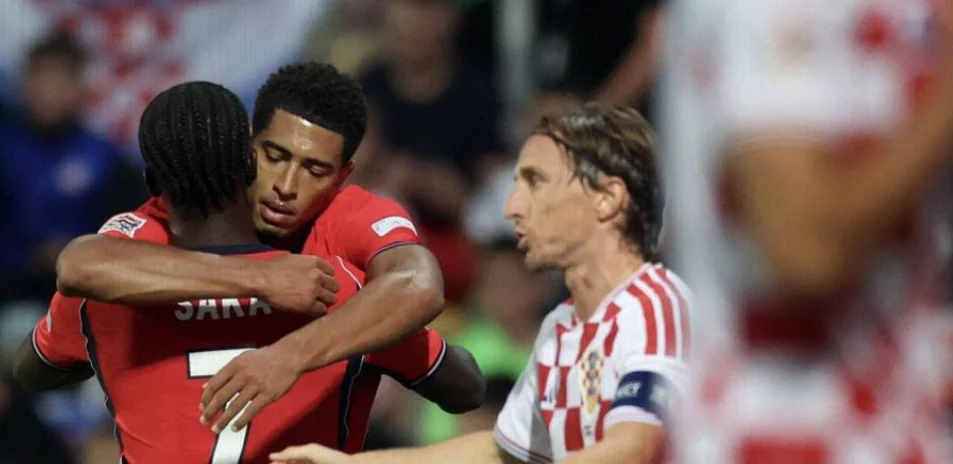
Luka Modric returns to Milan carrying the weight of Croatia’s most painful modern night, after England’s seven-goal Nations League humiliation left the captain speaking openly of shame and a national reputation damaged by an unacceptable display.
The midfielder faced the public responsibility that comes with wearing the armband after a defeat described as the heaviest in Croatia’s history. He said the side had offered neither aggression nor collective spirit, and that he had never felt such embarrassment after a match during his two decades with the national team.
“You can lose because the other team is better,” Modric said, “but to lose in that way, and undermine the reputation built over the years, is unacceptable.” He added that Croatia had looked as though they were several players short and insisted that football cannot be played in such a manner.
A difficult year around Milan and Croatia
The England result is the latest disappointment in a demanding period for Modric. His troubles began in May, when Milan lost the consistency that had kept them in the Champions League places for much of the season before their final-round collapse against Cagliari.
Modric had expected a calmer summer: Milan back among Europe’s leading competition, a straightforward decision to extend his stay with the Rossoneri, and then a World Cup campaign with Croatia. Instead, Milan’s sporting failure brought immediate upheaval around owner Gerry Cardinale and left the player travelling to the United States with major doubts over the club’s direction and his own future.
He eventually chose to continue with Milan, but only after Croatia’s World Cup had ended in the round of 32. Croatia were not viewed as leading contenders for the tournament, yet an exit at that stage still fell short of expectations.
Amorim’s management of the midfielder
The opening weeks at Milanello brought a different uncertainty. Under Ruben Amorim, Modric is no longer treated as an automatic starter. The Portuguese coach will assess him match by match, with his physical condition and the demands of the opposition central to the decision.
Amorim has made clear that matches dominated by running are difficult territory for Modric. The tactical context has also changed. In Massimiliano Allegri’s 3-5-2, the Croatian had two midfielders alongside him for protection; Amorim’s 3-4-2-1 leaves more ground for him to cover.
That does not mean a season on the bench. Milan have an additional European competition compared with last year, and Modric’s experience remains valuable across a longer campaign. But his minutes are set to be managed more carefully than before.
Amorim has said that Modric understands the situation fully. The Croatian’s professionalism has never been in doubt, and he is unlikely to air any dissatisfaction publicly. After the national-team collapse, Milan now offer him a place to regain balance: for a club seeking to recover its direction, and for a captain determined to put a painful international night behind him.