Inter’s past has lost one of its defining figures with the death of Sandro Mazzola, a player whose influence stretched from the victorious years of the 1960s to his later work inside the club. For Massimo Moratti, speaking with evident sadness, Mazzola was not simply a member of the Grande Inter: he was part of its identity, its memory and its enduring standard.
Key takeaways
- Massimo Moratti described Sandro Mazzola as “everything” to Inter and an irreplaceable name in the club’s history.
- Moratti last met Mazzola around six months ago and said he had appeared well, despite periods of difficulty.
- Mazzola’s pace of execution, dribbling and finishing made him especially decisive in the final third.
- He later served Inter as a director, working under both Ernesto Pellegrini and Moratti.
- Moratti singled out Mazzola’s European Cup goal against Vasas in Budapest on 8 December 1966 as an unforgettable moment.
A champion formed in the Grande Inter
Mazzola belonged to the Inter built by Angelo Moratti and shaped on the pitch by Helenio Herrera, the side that rose from a difficult moment to become one of the defining teams of its era. Massimo Moratti recalled the courage shown when Herrera introduced the young Mazzola into the first team, seeing that decision as the beginning of a period in which Inter began to collect every major prize.
“It is a very sad day,” Moratti said. “There is an immense sense of nostalgia, but also the memory of the beautiful things and the joy he gave us.” He noted that younger supporters may not have witnessed Mazzola at his peak, but insisted that his presence remains vivid for those who lived through those years.
In Moratti’s recollection, Mazzola’s finest qualities were clear: the dribble, the rapid strike and an unusually quick action that denied defenders the time to react. His shooting could be forceful, but it was the speed of his execution that set him apart.
Although Mazzola was able to operate across midfield and attack, Moratti remembered him primarily as an attacking midfielder or near-centre-forward in his father’s Inter. He moved deeper as his career developed and was effective there too, yet Moratti agreed with Roberto Boninsegna’s view that Mazzola was at his most dangerous in the last 30 metres.
That assessment followed Mazzola’s final interview, in which he had apologised to Boninsegna for not resisting the celebrated exchange that brought Pietro Anastasi from Juventus. Boninsegna replied that he had advised Mazzola against becoming a deep-lying playmaker because Inter needed him alongside him in attack. Moratti found the exchange between the two former teammates moving.
The goal Moratti carries most clearly was scored in Budapest against Vasas in the European Cup on 8 December 1966. Mazzola beat the opposition defence twice, including the goalkeeper, with the ball seemingly attached to his foot. For Moratti, it was an example of a player beyond comparison.
Professionalism, loyalty and life after the pitch
Moratti portrayed Mazzola as a serious professional rather than the loudest character in a dressing room. He was neither withdrawn nor a natural entertainer, but simple in manner, disciplined in his role and driven by the demand to matter when the match required it.
“He was an example through his determination, will and courage,” Moratti said. “There was no challenge he approached without believing he could win it.”
He placed Mazzola within a group of exceptional footballers who treated success not as an entitlement but as the result of talent and sacrifice. They did not need to advertise themselves, Moratti suggested; their quality made achievement seem natural.
Mazzola’s life had also been marked by the death of his father Valentino, the Grande Torino hero who died in the Superga tragedy. Massimo Moratti did not know Sandro before that loss, but recalled the importance of Veleno Lorenzi, who had been close to Valentino and became a fatherly figure to the young Mazzola. Lorenzi brought him towards Inter and Milan, guiding his first steps in Nerazzurri football with sensitivity and generosity.
That connection did not end when Mazzola stopped playing. He returned to serve Inter as an executive, first during Pellegrini’s presidency and then under Moratti. Moratti regarded him as precise and capable both as a sporting director and in transfer work.
One of the lasting images from that later chapter shows Mazzola beside Luis Suárez at Ronaldo’s Inter presentation in July 1997. His death came close to Ronaldo’s 50th birthday, linking two great talents who, in different generations, brought enormous satisfaction to the club.
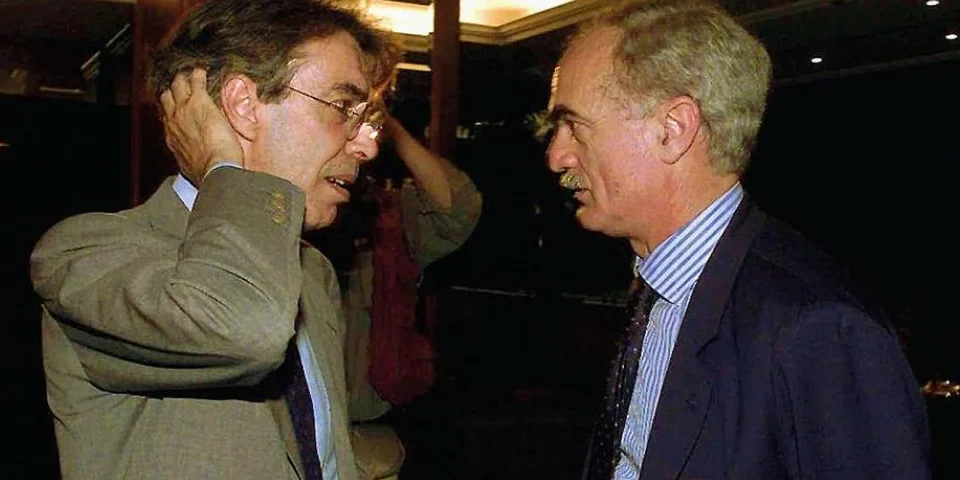
Moratti declined to rank Mazzola among the protagonists of the Grande Inter. He has never believed in such lists. Yet his conclusion left little room for doubt: Mazzola was Inter’s history, and for the club he will remain unforgettable.