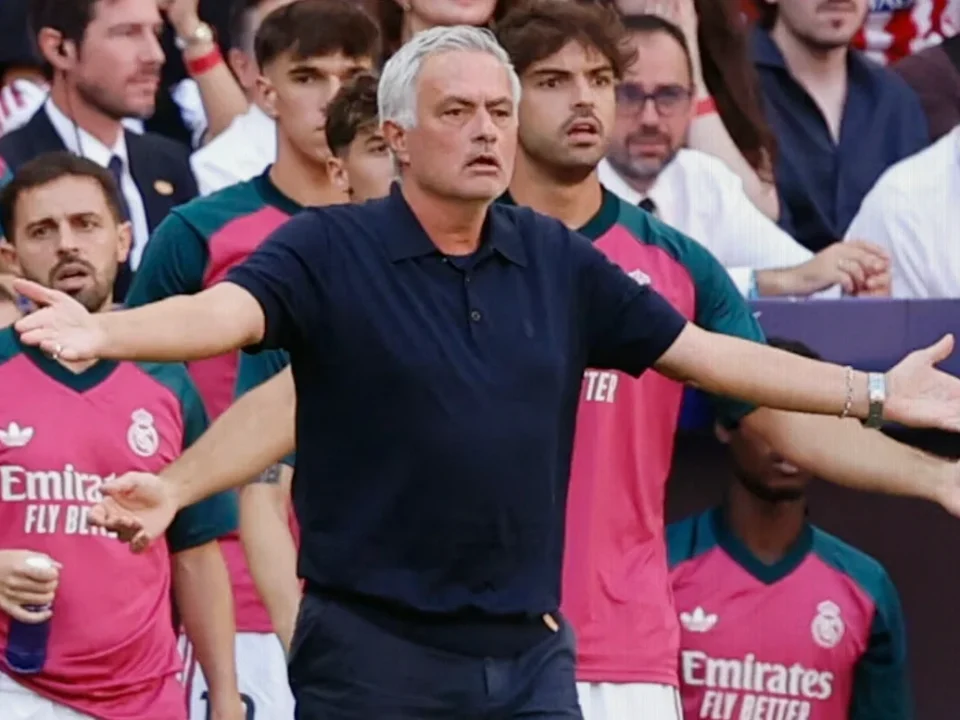
José Mourinho says he is preparing for an emotional return to Roma next Wednesday, this time without the backing of the Giallorossi supporters who once made him feel at home. The Real Madrid coach, reflecting on a career that has repeatedly crossed Europe’s biggest stages, said he expects respect rather than tributes when he goes back to the club he led to the Conference League.
“It will be the first time I arrive without the support of the Roma fans, so I have to be ready for that,” Mourinho said. “I do not expect songs or banners. I expect a great deal of respect.”
His departure from the Italian side, he admitted, “hurt my heart”, but he insisted he has no grievance with either Roma or its ownership. Mourinho said he leaves clubs with a clear conscience and described Roma as a permanent home after the affection shown to him from his first day in the city.
Thousands greeted him when he arrived despite him having achieved nothing there at that point, he recalled. Mourinho said he fought for the supporters and gave everything to the cause, with the 2022 Conference League triumph carrying special weight for a club that had not regularly collected trophies.
A Madrid return that began as rumour
Mourinho also described how his return to Real Madrid developed this summer, saying speculation preceded any contact from the Spanish club. He had been content at Benfica, a club close to his home and one he believed required a major rebuild.
Having signed a three-year agreement, he expected to remain focused on Benfica’s future. The noise around Madrid surprised him, particularly after the club changed coach in mid-season and later appointed Álvaro Arbeloa.
“Normally there is contact first and the rumours follow. In this case, it happened the other way around,” Mourinho said. “The stories started when there had been no contact at all.”
He said he initially dismissed the reports as impossible, with his attention entirely on Benfica and its long-term project.
Prestianni case tested Benfica before Madrid trip
Mourinho returned to last season’s Champions League controversy involving Benfica’s Gianluca Prestianni and Real Madrid forward Vinícius Júnior. He called it an exceptionally difficult episode to manage, particularly because Prestianni was suspended despite, he said, not being punished for racism.
The coach said public opinion had moved ahead of the evidence in a situation he regarded as uncontrollable. Prestianni denied the allegation, Mourinho said, while no proof established that it was true.
For Benfica, the uncertainty came at a damaging moment. After a preliminary-round match, the team travelled to Madrid without knowing whether Prestianni would be available or facing a sanction.
Mourinho said the eventual outcome mattered because he came to know both young players and viewed them positively. “On one side there was a fantastic boy; on the other, a perfect boy,” he said. “It was a problem, but in the end I got to know both of them.”
Questions over football’s expanding machinery
Asked whether the sport has evolved, Mourinho argued that football moves in cycles rather than along a straight line of progress. He accepts that players have become more physically developed and that clubs now have vastly greater resources, but questioned whether every addition to a modern travelling party is necessary.
He said teams can now travel with one bus for players and another for staff, with hotel room lists containing one page for the squad and another carrying around 40 further names. Analysts, social-media staff and kit personnel all form part of the larger operation.
“Are they all needed?” Mourinho asked, adding that the financial burden has increased because presidents are prepared to fund such structures.
He also joked about Manchester City’s case, saying a final resolution will come only after a verdict and then a likely appeal. Mourinho suggested that, as two men approaching 60, he and his interviewer would need good fortune to still be present when the process reaches its true conclusion.
Old friction, familiar figures and the desire to continue
Mourinho rejected the idea that his long history of disputes with referees is simply a personal problem. He referred to Real Madrid’s years during the Negreira case period, saying those inside the club experienced it before its details became widely known.
He also said that similar situations seemed to arise for him in Turkey after a major scandal there.
On Carlo Ancelotti, Mourinho offered warmth mixed with humour. He said the former Madrid coach wanted to speak to Vinícius, Rodrygo and Éder Militão about their progress, and sought permission to visit despite Endrick being injured at the time.
Mourinho joked that Ancelotti was “ill” with his attachment to Madrid, before teasing him over the photographs of the Italian that line the corridors at the club’s training base.
For all the changes around elite football, Mourinho said his own future remains simple: he will continue coaching for as long as his health allows it.