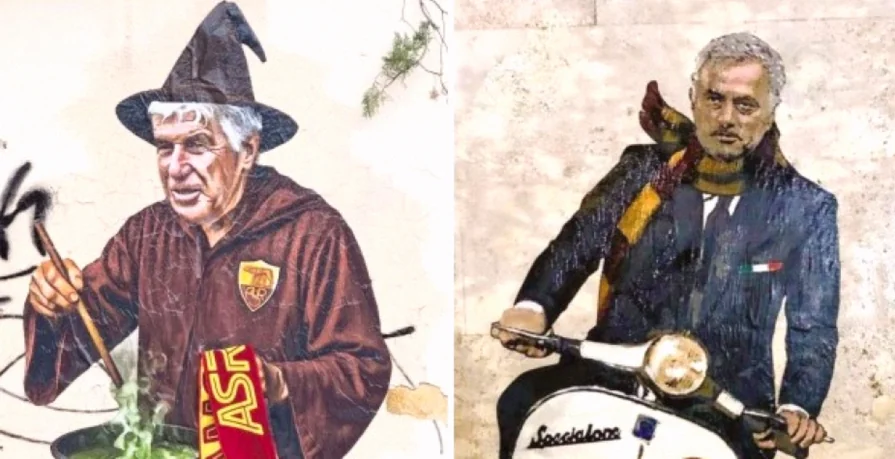
Rome will make room again for José Mourinho, a figure who never became ordinary in the life of the club. The reunion comes with Gian Piero Gasperini now on the Roma bench, two coaches linked by a shared birthday — 26 January, five years apart — and by very different routes into the affections of the Giallorossi public.
Mourinho arrived as an event in himself. On 4 May 2021, news of his appointment spread shortly after lunchtime and changed the mood of an otherwise unremarkable Tuesday. For Roma supporters, surprise quickly gave way to the hope that a manager of his stature could return the club to a larger stage. He was not simply a coach to them; he became the loudest expression of their ambitions, frustrations and sense of grievance.
His relationship with the supporters was built on that instinctive identification. Mourinho defended his squad fiercely and spoke after difficult matches in language that often resembled the conversations taking place among disappointed fans leaving the Olimpico. The players followed him, while the stands saw in him a manager prepared to carry the weight of the club publicly.
The Conference League triumph made that bond permanent. It ended a 14-year wait for a trophy and brought Roma their first major European cup since 1961. Even after the painful Europa League final defeat in Budapest, and as tensions with the Friedkin ownership began to surface in December 2023, the supporters remained protective of him. A banner in the Curva Sud declared Mourinho “a Romanista for life”, with eyes filled by the club’s colours and a soul immersed in Romanismo.
A different route to the same city
Gasperini’s arrival on 6 June 2025 carried a different atmosphere. His move had been anticipated for some time, so there was none of the shock that accompanied Mourinho’s appointment. A late interest from Juventus had, however, made many in Rome reconsider how significant it would be to secure the man who had built Atalanta into a leading force.
There were doubts as well. Some previous remarks by Gasperini had not gone down well with sections of the fanbase, and he arrived knowing that reputation alone would not settle the matter. His case had to be made on the pitch. It did not take long for that process to begin.
Where Mourinho connected first through emotion, Gasperini has won people over through work, intensity and the visible coherence of his Roma. As the side began to function with greater aggression and rhythm, the Olimpico responded. There is a growing feeling around the club that Roma have not played football of this quality for some time.
The coach from Grugliasco has also shown flashes of feeling that have caught supporters by surprise. At Parma, he could not watch as Malen converted a penalty in the 101st minute. After Soulé scored in the most recent Roma-Atalanta meeting, he ran towards the Curva Sud in celebration, an image some compared to Mourinho’s own uninhibited connection with the crowd.
The comparison only goes so far. Mourinho remains the defining figure of a recent Roma era, the man who brought silverware and gave voice to a city’s most intense footballing emotions. Gasperini is the present, and for many supporters he may also be the future. Both understand the particular demands of managing Roma, where a Sunday afternoon can feel like a verdict on the whole club.
Before kick-off, there may be warmth for Mourinho from supporters who have never stopped loving him, and from a manager whose affection for Rome has remained clear. Gasperini will understand the occasion better than most. Once the match begins, though, sentiment will have to wait.