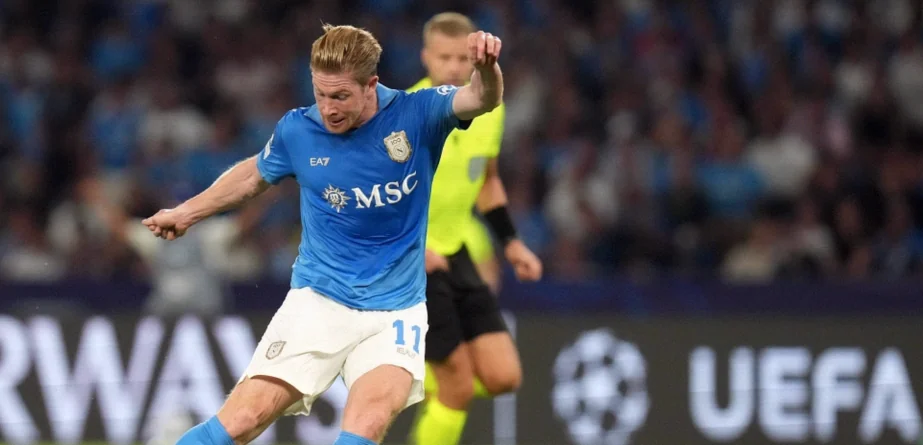
Europe returns with a compact but revealing Serie A–La Liga sequence, three meetings that arrive after an extended international break and offer Italian football an immediate point of comparison with its closest continental rival. Villarreal host Napoli first, Roma face Real Madrid the following day, and Juventus travel to Celta Vigo to complete the set on Thursday.
The league positions give the fixtures a curious balance. Villarreal and Napoli come together from 11th and eighth in their respective domestic tables, Roma and Real Madrid sit third and fourth, while Celta and Juventus occupy ninth and sixth. It is an imperfect early-season picture, naturally, especially after a long pause for international football, but the encouraging detail for the clubs involved is that the break has not produced a serious injury crisis.
These matches will not settle the argument between the two leagues, yet they form part of a wider contest. Serie A and La Liga are both trying to establish themselves behind the Premier League in the European ranking. Italy held the extra Champions League place two seasons ago; Spain claimed that advantage last year and has retained it this season. The race has begun again, and points earned in Europe will matter well beyond the individual evenings in Villarreal, Rome and Vigo.
Two leagues, different foundations
Spanish football has built a substantial lead over the course of this century. From 2000 onwards, La Liga clubs have collected 24 European trophies, compared with five won by Milan, Inter and Roma. Real Madrid and Barcelona have set the standard, but Spain’s record has also been strengthened by Atlético Madrid, Sevilla and Villarreal, while Valencia, Athletic Bilbao, Real Betis and Rayo Vallecano have all reached European finals.
The national picture has reinforced that standing. Spain’s national sides have won two World Cups, three of the country’s four European Championships and a Nations League, alongside two final defeats in that competition. Italy’s fourth World Cup arrived in 2006 and the Azzurri won Euro 2021, but the failure to qualify for the last three World Cups has left a deeper scar. Spain’s men’s and women’s teams, from Under-17 level through to the senior sides, currently hold eight international titles between them.
The financial gap is just as significant, even if the football itself is not always separated by the same distance. La Liga’s 20 clubs receive €835 million from overseas television rights, while Serie A’s clubs bring in €242 million. For Italian football, that difference points to weaknesses in how its domestic product is marketed and distributed internationally.
Stadiums remain another dividing line. Spain has already secured a share of the 2030 World Cup, whereas Italy is still working to protect its role at Euro 2032. La Liga has supported refurbishment schemes across the country, helping clubs modernise grounds that are usually owned by the teams themselves. Real Madrid and Barcelona stand apart: their transformations of the Santiago Bernabéu and Camp Nou have required investments beyond €1 billion, backed by banks willing to support institutions whose annual revenues exceed €1 billion.
Elsewhere, the league under Javier Tebas has applied stringent financial controls designed to prevent clubs spending beyond their means. That discipline can leave Spanish sides exposed when Premier League clubs pursue their best players, but it has also produced healthier accounts. In 2024-25, La Liga clubs recorded a combined €300 million surplus, while Serie A teams posted a deficit of the same amount. Spanish clubs generated €4.106 billion in aggregate revenue, with 52 per cent coming from Real Madrid and Barcelona; Serie A’s equivalent total was €3.007 billion.
For now, the comparison returns to the pitch. Napoli, Roma and Juventus have three separate chances to carry Serie A’s case into the European week. The longer judgement, however, will reach beyond results: Italian clubs are also being measured in the stadium, in the balance sheet and in the ability to sell their championship to the world.