Minutes are the hinge on this board. Josh Hart is positioned to reclaim a heavy-run starting role in New York, Kel’el Ware could climb from roughly 25 minutes toward a larger Milwaukee frontcourt load, and Naz Reid arrives in Charlotte with his cleanest path yet to 30-plus minutes. In nine-category fantasy formats, those rotation openings matter as much as the names at the top of the draft board.
From the locker room
Hart’s place with the Knicks looks far more secure after Mitchell Robinson’s move to Boston. New York added Andre Drummond, but he is not viewed as a likely frontcourt starter next to Karl-Anthony Towns. The rest of the roster is largely intact from last season’s championship group, giving Hart a familiar role and a probable spot in the opening five.
Hart started 52 games last season after initially working as a reserve. In those starts, he produced 12.6 points, 7.6 rebounds, 4.9 assists, 1.2 steals and 1.6 made 3-pointers per night, while hitting 51.5% from the field. His Yahoo average draft position is 96, a range where a starter with rebounding and assist value can return more than the draft slot suggests.
Minnesota’s rotation has been reshaped by the departures of Reid and Julius Randle and the arrivals of LaMelo Ball and Jonathan Kuminga. Ball gives the Timberwolves an established lead guard and could accelerate the club’s tempo. Kuminga signed a two-year, $13 million deal after splitting last season between Golden State and Atlanta, but he has yet to consistently offer much beyond scoring.
That leaves Jaden McDaniels as a steady two-way piece for smaller Minnesota groups. He posted career highs last season with 14.8 points, 4.2 rebounds and 2.7 assists per game, adding 1.1 steals, 1.0 blocks and 1.4 3-pointers. McDaniels also made 41.2% from deep and finished at 51.5% overall. With an ADP of 89, his defensive categories and role stability give him a dependable floor.
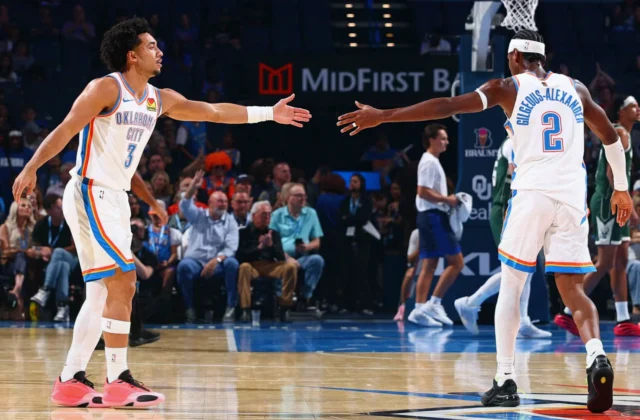
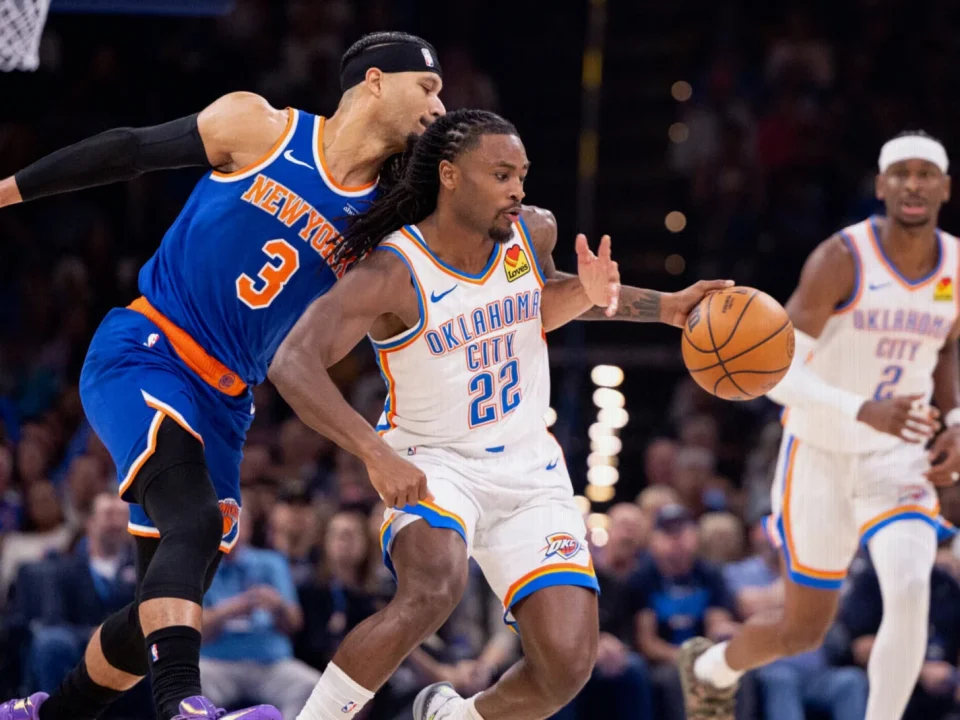
Oklahoma City has vacancies on the wing after Luguentz Dort, Aaron Wiggins and Isaiah Joe exited the rotation picture. Ajay Mitchell, Jared McCain and Cason Wallace are among the players in line for the available court time around Shai Gilgeous-Alexander, Jalen Williams and Chet Holmgren.
Wallace logged 27 minutes per game last season, delivering 8.6 points, 3.1 rebounds, 2.6 assists, 1.9 steals and 1.3 triples. His 14.5% usage rate points to a supporting offensive role even if his minutes rise, but the steals can swing a weekly matchup. He also owns a 37.4% career mark from 3-point range and averaged 1.8 steals in 2024-25. At an ADP of 118, a path to about 1.5 threes and 2.0 steals per game would make him a useful late pick.
Ware’s new Milwaukee situation carries the widest minutes range of the group. Miami had Bam Adebayo entrenched in the middle, limiting Ware’s runway there. The offseason deal that sent Giannis Antetokounmpo to Miami moved Ware to a Bucks frontcourt where he can become a central piece.
In 22 minutes per game last season, Ware averaged 11.1 points, 9.0 rebounds, 1.1 blocks, 0.8 steals and 1.2 made 3-pointers. His 10 games of at least 30 minutes showed the ceiling: 18.1 points, 14.0 boards, 3.3 blocks, 1.1 steals and 1.8 threes. His outside shooting also improved sharply, from 31.5% as a rookie to 39.5% last year.
Myles Turner remains the early obstacle to a full Ware breakout. Milwaukee is rebuilding and could move Turner if a trade market develops; even without a deal, Turner could be shut down later in the season. Ware is expected to begin near 25 minutes a night, with a chance for that workload to increase as the year moves along.
Reid lands in Charlotte after the Hornets addressed their need for size. The departure of Miles Bridges also clears scoring volume; Bridges had averaged at least 17.1 points in each of the previous four seasons. Reid has an opening to take on more shots and, for the first time, consistently clear 30 minutes.
His Minnesota production came under a minutes ceiling created by Rudy Gobert and Randle. Reid never reached 28 minutes per game in a Timberwolves season and averaged 26 last year, posting 13.6 points, 6.2 rebounds, 2.2 assists and 2.1 3-pointers. His starting sample offers a stronger read on what Charlotte could receive: across 77 career starts, he has averaged 15.5 points, 7.1 rebounds, 2.0 assists, 1.8 threes, 1.2 blocks and 1.1 steals. His Yahoo ADP sits at 62.1.
Los Angeles made a four-year, $52 million commitment to Sandro Mamukelashvili, looking for both size and shooting. LeBron James’ departure leaves a major vacancy at power forward. Jake LaRavia is still on the roster, but his 25 minutes per game last season did not translate into major production, leaving Mamukelashvili with a credible route to an expanded role whether he starts or comes off the bench.
Mamukelashvili reached new ground in Toronto last season. After never previously averaging more than 15 minutes, he played 22 per night in 80 games for the Raptors and returned 11.2 points, 4.9 rebounds and 1.4 made 3-pointers. He shot 52.3% overall and 38.9% from beyond the arc. At a 120.3 ADP, another personal best in playing time would put him in late-round value territory.
Rotation watch
| Player | Team | Yahoo ADP | Minutes outlook |
|---|---|---|---|
| Josh Hart | New York Knicks | 96 | Expected starter after Robinson’s departure |
| Jaden McDaniels | Minnesota Timberwolves | 89 | Key two-way forward in smaller lineups |
| Cason Wallace | Oklahoma City Thunder | 118 | Opportunity for a larger wing-guard workload |
| Kel’el Ware | Milwaukee Bucks | Not listed | Projected near 25 minutes initially, with growth potential |
| Naz Reid | Charlotte Hornets | 62.1 | Chance to exceed 30 minutes for the first time |
| Sandro Mamukelashvili | Los Angeles Lakers | 120.3 | Clear path to a new career high in minutes |