Week 1 delivered a record-setting fantasy surge from Chicago, but it also left several prominent NFL players facing questions after quiet openers. One disappointing game is not enough to force a lineup overhaul, though the early usage patterns in New Orleans, Cleveland and Green Bay deserve closer attention.
Week 1 NFL Fantasy Fallout: Which Struggles Matter Ahead of Week 2?
SEO Title: NFL Week 1 Fantasy Fallout: Players to Trust and Warning Signs for Week 2
SEO Description: A Sunday-desk look at NFL Week 1 fantasy disappointments, including Caleb Williams’ Bears, Drake Maye, Dak Prescott, Travis Etienne Jr., Matthew Stafford and key backfield situations.
Chicago’s 59-point outburst against Carolina was one of the opening weekend’s biggest developments. The Bears’ offense evoked the explosive “Greatest Show on Turf” Rams, while 12 NFL players reached at least 30 fantasy points in Week 1, a new record for an opening slate.
That environment made Colston Loveland’s scoreless afternoon stand out even more. Chicago’s rookie tight end, selected 37th overall in ESPN drafts and third at his position, did not record a fantasy point despite the offensive eruption. Still, his involvement was more encouraging than the final line: Loveland ran 25 routes, above his 22.9 average as a rookie, and drew a look in the end zone.
In Ben Johnson’s offense, targets can shift quickly from week to week. Loveland remains a top-five tight end option against Minnesota in Week 2, particularly with the Vikings expected to bring pressure and Caleb Williams likely needing a versatile target over the middle.
Quarterbacks have room to rebound
Drake Maye’s 9.82-point performance at Seattle included three fourth-quarter interceptions, but New England’s game plan was cautious early and the Seahawks presented a difficult road opponent. The Patriots also must adjust without A.J. Brown, who has been placed on injured reserve for at least four weeks with an ankle injury.
Maye still supplied 47 rushing yards, an important part of his fantasy value. He averaged 20.7 fantasy points per game last season, and New England has previously shown it can build productive plans around his mobility. The Patriots need more from Romeo Doubs, but Maye’s passing opportunities were available in Week 1. He remains a lower-end QB1 candidate for Sunday’s matchup with Pittsburgh.
Dak Prescott also opened below expectations in Dallas’ loss to the Giants, totaling 14.4 fantasy points. He threw one interception, passed for two touchdowns and ran for 14 yards, but produced only 175 passing yards as the Cowboys’ vertical game failed to connect.
Prescott completed just one of six throws traveling at least 15 yards in the air. Dallas needs more downfield production from George Pickens and CeeDee Lamb, especially after Prescott averaged 5.6 fantasy points per game on vertical attempts last season. The Cowboys face Washington in Week 2, leaving Prescott in the middle tier of QB1 plays.
Matthew Stafford’s concerns are more substantial after the Rams’ loss to San Francisco in Australia. He finished 15 of 25 for 155 yards, one interception and only 4.1 fantasy points. Los Angeles has time to regroup before Monday night against the Giants, but Stafford appeared restricted when moving in the pocket and reaching the edge on boot-action concepts.
Stafford offers little as a runner, which narrows his margin for error when the passing game stalls. He can still deliver QB1-caliber weeks, but expectations should be moderated after his career-high 46 touchdown passes in 2025.
Running backs: production versus workload concerns
Omarion Hampton’s Week 1 stat line did not match the preseason excitement surrounding his role in Mike McDaniel’s Chargers offense. Hampton carried 12 times for 43 yards and a touchdown in the loss to Arizona, producing 8.3 fantasy points as Los Angeles fell behind and negative game script reduced his late opportunities.
The larger issue is his receiving involvement. Hampton was not targeted and ran only seven routes. Even so, he remains the Chargers’ lead back in a system that should suit his physical, downhill style. Los Angeles is expected to make adjustments before Sunday’s game against the Raiders, and Hampton remains in the RB1 conversation.
James Cook III had a quieter outing in Buffalo’s victory over Houston, scoring 9.9 fantasy points. The Texans controlled possession and fielded a difficult front, but Cook still averaged 4.4 yards on 13 carries and caught three passes for 12 yards. There is little reason to downgrade him in an elite Bills offense. He remains an RB1 for Thursday night’s home opener against Detroit.
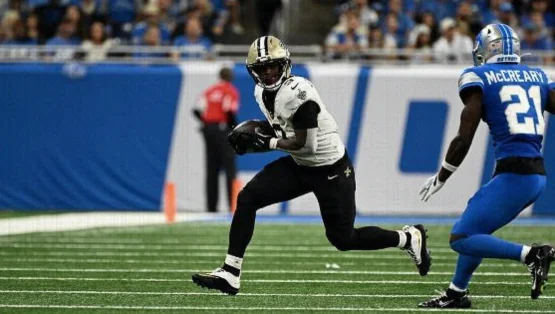
Travis Etienne Jr. delivered a usable 14.8-point total in New Orleans’ overtime defeat to the Lions, aided by seven catches for 32 yards after the Saints fell behind 21-0. The concern lies in how the rushing work was divided.
Etienne and Kendre Miller each received nine carries, while Miller handled a low-red-zone opportunity and scored on an 8-yard run. Etienne’s receiving skill keeps him viable as an RB2 or flex option, but the Saints’ rotation could limit his weekly ceiling if the workload remains split.
Quinshon Judkins faces a similar volume issue in Cleveland. The Browns runner posted 12 carries for 33 yards and added two receptions for 17 yards in the lopsided loss to Jacksonville, finishing with 7.0 fantasy points. Judkins is built to operate between the tackles and wear down defenses, but he may need close to 20 touches to become a reliable lineup difference-maker.
That kind of workload is difficult to sustain when Cleveland is chasing games, a scenario that could recur this season. Judkins should be viewed as a flex play entering Sunday’s game at Tampa Bay.
Atlanta’s quarterback injuries cloud London and Pitts
Drake London and Kyle Pitts Sr. were hurt by Atlanta’s quarterback situation rather than a lack of individual ability in the Week 1 loss to Pittsburgh. London caught both of his two targets for 29 yards, while Pitts ran 19 routes without receiving a target.
Cooper Rush, Atlanta’s third-string quarterback, started because Tua Tagovailoa was sidelined with an oblique injury and Michael Penix Jr. was dealing with a knee issue. Rush completed 54% of his throws and was intercepted twice, leaving the Falcons’ passing game unable to operate at an NFL-caliber level.
The availability of Tagovailoa and Penix for the Carolina game remains unresolved. Even if Rush starts again, London and Pitts should not automatically be removed from lineups. Carolina presents a more favorable opponent, and Rush will have another week of practice with the first-team offense.
McLaurin and Packers backfield remain watch-list situations
Terry McLaurin managed two catches on four targets for 14 yards in Washington’s Week 1 defeat at Philadelphia. The Commanders’ rookie offensive coordinator, a difficult road setting and Vic Fangio’s defense all contributed to a rough passing day. McLaurin also spent time against Eagles cornerbacks Quinyon Mitchell and Riq Woolen.
Washington gets a friendlier draw against Dallas in Week 2. McLaurin remains a WR2 or flex option rather than a player to bench after one difficult matchup.
Green Bay is operating without Josh Jacobs, who is on the commissioner exempt list, and its Week 1 loss to Minnesota offered little clarity behind him. MarShawn Lloyd led the backfield with 13 carries for 37 yards, while Chris Brooks had seven attempts for 29 yards. Each player saw one target, and neither recorded a reception.
Lloyd has enough projected volume to be considered a flex option against the Jets in Week 2. But without a clear difference-maker in the backfield, Green Bay may be forced toward a more pass-heavy approach, limiting the upside of both Lloyd and Brooks.