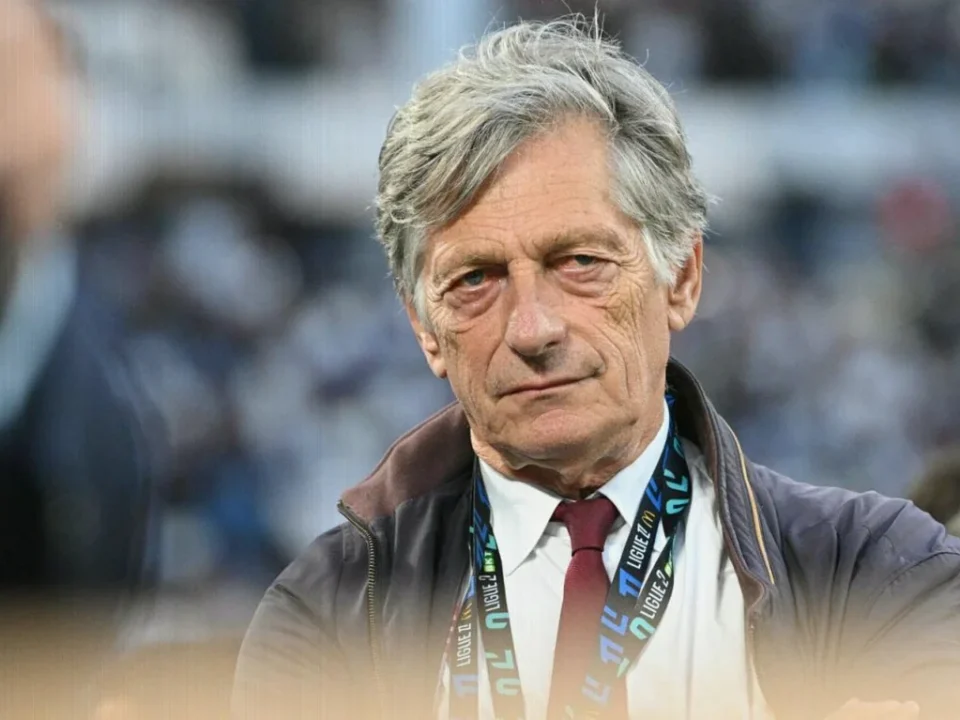
The first meeting room of French football’s governance reform is set for Thursday morning, with a late decision over club representation finally settling one of the tensions surrounding the process. Nicolas de Tavernost, president of Stade Rennais’ supervisory board and the former M6 chief, has been selected to join the political working group meeting at the French Football Federation headquarters at 9.30am.
The group has been created to shape the new governance of professional football following the law promulgated on 3 August. Its club-side membership had prompted several days of debate, particularly among opponents of Ligue de Football Professionnel president Vincent Labrune, who wanted an additional representative chosen from Pierre Ferracci of Paris FC or De Tavernost, seen respectively as figures connected to the Arnault and Pinault families.
De Tavernost has ultimately taken the place, joining Le Havre president Jean-Michel Roussier and Lyon executive Michael Gerlinger. Toulouse president Olivier Cloarec is also part of the panel, alongside Lorient owner Loïc Féry. Ligue 2 will be represented by Grenoble’s Max Marty and Guingamp’s Frédéric Le Grand.
Labrune will attend in his role as LFP president, together with Olivier Létang, head of the Ligue 1 college, Jean-Pierre Caillot for the Ligue 2 college, UNFP president David Terrier and Foot Unis representative Victoriano Melero.
The FFF delegation includes president Philippe Diallo, director general Jean-François Vilotte, and executive committee members Marc Keller of Strasbourg, Baptiste Malherbe of Auxerre and former Lyon president Jean-Michel Aulas.
The issues on the table
Thursday’s agenda is designed to establish and approve the political direction of the reform rather than deliver a finished structure. Discussions will cover the broad principles governing the new club company, including how authority is shared inside its governing bodies.
The working group must also consider the make-up, responsibilities, appointment procedures and dismissal rules for both the executive body and the supervisory body. The organisation of the general assembly, plus the tax and accounting treatment of transactions resulting from the new law, are also scheduled for examination.
A timetable for implementing the new governance model is another key item. The group has two further sessions planned, on 15 October and 29 October, as French professional football attempts to turn a politically sensitive reform into a working institutional framework.