
From Oslo, Norway’s football federation has carried its concerns beyond the touchline and into FIFA’s own internal chambers, asking for formal scrutiny of three episodes it believes raise wider questions about power, political neutrality and accountability in the global game.
The Norwegian Football Federation (NFF) has submitted two formal requests to FIFA: one to its Ethics Committee and another to the Governance, Audit and Compliance Committee (GACC). The applications were approved unanimously at an NFF assembly on 7 August, forming part of the federation’s longer campaign for stronger governance and political neutrality in international football.
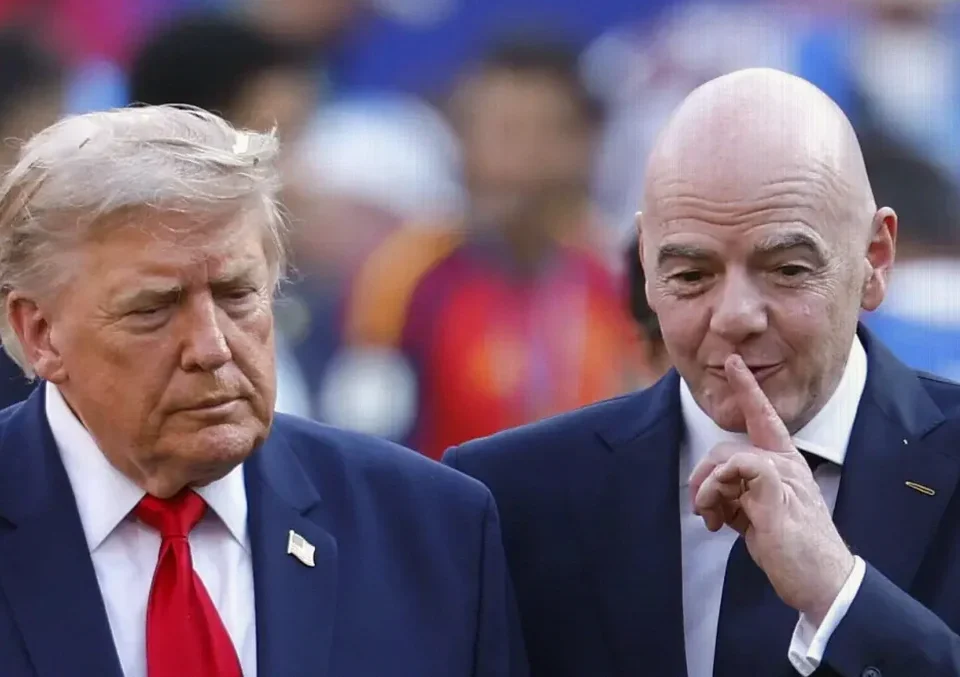
At the centre of the requests are the rescinded red card shown to United States forward Folarin Balogun before the World Cup meeting with Belgium, FIFA’s Forward Enterprise project, and FIFA’s peace prize awarded to US President Donald Trump.
Three cases, one governance question
The NFF wants the Ethics Committee to conduct an independent examination of whether FIFA president Gianni Infantino or other senior figures may have breached FIFA’s Code of Ethics. Its submission to the GACC asks whether FIFA’s decision-making, oversight and internal safeguards operated as they were meant to, and whether weaknesses in governance enabled the three matters to occur.
NFF president Lise Klaveness said the cases point to a broader issue: whether FIFA’s influence or authority had been used improperly, and whether the controls intended to prevent such conduct had worked.
Norway is not asking FIFA’s bodies to reach a predetermined verdict. Rather, Klaveness said, the federation wants the relevant panels to establish the facts and assess whether governance and supervision met the required standard in matters of major importance to world football. Should shortcomings be identified, the NFF expects transparency, responsibility and corrective action.
The federation believes an investigation should consider whether FIFA’s award to Trump was compatible with the organisation’s political neutrality; whether political intervention in the Balogun disciplinary case affected the independence of that process; and whether the Forward Enterprise initiative was developed without consultation with FIFA’s member associations.
The Forward Enterprise plan was intended to market externally the commercial rights connected to FIFA competitions. For the NFF, its handling belongs in the same institutional examination as the Balogun case and the peace prize.
Klaveness said the purpose was to establish the facts and ensure that FIFA is held to its own rules. Trust in football, she argued, relies upon confidence in its institutions, and serious questions must therefore be tested independently and openly.
A wider World Cup backdrop
The Norwegian intervention emerged on the same day as separate investigations raised concerns over the Democratic Republic of Congo’s World Cup status. Those reports argued that the country should have faced exclusion from the tournament because goalkeeper Lionel Mpasi was allegedly ineligible while under investigation, since November 2025, over nationality questions and possible passport fraud.
For Norway, the immediate cases differ in subject but meet at the same crossroads: the credibility of the rules, the distance between political influence and sporting decisions, and the ability of FIFA’s own mechanisms to examine the organisation when its authority is called into question.