Consistency, rather than any individual decision, has become the uncomfortable theme around Serie A’s refereeing direction after two similar incidents in Como and Lecce received sharply different punishments.
Daniele Orsato has made clear that the league’s officials are expected to maintain a higher threshold for intervention through the end of the season. The message has been that the line is set and should not be moved backwards. Serie A president Ezio Maria Simonelli has also underlined the need for technical uniformity. Yet the latest round offered a difficult counterpoint, with decisions that appeared to alter the texture and outcome of the two matches.
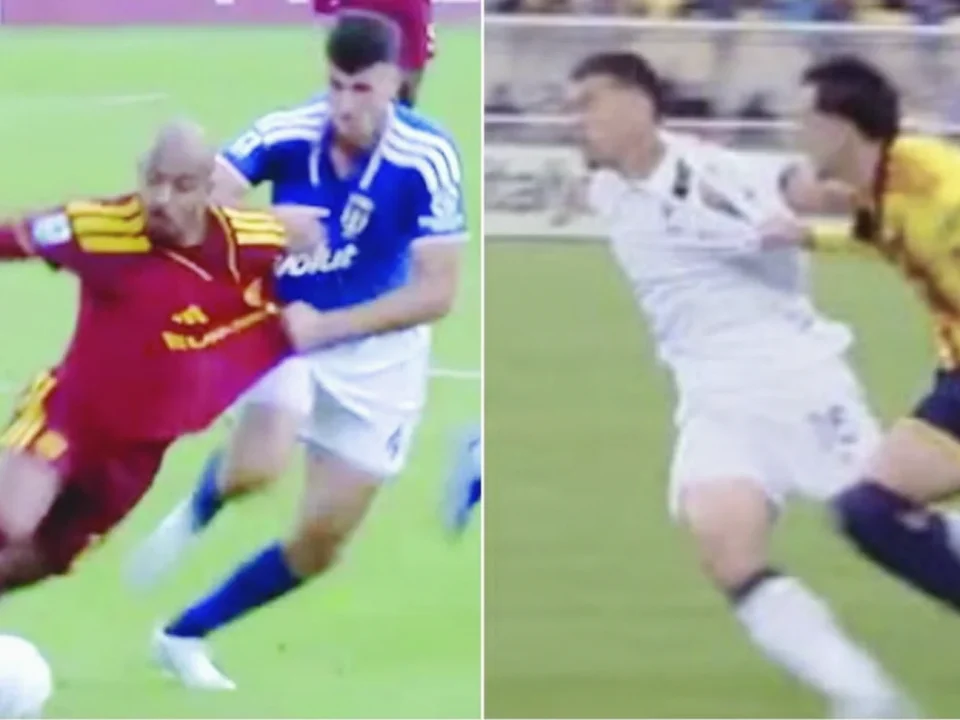
At Como, referee Michael Fabbri dismissed Donyell Malen for a challenge on Kaiki. On its own terms, the decision was sound: Malen went in with his right leg extended, his foot high and forceful, and the tackle endangered his opponent. It was the sort of intervention that fits the definition of serious foul play.
Only a few hours later in Lecce, however, Luca Pairetto showed El Azzouzi only a yellow card after his challenge on Ndri. The argument over whether El Azzouzi’s leg was fully straight does not settle the wider issue. The contact was higher, he arrived with both feet involved, and the challenge was similarly capable of putting the opponent at risk. The contrast left a simple question: if Malen’s tackle required a red card, why did this one not?
Two matches, no common line
The Como match also contained another episode involving Malen. Before the forward’s dismissal, Ramon appeared to hold him twice, stretching his shirt and knocking him off balance, but play was allowed to continue. A high threshold can explain a reluctance to whistle every minor contact, but a clear holding offence remains a foul regardless of the broader instruction to let matches flow.
In Lecce, Pairetto initially allowed play to continue after Esteban held Casale, before changing his own decision and cancelling a penalty. As the game had not restarted, he was entitled to correct the call. Even so, the sequence made the comparison with Como harder to avoid: one holding incident went unpunished, while another was ultimately penalised after a rethink.
Fabbri’s afternoon then became still more unsettled. After he was forced off, Simone Sozza took over and the contest quickly lost some of its previous tension. There were further calls that drew scrutiny, including Caqueret stopping a Molina throw-in with his hand, an offence that appeared to warrant a straightforward booking.
Como also protested after Wesley’s challenge on Diao near the end of the first half, believing a red card was required. The more balanced reading was that Diao had sought the contact, with Wesley behind him, but that there was still a foul and a yellow card for stopping a promising attack.
None of these moments alone defines a season. Together, though, they test the principle Orsato has put forward. Serie A can choose a higher line for fouls and physical contact, but it needs that line to be recognisable from one Sunday afternoon to the next.