Serie A’s first five rounds have brought a noticeable change in the way matches are being managed: fewer whistles, more continuous football and a VAR protocol intended to stay in the background unless an official has missed an important incident.
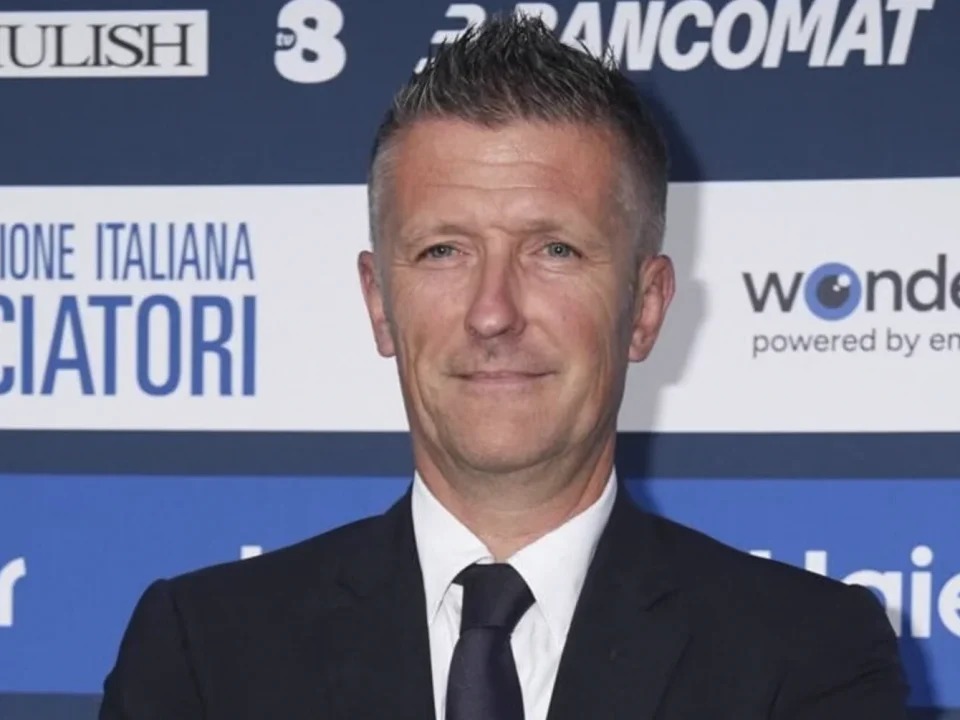
Refereeing chief Daniele Orsato restated that approach during a meeting with Serie A clubs at the IBC in Lissone, where coaches were invited to discuss the early weeks of the campaign. The central instruction is straightforward: allow play to continue and avoid penalising marginal contact.
The figures point to an immediate effect. Average effective playing time has risen to 59 minutes and 31 seconds, while the average number of fouls has fallen to 22.60 per game. Referees have awarded only two penalties in the opening five matchdays, compared with nine at the same stage last season, and dismissals have also decreased.
A more restrained VAR role
Video review has been used sparingly under the new direction. There has been one on-field review and two VAR overturns across the first five rounds.
Orsato reiterated that VAR should step in only when the referee has failed to see an incident, or has seen it incorrectly. The intention is to give the referee’s assessment greater weight in situations that remain open to interpretation, while ensuring clear mistakes can still be corrected.
That distinction was central to the discussion of two recent penalty incidents. Orsato and technical director Domenico Messina accepted that Pierre Kalulu’s challenge on Rowe in Juventus’ match against Atalanta should have resulted in a penalty. Atalanta had strongly contested the decision, while Sarri also called for VAR to be abolished.
By contrast, the contact involving Heggem and Oristanio in Bologna-Torino was judged not to warrant a penalty. The explanation given was that it remained a referee’s on-field assessment rather than an error requiring intervention.
Messina said the refereeing body would address the mistakes made so far without changing the technical direction. “We will work to prevent the limited number of errors we have seen, but we will not give up any ground on the approach we have adopted,” he said.
Coaches seek a consistent threshold
The gathering drew significant participation from the league’s coaching group, with Chivu, Gattuso, Amorim, Spalletti and De Rossi among those present.
For the clubs, the key issue is not the promise of a faultless season, but a consistent standard that coaches can explain to their squads. League president Simonelli said the meeting had shown a willingness within the refereeing structure to examine its own decisions.
“There was a strong sense of self-criticism,” Simonelli said. He highlighted Orsato’s focus on referees’ positioning, arguing that officials are now covering greater distances as the game becomes less fragmented.
Simonelli said Serie A is being played for around five and a half minutes longer than last year, and seven minutes longer than two seasons ago. A referee now typically covers between 12 and 13 kilometres during a match, he added, with no possibility of a half-time replacement unlike a coach making substitutions.
“Coaches want to understand the standard so they can pass it on to their players,” Simonelli said. “It was a positive meeting. The referees also showed the situations in which they have made mistakes. We know errors have happened and that they can happen again, but the aim is to prevent them from being repeated and to avoid different decisions within the same match or from one match to another.”
For Orsato’s group, then, the opening chapter is one of encouragement rather than complacency. The league has gained rhythm and effective playing time, but the Juventus-Atalanta episode remains a reminder that a clearer line still depends on accurate decisions when the pressure rises on a Sunday afternoon.