Barcelona’s Champions League campaign has underlined both the value and the risk in building from the back with Pau Cubarsí. His red card in the previous tie against Atlético de Madrid damaged the Catalan side’s prospects, yet Paolo Montero believes the defender’s rise is proof that patience with exceptional young players can bring a club-level reward.
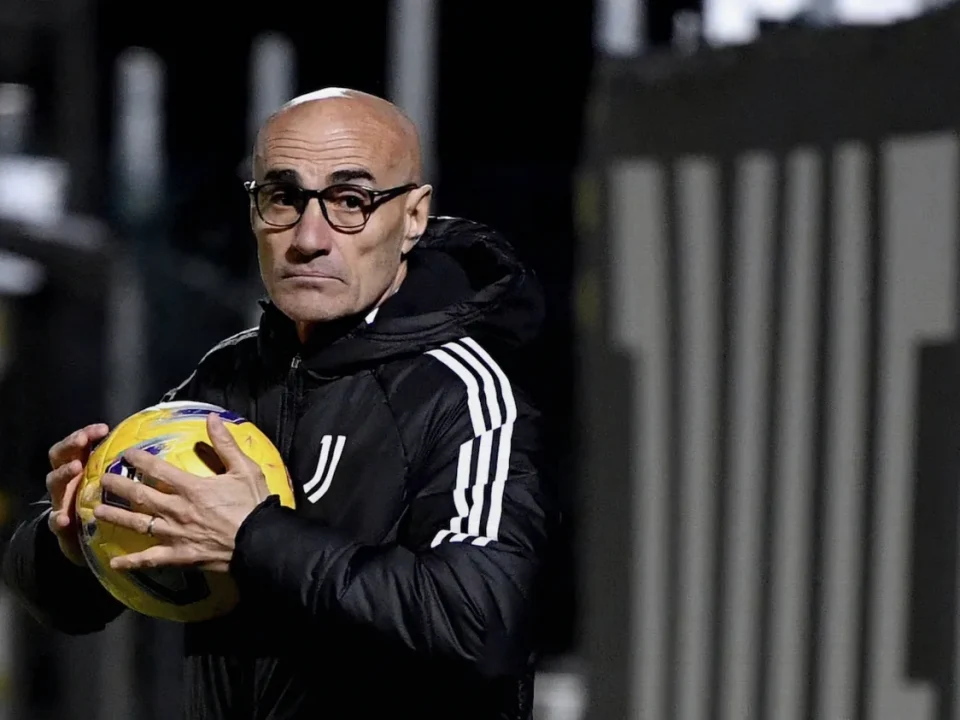
Montero, the former Juventus and Uruguay centre-back, delivered a sweeping endorsement of Cubarsí while appearing in Venice at the Golden Boy 2026 event, where he unveiled the final five nominees. The 1990s Calcio defender, who played alongside Ciro Ferrara and holds the Italian league record with 16 dismissals, said Barcelona’s teenager is already among the game’s finest defenders.
“Before long he will be one of the best defenders in the world,” Montero said. “In truth, he is already one of the best.”
Patience behind Barcelona’s defensive leader
For Montero, Cubarsí’s development has been accelerated by the faith shown in him at Barcelona and in Spain. Playing in a side that pushes its defensive line high and asks its centre-backs to begin attacks, he said, inevitably exposes a young player to mistakes.
“Barcelona gave him time to improve,” Montero said. “At the start he made mistakes, but he does not make them now. He has grown.”
The Uruguayan contrasted that approach with the climate in Italy, where he believes clubs are less prepared to allow emerging players the space to develop. He cited Cubarsí and Barcelona team-mate Lamine Yamal as examples of youngsters who have benefited from sustained trust rather than instant judgement.
Montero said Yamal, now increasingly discussed as a Ballon d’Or contender, was once more inconsistent: capable of a decisive action every 10 minutes, but not yet a threat every time he received the ball. Barcelona’s willingness to wait, he argued, has helped produce a player who can now decide matches at the highest level.
Cubarsí, a 19-year-old World Cup winner and the tournament’s best young player, still has a striking amount of room to improve, in Montero’s view. “He is like an adult inside a child’s body,” he said.
A modern Barcelona defender with old Calcio instincts
Montero placed Cubarsí among formidable company when asked which past defenders he most resembles. He named Alessandro Nesta, Fabio Cannavaro, Ciro Ferrara, Lilian Thuram and Paolo Maldini, stressing that the comparison is founded on tactical awareness rather than physical likeness.
Barcelona’s current system makes that anticipation essential. With the team defending close to the halfway line and pressing forward, a centre-back must identify where the next pass will go or risk being left exposed. Montero sees Cubarsí’s reading of the game as a defining strength.
That intelligence also explains why the defender can act as Barcelona’s first distributor and, during long spells of possession, almost as an additional midfielder. Montero fully agreed with that assessment.
More than technique, however, he has been struck by Cubarsí’s temperament. The defender was only 17 when he began producing such assured performances in a Barcelona shirt, a level of composure Montero considers especially significant.
“I always look at personality,” he said. “To wear the Barcelona shirt at that age and perform like that says a great deal.”
Cubarsí and Yamal belong to the same generation but present very different characters: the winger is more overtly forceful, while the centre-back is quieter and more reserved. Montero said that distinction reflects the demands of their roles, with defenders often more restrained than attacking players.
He returned to Maldini as the model, noting that the Milan great was also understated despite his imposing 1.90m presence. Montero’s wider conclusion was that the finest footballers are often humble, discreet and calm, qualities he sees in Cubarsí.
He also rejected the suggestion that defensive players should be viewed as less talented than creative or attacking stars. “A defender can be a talent too, in his own way,” he said, recalling how Gennaro Gattuso and Andrea Pirlo offered different forms of quality while complementing one another.
Huijsen and a possible Spain partnership
Montero also highlighted Dean Huijsen, whom he coached in Juventus’s youth ranks and now sees at the right level after his move to Real Madrid. “Huijsen is another talent,” he said.
He would not draw a direct comparison between Huijsen and Cubarsí, describing them as defenders with different profiles and different interpretations of the position. Yet he can imagine them forming a major partnership for Spain, comparable in importance to the celebrated Italian combinations of Thuram and Cannavaro at Parma, or the Milan group of Franco Baresi, Alessandro Costacurta, Nesta and Maldini.
Asked whether the pair could operate together for the national team, Montero answered without hesitation: “Yes, yes, yes.”
Huijsen’s next challenge, he said, is to absorb the scrutiny that comes with playing for Europe’s biggest clubs. At Real Madrid, Juventus, Barcelona or Manchester, criticism is unavoidable; the important task is to take it constructively and use it to improve.
Montero also pointed to José Mourinho, who had sought to sign Huijsen for Roma, as a coach capable of strengthening the defender’s mentality. Mourinho’s influence, he said, could help make the young centre-back “mentally tough” for the demands of elite European football.