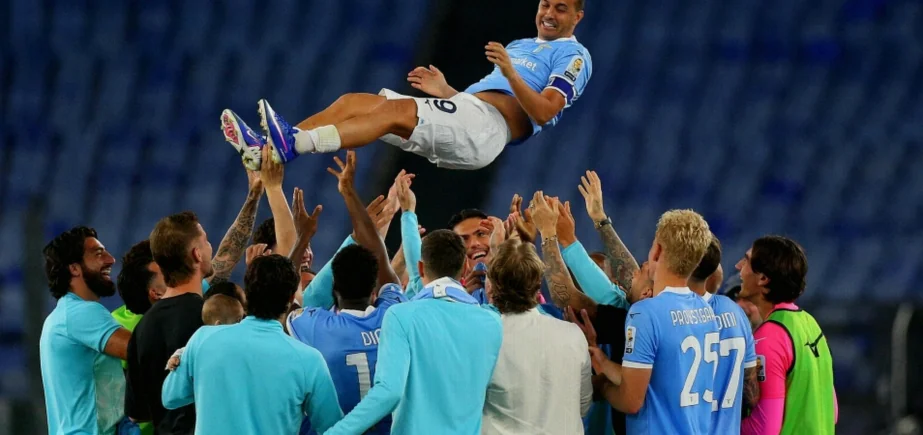
Pedro Rodríguez leaves football with the rare sense of a player who remained useful through every change around him. At 39, after 20 professional seasons, the Tenerife-born forward has announced his retirement and drawn a line under a career that crossed the great Barcelona years, England, Rome and five seasons at Lazio. “I feel it is time to take a step forward and begin a new chapter of my life,” he said in his farewell message.
His final club was Lazio, where experience never became an excuse for standing still. Pedro’s contribution in Rome was built on the qualities that had shaped him from the beginning: clean finishing, intelligent movement and the discipline to serve the collective game. He arrived in Serie A after turning 30, first joining Roma in 2020, when doubts over his future had begun to gather after an uneven, injury-affected final period at Chelsea.
That first Italian campaign under Paulo Fonseca did not always run smoothly and could easily have appeared to be the closing act. Instead, Pedro found fresh purpose across the city at Lazio. In the later years of his career, he offered the club not simply flashes of a famous past but a standard of daily professionalism. Marco Baroni, one of his coaches, described him as “incredible” and “a model”, saying that he leaves within a squad the kind of seed that benefits everyone else.
The move to Italy was consistent with a career defined by accepting new challenges. Pedro began at Club Deportivo San Isidro before entering Barcelona’s academy at 17. Frank Rijkaard gave him his Liga debut in 2008, when he was 21, and the ascent was rapid. Under Pep Guardiola, the major figure in his development, he became an essential part of an extraordinary attacking unit, later continuing under Tito Vilanova, Gerardo Martino and Luis Enrique.
He played alongside a changing cast of elite forwards and still made himself indispensable: Lionel Messi, Thierry Henry, Zlatan Ibrahimovic, Alexis Sánchez, David Villa, Luis Suárez and Neymar all shared attacking lines with him at Barcelona. Pedro had the judgement to find space in crowded areas and the patience to wait for the moment to arrive. His most productive scoring season came under Martino, when he scored 15 Liga goals and 19 in all competitions.
A career measured in trophies and decisive moments
Barcelona provided five league titles, three Champions Leagues, seven further domestic trophies and five international honours. At Chelsea, Pedro added the Premier League, FA Cup and Europa League. His 23 club trophies were joined by the World Cup and European Championship won with Spain, taking his overall total to 25.
For Spain, he made 65 appearances between 2010 and 2017 and scored 17 goals. He was part of the national side that won the 2010 World Cup in South Africa and followed it with the Euro 2012 title, an era in which Spain set the pace in international football.
Pedro also played 27 club finals, winning 16 of them. He shared the distinction of scoring in both a Champions League final and a Europa League final, while his place in the record books extends further: he was the first player to win all the principal international trophies. In 2009, during Barcelona’s historic year, he became one of only two players, alongside Messi, to score in six official competitions in a single calendar year.
Italy did not bring him another trophy, but it gave the final stretch of his career its own significance. Pedro said that football had made him “so happy” and added that Italy had touched his heart. Lazio became the setting for a veteran player who knew how to conserve his influence without reducing his commitment.
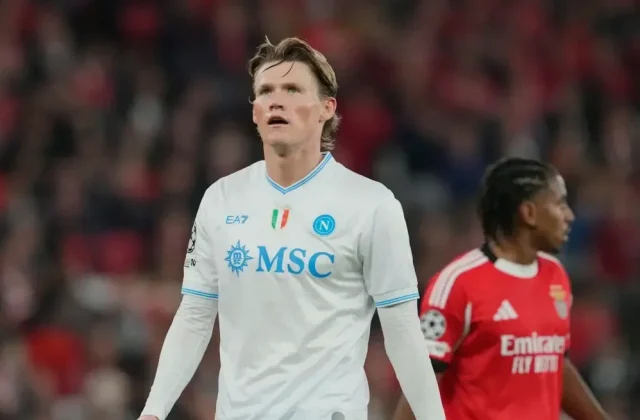
One episode ensured that his Italian story reached beyond the capital. In the 2024-25 season, when Antonio Conte guided Napoli to the club’s fourth Scudetto, Pedro scored twice against Inter at San Siro. Those dropped points proved important in the title race and secured him an unlikely place in Naples’ championship folklore. From Forcella to the Spanish Quarter and Posillipo, gratitude for that afternoon has endured, accompanied by the familiar refrain: “Pedro Pedro Pè…”
It is a fittingly Italian coda to a career that began in Barcelona’s academy and travelled through some of European football’s most demanding dressing rooms. Pedro was never merely an ornament in great teams. He understood the game’s changing demands, adapted to coaches and teammates, and remained prepared when the decisive opening appeared.