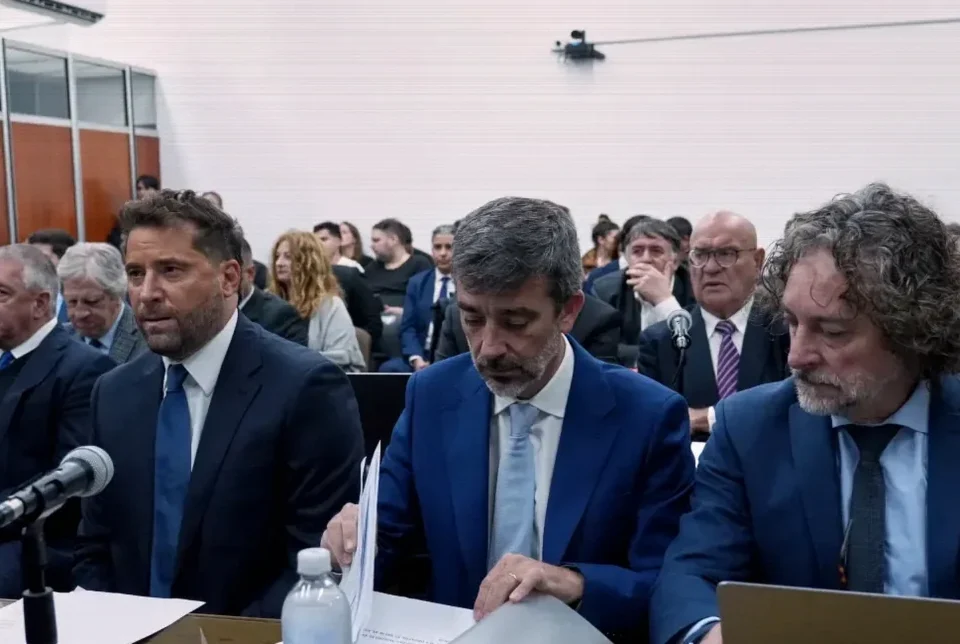
In the closing stretch of the trial over Diego Armando Maradona’s death, prosecutors have set out prison terms ranging from four to 12 years for six members of the medical team responsible for his care. They also asked for the acquittal of a seventh doctor, arguing that he held neither authority nor decision-making power over the former Argentina captain’s treatment.
A chaotic final fortnight in Tigre
Maradona died on 25 November 2020 while receiving home care following brain surgery. In their final arguments, prosecutors portrayed his last two weeks as a period of disorder, with no coherent medical structure around a highly vulnerable patient.
The treatment at the house was described as chaotic, inadequate and reckless, with failures in planning, communication and supervision said to have contributed to Maradona’s death. Prosecutors argued that the home was not equipped for a patient requiring complex care, and that decisions which might have brought him into specialised rehabilitation or clinical treatment were not properly pursued.
- Six defendants face requested custodial sentences and professional bans.
- The requested jail terms run from four years to 12 years.
- Prosecutors maintained that different actions and failures by the accused played a role in the death.
- Clinical doctor Pedro Di Spagna is the only defendant for whom prosecutors sought acquittal.
Luque and Forlini identified as central figures
Neurosurgeon Leopoldo Luque, Maradona’s personal doctor, faces the most severe request: 12 years in prison and a 10-year ban from practising medicine for simple homicide with possible intent.
Prosecutors said extensive evidence established Luque as Maradona’s main doctor and one of two leaders of the home-care arrangement. They alleged that he failed to follow up on examinations advised by a cardiologist, did not arrange admission to an appropriate rehabilitation facility and approved the move to a house unsuited to the complexity of Maradona’s condition.
Patricio Ferrari, speaking for the prosecution, said Luque “did everything possible for things to go wrong.”
Nancy Forlini, the Swiss Medical home-care coordinator, was identified as the other key figure in the treatment structure. Prosecutors requested 10 years in prison and a further 10-year professional disqualification for simple homicide with possible intent.
They said Forlini did not assess whether the property was functionally suitable before Maradona was taken there, and did not ensure the presence of essential equipment or specialists. The alleged missing provisions included resuscitation tools, ECG capability, laboratory support and an ambulance.
Forlini was also accused of leaving the medical team disconnected from one another, failing to share daily nursing reports with doctors and taking no action after hypertension and tachycardia were recorded in the week before Maradona’s death.
Claims involving the psychiatric, psychological and nursing staff
Psychiatrist Agustina Cosachov faces a prosecution request for eight years in prison and a 10-year professional ban. The proposed charges are simple homicide with possible intent and false documentation.
Prosecutors alleged that Cosachov, like Luque, did not secure a place for Maradona in a clinic and instead backed care at an unsuitable property without subsequently confirming that the arrangement could work. They also accused her of approving the removal of therapeutic companions, disregarding symptoms consistent with heart failure and falsifying treatment-related records.
The symptoms listed by prosecutors included oedema, swelling, shortness of breath, an altered or robotic voice and fatigue.
- Carlos Díaz: Prosecutors requested five years in prison and a 10-year professional ban for negligent homicide. The psychologist was accused of acting beyond his medical remit, seeking to limit nurses to administering medication, concealing Maradona’s real condition from relatives and restricting access to him in his final days.
- Mariano Perroni: The head of nursing faces a request for four years in prison and an eight-year ban for negligent homicide. He was accused of not ensuring that the nursing service carried out its duties or supervising the staff under him.
- Ricardo Almirón: The nurse also faces four years in prison and an eight-year professional ban for negligent homicide. Prosecutors alleged that he missed obvious heart-failure signs, falsely recorded a patient check, failed to complete a proper handover and did not carry out vital-sign checks on the day Maradona died.
In Díaz’s case, prosecutors said his approach to isolation took precedence over family contact and access by doctors from other specialties. Perroni was further accused of being involved in changes to nursing records from the day of Maradona’s death, and of failing to respond when Maradona objected to one nurse checking his vital signs.
Prosecutors seek Di Spagna’s acquittal
Pedro Di Spagna, a clinical doctor called in by Swiss Medical as a consultant, is the lone accused person whom prosecutors say should be cleared.
They argued that Di Spagna was neither Maradona’s coordinator nor his principal doctor, and therefore lacked the authority to direct the player’s medical course. He visited Maradona on 12 November and recommended tests. When he returned to the house on 18 November, Maradona did not receive him.