Lazio’s rise has found an unlikely centre in Reda Belahyane, while Milan are still searching for the outline of a team under Ruben Amorim. Between those two stories sits the familiar Serie A truth: a season can turn when a coach recognises a player in need of trust, or loses time trying to make a squad fit an idea.
Belahyane has been in Italian football for more than two years, yet his age has perhaps been obscured by the speed of events around him. He only turned 22 on 1 June. The France-born midfielder, who represents Morocco at international level, appeared to have slipped out of Lazio’s plans after Maurizio Sarri judged him unsuitable. A departure, perhaps even a return to Verona, seemed the natural next step.
Gennaro Gattuso has instead made him essential. Lazio’s midfield injuries, particularly to Nicolò Rovella and Danilo Cataldi, certainly created an opening, but the coach’s faith has done the rest. Belahyane has become the reference point of a Lazio side now leading the table, bringing tactical awareness, clean touches and a capacity to affect the match rather than merely occupy a place in it. When the injured midfielders return, it will be difficult to justify removing a player who has given the side such balance and personality.
Mina’s value to Cagliari
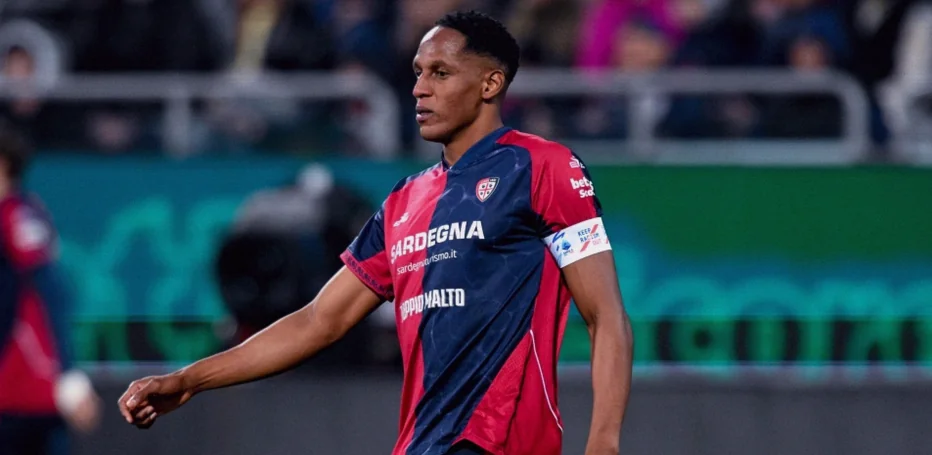
Yerry Mina’s revival has followed a different path, but it also began with a coach’s intervention. Claudio Ranieri called him when the Colombian was effectively stranded at Fiorentina, training and collecting his wages without being used in matches. Ranieri invited him to join Cagliari for a survival fight, and Mina found a setting suited to the intensity of his football.
His career had already taken him as far as Barcelona, but his importance in Sardinia has been built on confrontation: strength in duels, aggression, determination and an ability to pull team-mates into the contest. Opponents often regard his provocations as part of the problem. Luciano Spalletti recently complained that Mina had mocked his side; Mina’s reply was straightforward, saying that this was simply his way of playing and adding, “Coach, I care about you.”
There are players who are unbearable when they wear the other shirt and indispensable when they wear yours. Mina belongs to that category. He can go too far and he can irritate, but Cagliari benefit from the energy he provides, the battles he starts and the collective edge he creates. Behind the hard image is a player whose usefulness is impossible to ignore.
Milan need clarity from Amorim
At Milan, the concern is less about one individual than the lack of a recognisable direction. Amorim arrived committed to a 3-4-2-1, presenting it as the framework of his football rather than a starting point to be adapted. The difficulty is that a coach must usually draw the best from the players available, rather than ask the entire group to serve a fixed system.
When that structure failed to produce results, the adjustments brought further uncertainty. The decision against Sassuolo to use a midfield short of numbers and without a genuine distributor was one example of a side still looking unsettled. More troubling than any single formation is the absence of a visible identity: it remains unclear what Milan are trying to be from one week to the next.
Selection has added to the doubts. Cisse, impressive with Italy Under-21s and already decisive in the Rossoneri shirt, was introduced only in the 78th minute. Milan still have time to recover their season, but the club need their coach to establish clearer priorities quickly. In a long championship, uncertainty can become a habit unless it is confronted early.