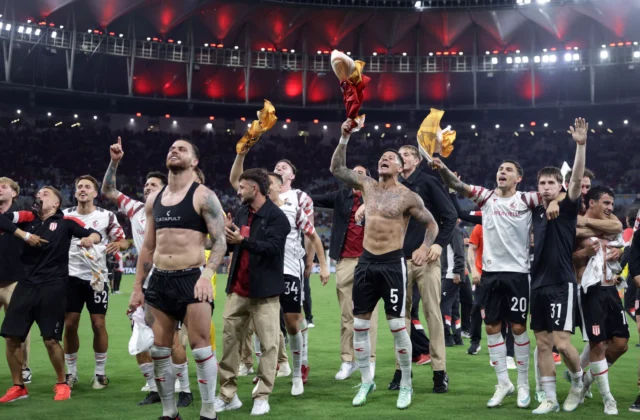
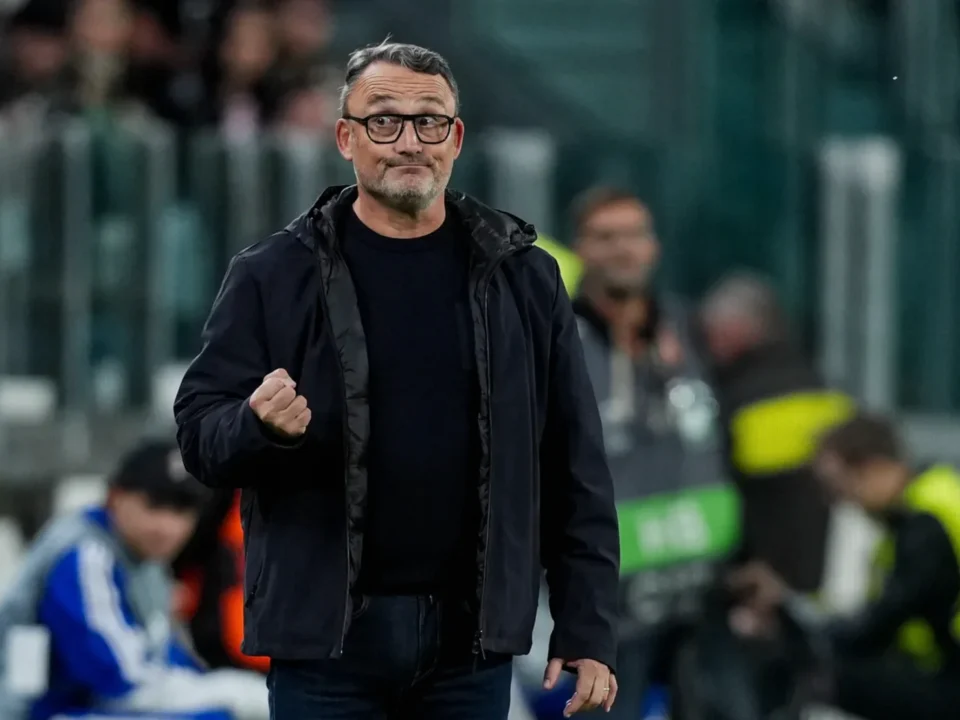
In the noise and tension of Turin, Rennes found a different rhythm. Their 2-2 draw with Juventus on Thursday did not settle every concern around Franck Haise’s side, but it offered a far more convincing picture of a team that had recently appeared too open, especially away from home.
Some 2,300 Rennes supporters packed the away end and made themselves heard for long spells inside a restless Juventus Stadium, where frustration with the Italian side’s difficult start to the campaign was clear. Rennes could have lost the match, yet they also came close to leaving with victory after producing one of their most complete performances of the season.
The result came despite an already encouraging set of numbers. Rennes sit fifth in Ligue 1, only one point off top spot, have scored more goals than any other team after seven rounds, and opened their Europa League campaign with one win and two draws. Yet the performances had drawn criticism. Haise’s players had too often lacked control, while the defence had been exposed on the road in successive defeats: 4-0 at Lyon and 4-3 against Paris FC.
A rapid switch pays off in Turin
The defeat at Stade Jean-Bouin appears to have accelerated Haise’s decision to move away from his usual 4-3-3. Rennes lined up in a 3-5-2 against Juventus, a system prepared in only two training sessions alongside extensive video work.
Defender Anthony Rouault said the players had been informed after Sunday’s game and that the change had not been widely discussed beforehand. He felt, however, that the squad adapted quickly because many had previous experience of a back three. Rouault had used it under former Rennes coach Habib Beye, while Charlie Cresswell had played in that shape at Toulouse.
Valentin Rongier, the Rennes captain, revealed that senior figures had spoken with Haise before the tactical adjustment. “There were plenty of conversations with the experienced players,” he said. “The coach needs our feedback to make decisions. He asks how we feel on the pitch so that he can put us in the best conditions.”
Rongier also believed Juventus had not anticipated the new formation. Rennes saw uncertainty in the home side’s pressing and were able to exploit it, with the captain confident that the structure can become more polished with further work.
The wing-backs gave Rennes greater thrust and width. Nagida was outstanding down the left and was named man of the match, while Mousa Tamari combined his usual speed with sharper end product. The Jordanian beat opponents more regularly and scored his first goal of the campaign after arriving centrally to finish.
Rennes also benefited from cleaner connections between midfield and the flanks. The three central midfielders had more natural options than in previous matches, when wide forwards such as Issa Soumaré and Tamari had sometimes struggled to contribute to combination play from advanced wide positions.
Haise sees a system suited to his squad
Haise said the new plan gave Rennes more defensive security and improved their ability to play through pressure. Juventus are normally aggressive without the ball, but Rennes enjoyed longer spells of possession and showed greater composure when building from the back.
“We had been too vulnerable defensively and not protected enough,” Haise said. “This shape gave us more stability. We had better periods of control when playing out against a Juventus team that usually presses very hard.”
The Rennes coach was pleased not only with the tactical result but with the character shown in Italy. He said the approach suited a significant part of his group and highlighted their strengths, adding that he was proud of the performance, the attitude and the personality of his players.
The return to a three-man defence carries some history at Rennes. Beye’s use of the formation had frustrated sections of the support over many months, before the club regained momentum with a more conventional 4-3-3. But Haise’s version in Turin looked more fluid and balanced, and the early evidence suggests it could become an important alternative rather than a one-off European surprise.
Rongier welcomed that possibility, saying Rennes would gain an edge if they could perform well in more than one setup and make opponents less certain of what was coming. Haise accepted that the system may not suit every player equally, but said it fit many of them and confirmed that there was a real chance it would be revisited and used again during the season.