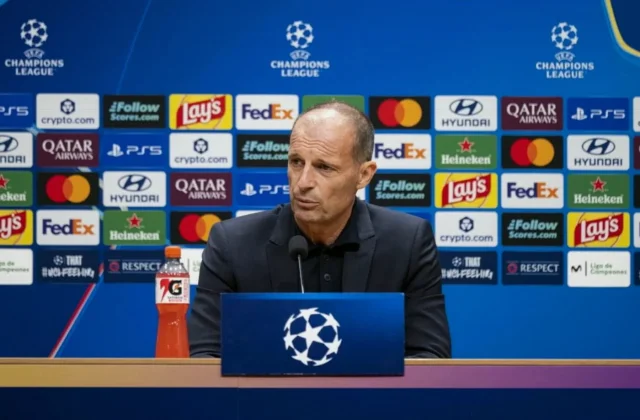
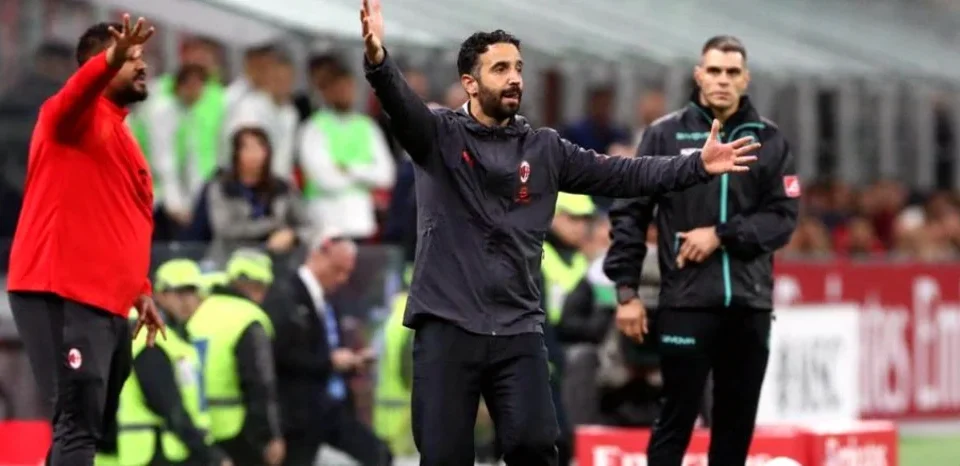
Four months into his Milan tenure, Ruben Amorim is already writing a different kind of championship chapter from the one many expected. The coach arrived with a clearly recognisable 3-4-2-1, but Serie A has encouraged adaptation rather than repetition. Milan have not abandoned the original idea; they have made it less rigid, changing their structure within matches and offering opponents fewer fixed reference points.
The coach and the club
Amorim has learned two important lessons early in his Rossoneri spell. One is that his tactical convictions require some adjustment if he is to avoid the difficulties experienced in Manchester. The other is that Milan need more than one way of playing.
He has acknowledged that, even if Italian football may not lead England in every respect, Serie A coaches are quick to understand a side that keeps presenting the same pattern. His response has been to retain the principles of his preferred system while giving the team a wider range of shapes.
When asked about formations, Amorim has made light of the fascination around them, asking whether people really enjoy speaking about such matters. His own view remains that the numbers on a teamsheet are secondary to the positions players occupy and the way they interpret them. Milan’s recent matches have given weight to that argument.
A shape that changes with the match
The 3-4-2-1 has not disappeared, but it is no longer present from the first minute to the last in its pure form. In recent outings, the remaining constant has often been only part of the back three. Milan can be difficult to define with one label because their organisation alters as play develops, particularly through the movements of the wide defenders.
Against Atalanta, Milan spent much of the match with a defensive line of four. That line shifted into a three when Gila pushed forward on the right or Moreira did so from the left. In the first phase of build-up, Modric regularly dropped between the central defenders to provide another passing option and protection.
The midfield has become equally difficult for opponents to map out. Adrien Rabiot was central to Amorim’s plan against Atalanta: he helped ensure Ramos was not isolated again, while also strengthening Milan when they did not have the ball. Christian Pulisic’s willingness to track back and cover ground supported Rabiot’s broad role across the pitch.
Modric benefits from the new balance
At different points against Atalanta, Milan could be read as a 4-2-3-1, with Rabiot behind the striker, Samuel Chukwueze on the right and Pulisic on the left. There were also periods closer to a 4-3-3, a structure that appears to reflect Amorim’s recent adjustments most clearly.
That added midfield support has helped Luka Modric. With two players around him rather than one—Yunus Musah in a more permanent role and Rabiot moving into support when required—the Croatian has found better conditions to connect Milan’s phases of play. He has consequently looked more influential than in the opening part of the season, returning to the work of linking and directing the game that he delivered so consistently last year.
For Amorim, then, the point is not a public renunciation of his preferred system. It is the construction of a Milan capable of changing its clothes during a Sunday afternoon, while keeping enough of its original identity to remain recognisable.