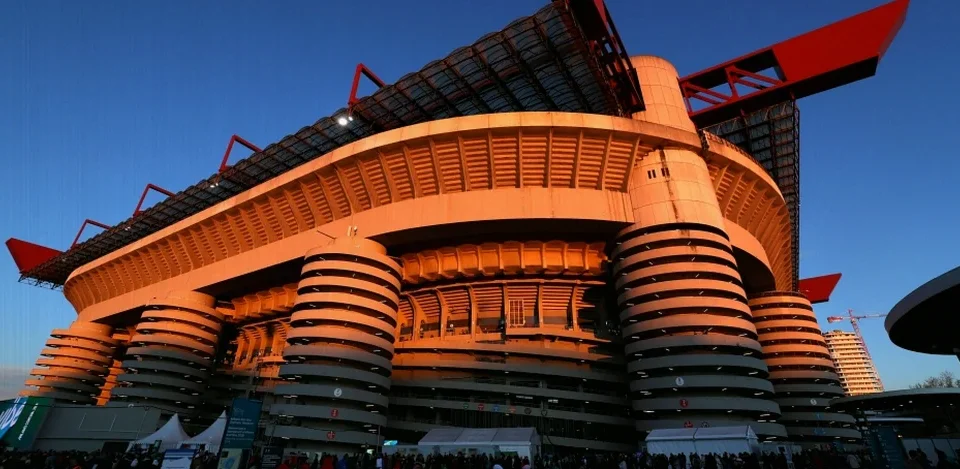
San Siro reaches its 100th birthday on 19 September 2026 still at the heart of football in Milan, but its centenary also underlines the commercial task facing Inter and Milan. The stadium has become a substantial revenue generator for both clubs, yet the European comparison shows that its greatest limitation is not attendance or history: it is the amount that can be earned from each visitor and on every non-matchday.
Key takeaways
- Inter and Milan now derive roughly €150 million to €170 million a year from San Siro in a typical season.
- Inter reported €98 million in match-related income for 2024/25, while Milan’s latest accounts recorded €61 million from stadium operations.
- M-I Stadio, jointly controlled by the two clubs, produced €26.7 million in non-matchday revenue during 2024/25.
- Inter earned €49 per spectator and Milan €34, far below the leading European stadiums.
- A replacement stadium is expected to expand hospitality, food, retail and weekday-event opportunities.
A century-old stadium with a growing business
Opened in 1926, San Siro has been reshaped several times while hosting World Cup matches, European finals, concerts and generations of supporters. It is now owned entirely by Inter and Milan, who share both its sporting importance and its economic potential as they await the next stage of their stadium project.
Inter’s 2024/25 figures offer the clearest indication of the scale available at the ground. Matchday revenues reached €98 million in the financial year ending 30 June 2025, up from €69.2 million in the preceding season, excluding friendlies and other tournaments. The increase of around 40 per cent reflected a particularly full home programme: Inter reached the Coppa Italia semi-finals and the Champions League final, producing the maximum number of home fixtures.
Higher average prices for tickets and season passes, alongside consistently strong crowds, also contributed. Milan’s most recent accounts showed €61 million in stadium revenue on the same basis. Across the two clubs, San Siro has therefore become a business capable of delivering around €150 million to €170 million annually, although the final figure still depends heavily on the volume and calibre of football played there.
That distinction was evident again in 2025/26. Inter were estimated to have brought in about €90 million despite a less exceptional European campaign, while Milan were estimated at roughly €60 million after missing out on European competition altogether. The stadium’s value is substantial, but its matchday income remains tied to the calendar created by results.
The building is increasingly active away from the fixture list. In 2024/25, M-I Stadio generated €26.7 million from non-matchday activity, compared with €25.3 million a year earlier. Concerts and associated recharge income delivered €10.2 million, while the museum and stadium tours added €7.3 million. Hiring internal and external areas brought in €2.9 million, and catering and bar operations contributed €2.4 million.
Other income amounted to €2.4 million, with Italy national-team use adding €1.5 million. The strongest year-on-year rises came from space rentals, up 38 per cent, and other revenues, up 69 per cent. Museum and tour income rose by 7 per cent. New attempts to make the stadium work throughout the week include a pitch-view beer hall open on non-matchdays and the possibility of roof visits alongside the museum experience.
The European gap lies beyond the turnstiles
San Siro’s revenues are considerable in an Italian context, but they remain well short of the continent’s leading venues. In UEFA’s 2024/25 comparison, Inter’s €98 million in total stadium income trailed Real Madrid’s €222 million, Arsenal’s €183 million, Paris Saint-Germain’s €175 million, and the €150 million recorded by both Barcelona and Tottenham.
Milan’s €69.5 million in that comparison placed them closer to Juventus, on €65.4 million, and ahead of Borussia Dortmund’s €55 million, but still a long way from the leading group. Combined, Inter and Milan generated less matchday revenue than Paris Saint-Germain alone.
The difference is also clear on a per-game basis. Inter averaged €3.4 million for each home match and Milan €2.3 million. Real Madrid stood at €7.9 million per match, with PSG at €6.7 million, Arsenal at €6.1 million and Bayern Munich at €5.9 million.
Most telling is the return per spectator. Inter’s figure was €49 and Milan’s €34, compared with €139 at PSG, €116 at Barcelona, €108 at Real Madrid and €102 at Arsenal. Manchester City generated €66 per attendee, while Tottenham reached €87.
This is not simply a question of ticket prices. The largest gap concerns premium hospitality, commercial areas and the ability to sell a wider range of services around the match. San Siro has proved that even a 100-year-old ground can create income through concerts, tours, catering and venue hire. But its physical limits restrict the scale on which those opportunities can be developed.
That is the financial argument behind a new stadium. More hospitality capacity, stronger food and retail provision, additional event space and greater weekday access would give Inter and Milan the chance to turn their stadium into a more continuous business. After a century as an irreplaceable stage for Italian football, San Siro’s final lesson may be the value still left unrealised within it.