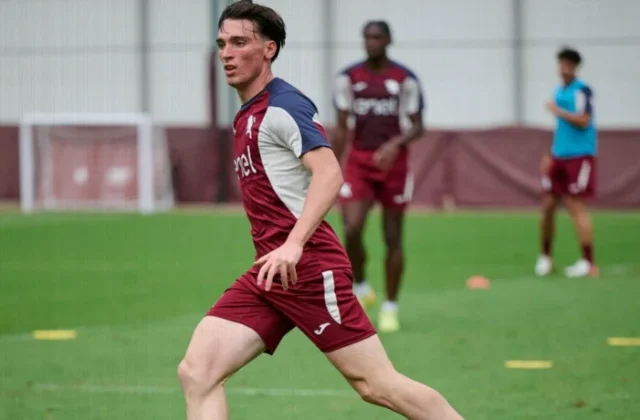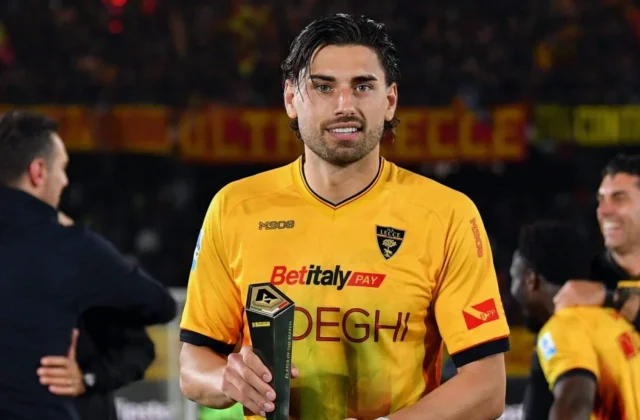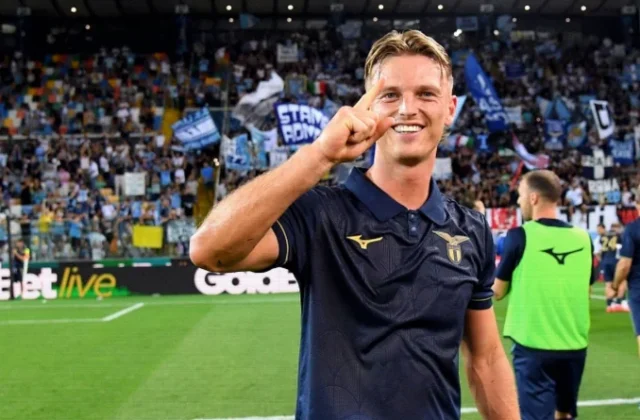
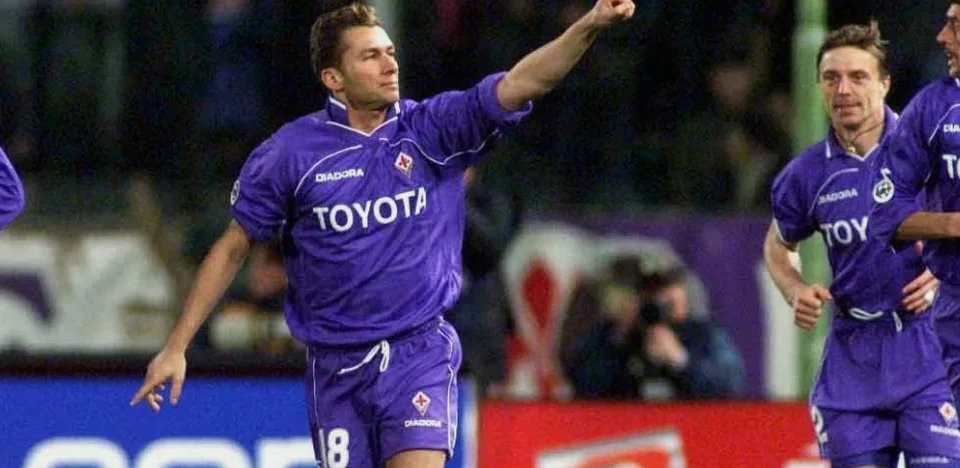
Sandro Cois remembers his football life with the clarity of a player who reached the highest rooms of Italian football, only to leave them earlier than he had planned. From Torino’s European nights to Fiorentina’s near-miss title challenge, and from a place in Cesare Maldini’s Italy squad to an abrupt retirement at 31, his career carried both achievement and an enduring sense of what might have been.
From number 10 to midfield enforcer
Before becoming known for his work in midfield, Cois played much further forward. In Fossanese’s youth ranks in Piedmont, he wore the number 10 shirt and operated behind the strikers. The shift in his career came after joining Torino, where Emiliano Mondonico gradually moved him deeper.
That change made him the player Serie A came to know: a combative midfielder, capable of covering ground and disrupting opponents. After moving to Fiorentina, supporters gave him the nickname “Osso”, a reference to the way he pursued opponents and snapped into challenges.
- Cois won the Coppa Italia during his spell with Torino.
- He also played in Torino’s 1993 UEFA Cup final against Ajax.
- He recalled the controversy of that tie, describing the officiating as unacceptable and remembering Mondonico’s famous chair protest towards the referee.
- His subsequent Fiorentina years placed him alongside Rui Costa, Gabriel Batistuta and a side that believed it could compete for the Scudetto.
The UEFA Cup final remains one of the bitter memories. Cois was on the pitch for the match that became synonymous with Mondonico lifting a chair in protest, an image born from Torino’s anger at the decisions made during the final.
Fiorentina’s unfinished title race
At Fiorentina, Cois found a squad rich in talent and personality. He believes the club’s failure to win the league title was difficult to explain, particularly in the season when the Viola were top of the table in January before their momentum slipped away.
Two absences shaped that campaign. Batistuta suffered an injury, while Edmundo returned to Brazil for Carnival and was away for much of the winter. Cois felt the team lost two decisive figures at the moment when its title challenge needed stability.
Yet his memories of Florence are not limited to frustration. Training sessions, he said, could feel like a spectacle, with Rui Costa and Batistuta producing moments that set them apart from most players. He also retained strong respect for Claudio Ranieri, then still early in his coaching career.
- Cois described Ranieri as a gentleman with modern ideas and a distinctive way of handling a dressing room.
- He also credited Alberto Malesani with helping him reach the Italy national team.
- Inter and Juventus both showed genuine interest in signing him.
- He said a Juventus move was not realistic while he was playing in Florence, while Fiorentina president Vittorio Cecchi Gori was determined to keep him.
For Cois, that Fiorentina side represented an era when Serie A was crowded with leading players from across the world. It was also the setting in which he became an Italy international, a reward he regarded as one of the great privileges of his career.
Italy, retirement and a difficult separation from football
His first apparent Italy call-up was initially a prank: he received a call saying he would be selected, only to discover it was not true. Months later, Cesare Maldini did call him into the national side for real.
Cois remembers sharing a room with Gianluigi Buffon, who was already making a major impression in 1998. He considered the Italy squad exceptional in every area of the pitch, but one regret has remained with him: he did not play a minute at the World Cup. A brief appearance, he felt, would have completed the journey.
The end came soon afterwards. Two serious cervical disc hernias left Cois physically and mentally exhausted. He said he could barely walk or remain standing, and retirement became less a choice of ambition than a release from a long ordeal.
- He stopped playing at the age of 31 after the injuries became impossible to manage.
- In his first period away from the game, he did not even watch matches.
- He felt the sport could be unforgiving once a player was no longer active, with people he considered friends disappearing after retirement.
- His son later helped bring him back towards football and coaching.
Cois began coaching in Tuscany, where he lives, working first at Margine Coperta and then with Pisa’s Under-17 side. Among the players he coached was Louis Thomas Buffon, the son of his former Italy roommate.
However, his return also left him critical of youth football. He argued that too many academy places are influenced by recommendations and insisted that coaching demands study and preparation rather than improvisation.
A return to the pitch with the drivers’ national team
Football eventually offered Cois another, less conventional route back onto the field. He joined the Nazionale Piloti, the team made up of racing drivers, after an encounter involving Michael Schumacher.
He had travelled to Monaco for a match in which he was expected to face the drivers’ side, but his own team already had several former footballers. Through a mutual friend, he spoke to Schumacher, who asked whether he would help the drivers instead. They won that match, and Cois remained part of the group.
Schumacher was not only one of Cois’s sporting idols but, in his view, a capable footballer as well. He also praised Schumacher’s son, while naming Fernando Alonso as the strongest footballer among the drivers he encountered.