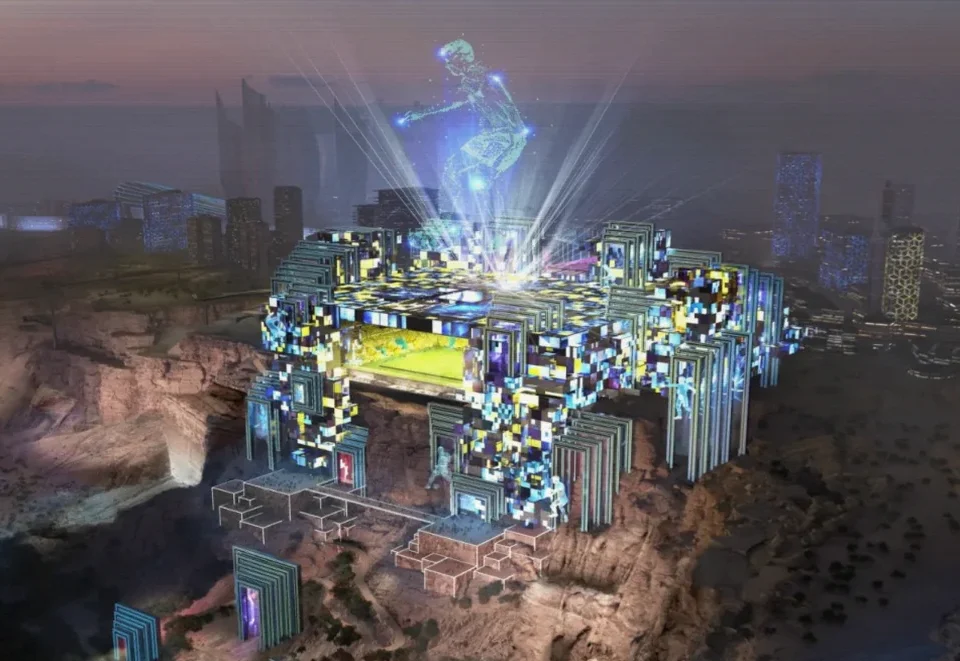
On the desert edge of Riyadh, where Saudi Arabia has been sketching a new entertainment city into the landscape, one of the most striking proposed venues for the 2034 World Cup has been put aside. The Prince Mohammed bin Salman Stadium, a project priced at around R$14 billion, had been planned as a 45,000-seat arena perched above a 200-metre cliff at Qiddiya.
The decision reflects a wider reassessment of spending priorities in the kingdom. Economic pressure following the war in Iran has contributed to a fall of more than 3% in Saudi GDP, forcing authorities to curb investments that had been included in the country’s vast development programme.
The stadium was conceived as far more than a conventional football ground. Designers had proposed a retractable roof and playing surface, with hundreds of LED screens lining the interior to create an enveloping matchday setting. A lake was also planned beneath the venue, adding to the theatrical scale of a project intended to sit at the centre of Qiddiya.
Qiddiya’s changing World Cup role
Qiddiya lies about 45 kilometres from central Riyadh and has been planned as a destination for sport, gaming and entertainment. The Qiddiya Investment Company, the state-created body responsible for developing the city, initially worked from a budget of roughly US$700 billion, equivalent to about R$3.4 trillion.
Funding for the stadium plan was to come from the Public Investment Fund, Saudi Arabia’s sovereign wealth vehicle. The PIF is also the majority owner of Newcastle United and controls four of the country’s leading clubs: Al-Nassr, Al-Hilal, Al-Ittihad and Al-Ahli.
Saudi Arabia remains committed to staging the entire 2034 World Cup within its borders. The country was the sole candidate for the tournament, which will feature 48 national teams, and its hosting proposal included 14 stadiums. The withdrawal of the Qiddiya cliff-top concept therefore changes one of the tournament’s most spectacular planned images, rather than the kingdom’s broader intention to deliver the competition.